Description
Performance and Detection Technology
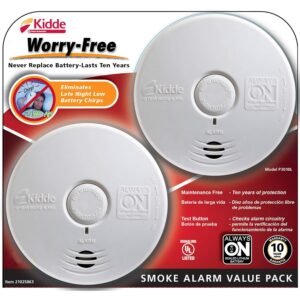
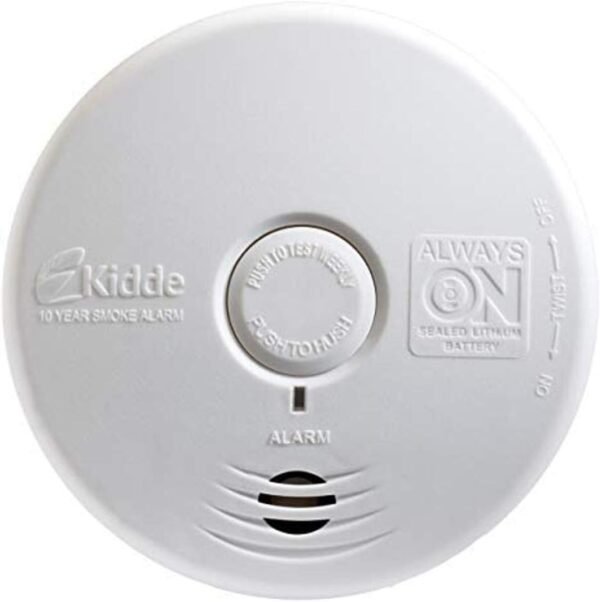
The Kidde Smoke Detector, 10-Year Battery, Photoelectric Sensor Smoke Alarm Detector Living Area is built around photoelectric sensor technology, which responds to the larger visible particles produced by smouldering fires. That sensing method is the one generally recommended for living areas and bedrooms, because the slow-developing fires that start in furniture or bedding produce smoke well before flame. The 85-decibel alarm is the standard output rating for residential smoke alarms, measured at 10 feet. Sensor type and alarm output are the two specifications that matter most on a unit like this, and both are conventional for the category.
Battery Life and Maintenance
The defining feature is the 10-year lithium battery sealed into the unit. It removes the annual battery change, which is the maintenance step households most often skip and the most common reason an alarm is found dead. Kidde specifies continued operation during mains failure, which is straightforward here since the alarm has no mains connection to lose. An end-of-life chirp signals when the unit itself needs replacing, an important behaviour because a sensor past its service life fails silently otherwise.
There is an inconsistency in the published terms worth flagging. The listing gives a 10-year limited warranty on the alarm but not on the battery, while the battery is sealed in and is what defines the alarm’s ten year service life. The two statements sit awkwardly together, and the practical question of what happens if the cell fails in year seven is not answered by the listing. Anyone relying on that cover should read Kidde’s warranty terms directly rather than the retail summary. The sealed design also means the whole unit is discarded at end of life, which does not suit buyers who prefer replaceable cells.
Ease of Use and Installation
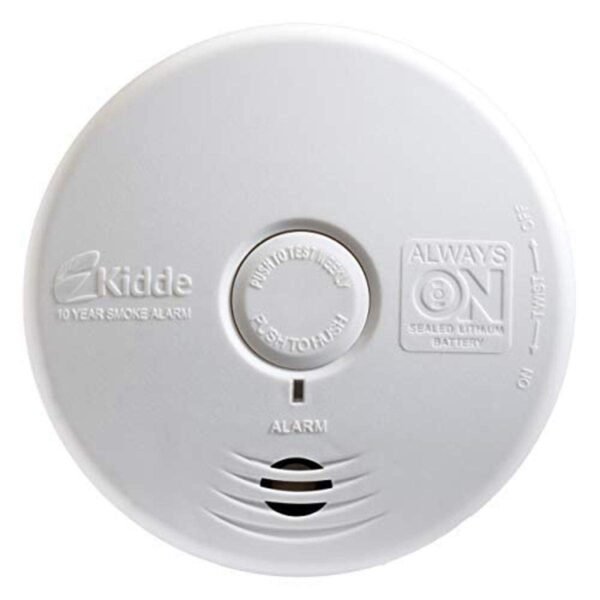
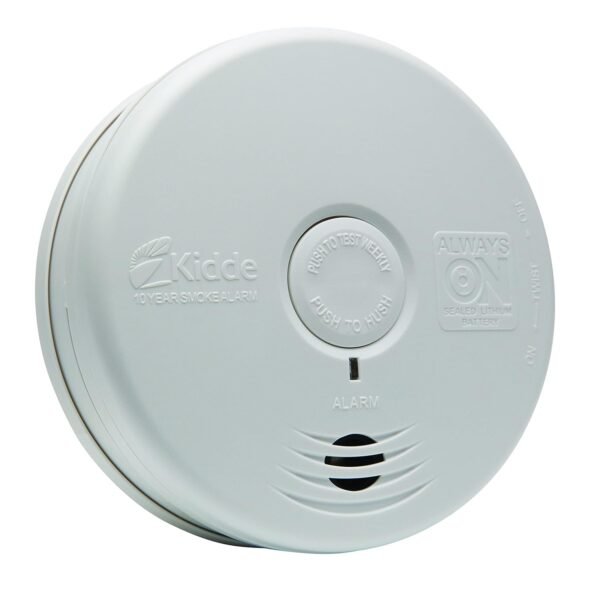
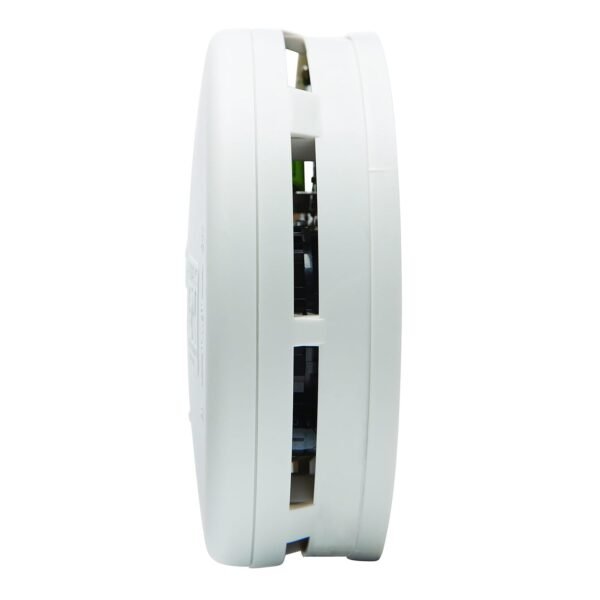
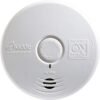
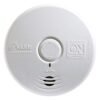
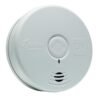
Installation is simple because there is no wiring. The unit is tamper-resistant and light at 9.6 ounces, and at about 5.22 inches wide and high it is compact enough not to dominate a ceiling. The test-hush button handles both the routine function test and the temporary silencing of a nuisance activation from cooking smoke or shower steam, without taking the alarm out of service. That second function is the one that keeps alarms on ceilings rather than in drawers. Buyers wanting the same sealed-cell convenience with carbon monoxide detection as well should look at the Kidde P3010K kitchen combination alarm.
Design and Durability
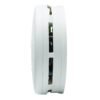
The all-white casing is conventional and keeps a low profile while staying visible enough to be checked. Published environmental limits are 10% to 85% relative humidity and temperatures up to 100 degrees Fahrenheit, which covers normal conditioned living space but excludes unheated attics and garages in most climates. The listing states the unit is UL listed. That listing reflects testing by the certifying body against the relevant standard, not any assessment made here.
Downsides and Things to Consider
- The sealed battery means replacing the whole alarm at end of life rather than a cell.
- Nuisance activations from heavy cooking smoke or steam still occur despite the hush function.
- The warranty terms exclude the battery while the battery defines the product’s service life.
- The housing is bulkier than the slimmest alarms now on sale.
Good Aspects of the Kidde Smoke Detector
- Sealed 10-year lithium battery removes annual battery changes.
- Photoelectric sensing is the type matched to smouldering fires.
- Test-hush button covers testing and nuisance silencing from one control.
- Listed UL certification with stated conformance to NFPA 72 and FHA requirements.
- 85-decibel output, the residential standard.
Value Proposition
On price and performance, this alarm offers reasonable value given the decade of service and the photoelectric sensor. Cheaper alarms with replaceable batteries exist, but over ten years they carry roughly ten battery changes and the chirping that comes with a flat cell. Judged over its full life rather than at the till, the sealed cell is the argument for it. A comparable sealed unit from the same family is the Kidde P3010B, and the Kidde i9010 with its ten year cell covers the same ground in a different housing.
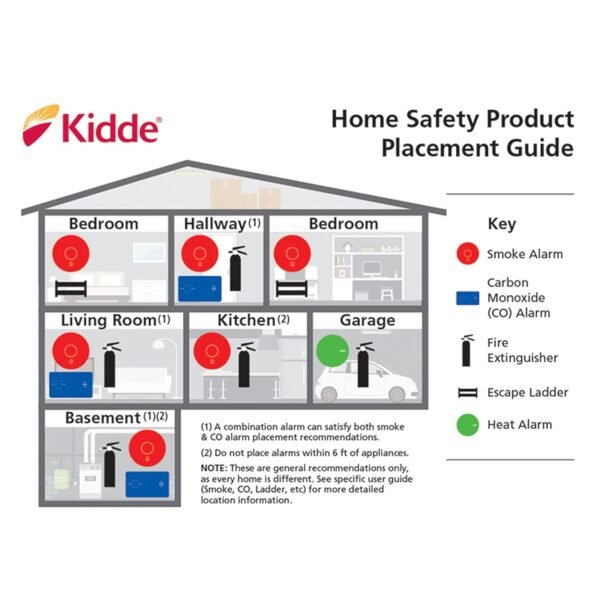
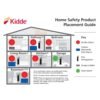
How many alarms a home needs and where they belong is set by local building and fire code together with Kidde’s installation instructions. Neither this page nor any single product choice changes those requirements, and a photoelectric alarm in a living area is one part of a layout rather than a complete answer to it.
Product Comparisons
Against competitors such as the First Alert BRK 3120B or Nest Protect, this unit holds a clear position. The photoelectric sensor matches what more expensive alarms use, and the 10-year sealed battery compares well with units needing annual changes. Nest Protect adds Wi-Fi and phone alerts, which are absent here. First Alert’s comparable models sometimes add voice announcements, usually at a higher price. The closest direct rival on the sealed-cell slim format is the First Alert SM210.
This Kidde model competes on simplicity: one sensing type, one sealed cell, one button, and no network dependency. That is a narrow proposition, and it suits buyers who want detection without an app. The rest of the smoke detector and fire alarm category covers the hardwired and interconnected alternatives for anyone who needs alarms to sound together.