Description
Positive Features of the Smoke and Carbon Monoxide Alarm
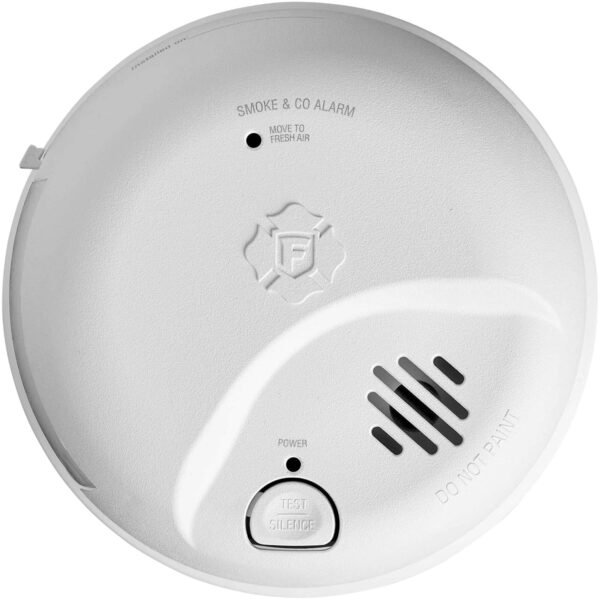
The BRK SMICO100-AC Interconnect Hardwire Combination Smoke & Carbon Monoxide alarm is specified around dual-sensor technology, pairing ionization and photoelectric sensing so one unit answers both fast flaming and slow smouldering fires, which single sensor alarms cannot do. The interconnect capability is the other headline: link several units and any one of them sounds the rest, so the alarm is heard in the bedroom rather than only in the room where the smoke started. The compact design, in a low profile white housing, avoids the bulky look of older ceiling alarms.
- Dual-sensor detection covers both smouldering and flaming fire types.
- Interconnect feature carries an alarm to every linked unit in the house.
- User-friendly buttons for silence and testing simplify operation.
Limitations of This Hardwired Safety Device
No product is without quirks, and this combination alarm has a few. Installation is marketed as easy, and it is still electrical work: existing wiring is rarely as straightforward as the box suggests, the hardwired design suits renters poorly, and the job should follow local electrical code with an electrician where there is no alarm circuit already. The battery backup covers outages, and the published battery life is modest enough that the low battery signal will be heard more often than on a sealed ten year unit. The alarm sound is loud, and owner ratings frequently mention nuisance trips from cooking and steam despite the silence button.
Model data for this alarm is also inconsistent in two ways that are worth resolving before ordering. First, it appears under two part numbers, SMI100-AC and SMICO100-AC, and the site catalogue lists the SMI100-AC smoke alarm and the SMICO100-AC combination alarm as separate products. Only one of those monitors carbon monoxide, so confirm the number printed on the unit. Second, the listing describes the ionization and photoelectric sensors as detecting carbon monoxide, which they do not: CO is read by a separate sensor, and a smoke sensor of either type cannot substitute for one. Check the CO marking on the alarm itself rather than trusting the specification block.
- Installation complexity for non-professionals.
- Battery backup needs regular monitoring.
- Sensitivity can lead to occasional false alarms.
Design and Usability Insights
The alarm’s 5″ depth by 4″ width and 2″ height keeps it unobtrusive on a ceiling or wall, which matters to anyone who would rather not see their safety equipment. The white plastic casing is solid, and the buttons are large enough to press from a ladder without fumbling. The audible alarm has a clear tone that is loud in a small room. The operating humidity range of 10-95% RH covers kitchens, basements, and garages, so the alarm is rated for the damp end of a house even though placement in those rooms remains a code question. On published specification the design balances a small footprint against the button sizes that make an alarm usable, which is not an easy pairing in safety equipment.
Practical Application in the Home
The case for a combination unit is that one device on one wiring run covers two unrelated hazards, so ceilings do not fill with separate alarms and there is a single end-of-life date to track. The interconnect feature is what makes it useful in a multi room house, because nobody has to be in the room where the hazard starts to hear about it.
The trade is nuisance alarms. An alarm sited near a kitchen or bathroom will sound during cooking and showers, and the silence button is the feature that keeps a unit on the ceiling instead of in a drawer. Owner ratings frequently mention that the silence function takes a firm, deliberate press, which is deliberate on a safety device but frustrating in the moment.
Competitive Options in the Safety Market
Against combination alarms from Kidde and against Nest Protect, the BRK unit competes on interconnect and dual-sensor coverage while competitors lean into smart home integration and app notifications. Those alternatives add smartphone alerts and easier battery access, usually at a higher price. The Kidde 30CUD10 combination alarm is the closest cross shop on a wired installation. This hardwired system prioritises power continuity through mains supply plus battery backup and needs no Wi-Fi to function. What it gives up is every smart feature, which will matter to some buyers and to nobody else.
Value for Money and Investment Considerations
On price to quality ratio, this is a sensible buy for a household that wants two hazards covered in one unit without paying for connected features. The hardwired system with battery backup is the substantive advantage over cheap battery only alarms that go quiet when a cell drains. The absence of app integration or voice alerts makes it less appealing to anyone building a connected home. For plain, wired detection, it is a budget-friendly choice that covers the essentials, and our smoke detector and fire alarm reviews show how quickly the price climbs once smart features enter the specification.
Installation and Compatibility Notes
Hardwiring this alarm calls for familiarity with household electrical work, and the job should follow local code. The compatibility with other hardwired systems means it can join an existing loop, while a house with no alarm wiring faces an electrician’s bill on top of the unit price. The included backup battery is convenient, and the low battery signal is the only thing that will tell you it has run down, so the weekly test is the check that matters. The test button is the tool for that, and it should be used on every unit in the loop rather than one, since the whole point of an interconnected system is that every alarm responds.
Safety Features That Matter Most
The dual-sensor arrangement is the specification worth paying for. Ionization sensing responds sooner to fast flaming fires, photoelectric sensing responds sooner to smouldering ones, and running only one method leaves a known gap, which is the same reason detectors pairing photoelectric and thermal sensing exist. A carbon monoxide sensor covers a separate hazard entirely, since CO has no colour or smell to warn anyone. The audible alarm is rated to rouse a sleeping household, and the interconnect feature extends that across rooms and floors. The low battery signal keeps the backup honest, and none of these features change the manufacturer’s weekly test instruction or the placement rules set by local code.
This combination smoke and carbon monoxide alarm covers the fundamentals on a wired installation, with real installation caveats and a sensitivity to steam and cooking. Two sensing methods plus CO detection in one interconnected device is the specification most households shopping wired alarms are after. The absence of smart alerts is a limitation only for buyers who want them. Confirm which model number you are actually buying first, because the smoke only and combination versions are not interchangeable.