




Description
Highlights of the First Alert SM210 Smoke Alarm
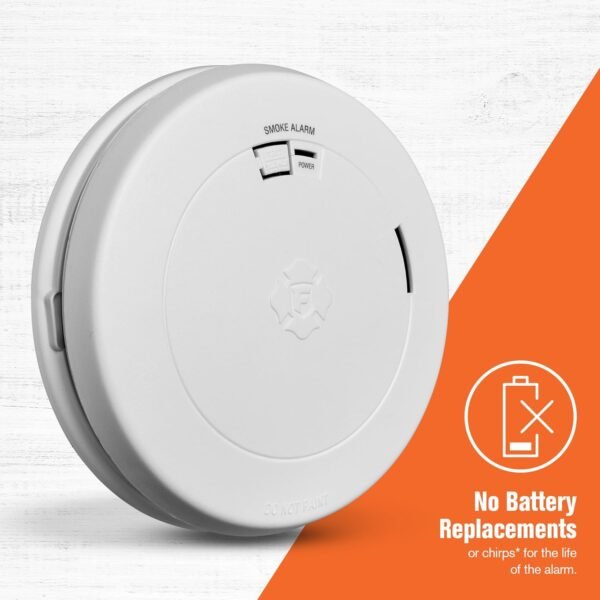
The First Alert SM210, 10-Year Sealed Battery Smoke Alarm with Slim Profile Design is built around two ideas: a sensor that does not cry wolf and a battery nobody has to think about. First Alert lists Precision Detection advanced sensing technology as the feature that holds down the cooking-related false alarms that get detectors unplugged, and the photoelectric sensor underneath it is the element that responds soonest to smouldering material while shrugging off most steam and toast smoke.
The 10-year sealed lithium battery removes the annual replacement and, more usefully, removes the 3am chirp that leads to a cell being pulled and never replaced. That failure mode is the reason sealed alarms exist, and it is the strongest argument for this design over a 9V unit in any household where nobody wants to be the person on the ladder. The end-of-life warning then signals when the alarm itself has reached its rated service life, which is a replacement instruction, not a nuisance to be silenced.
Good Points That Make a Difference
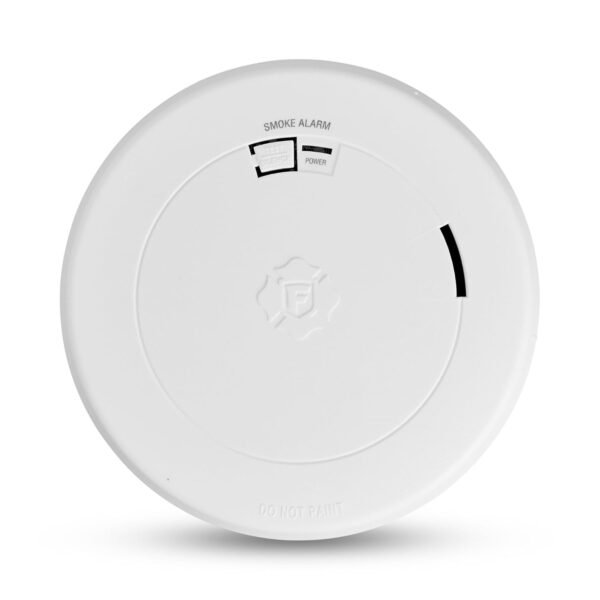
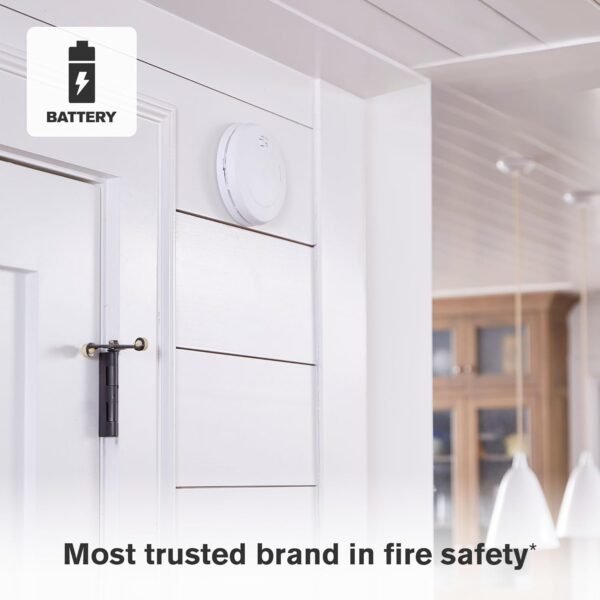
- Slim profile design that’s about half the depth of standard alarms, making it less obtrusive on ceilings.
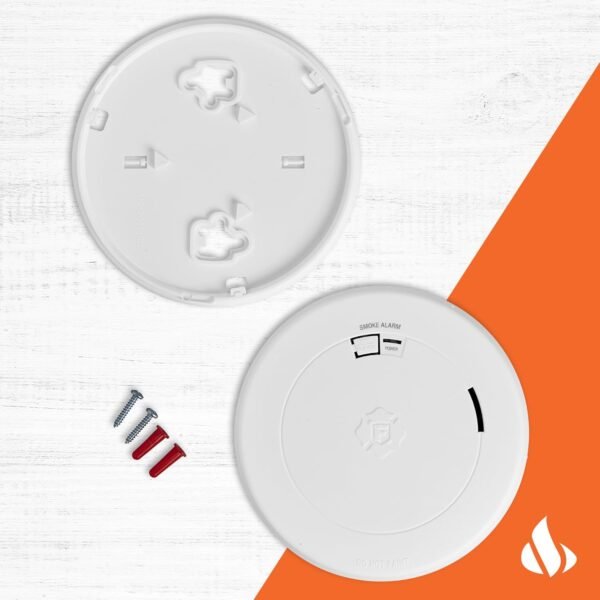
- One-pack convenience with everything needed included (battery pre-installed).
- Test/silence button for quick functionality checks or silencing nuisance alarms.
- Meets new industry standards, ensuring it’s up to date with safety regulations.
The low-profile housing sits closer to the ceiling than the older domed alarms, which is the visible difference between this and the units it replaces. Mounting is a twist-lock bracket and a couple of screws, with no wiring involved, and the rest of our smoke detector and fire alarm reviews cover the hardwired alternatives for anyone weighing that against a sealed battery unit.
Drawbacks of This Smoke Detector
This is a single-unit pack, so covering a whole property means buying several, and the per-unit cost adds up against multi-packs from competing brands. The listed drawback of occasional alarms in very smoky conditions is worth reading carefully: an alarm that sounds in heavy smoke is doing its job, not failing at it, and only a trip from cooking aerosols or shower steam counts as a nuisance alarm.
The volume is fixed and loud, which is the intent for waking sleepers and startling when the button is pressed with somebody standing underneath. There is no smart connectivity, so nobody away from the property is told anything. Buyers who want a Kidde equivalent built around the same sealed-battery and nuisance-resistance pitch can compare the Kidde 20SD10.
Performance and Feature Detail
The photoelectric sensor is the choice that suits bedrooms, hallways and living areas, where smouldering upholstery and bedding are the realistic fire scenarios. The test/silence button covers both jobs a button on a smoke alarm needs to do, verifying the horn and sensing circuit and temporarily quietening a nuisance trip without disabling the unit. The 10-year sealed lithium battery runs the whole service life, so a low-battery chirp on this alarm means the unit itself is finished rather than the cell.
Published specifications give a white housing measuring 5.13″ in diameter and 1″ high at 0.37 pounds, light enough that the supplied bracket and screws are all the mounting it needs. Listing copy also refers to fitting standard junction boxes, which does not apply to a battery alarm on a twist-lock bracket, so read those dimensions as mounting-space figures rather than a wiring detail. The end-of-life warning is a genuine safety feature and one that budget alarms often leave out.
Value Proposition: Price Worthiness Considered
The price to quality ratio holds up over the life of the unit. It costs more than a basic 9V alarm at the till, and the 10-year battery takes that back in cells never bought and ladder trips never made. Against alarms with shorter lives or replaceable batteries, this is the cheaper option measured across a decade, which is the timescale that actually applies to a smoke alarm.
What it does not do is carbon monoxide. There is no CO sensing in this model and no smart integration, so a property that needs both hazards covered is buying twice, either a combination alarm or a dedicated monitor such as the First Alert CO710 with its ten-year battery and digital display. For plain smoke detection with minimal upkeep, it is a sensible buy.
Product Comparisons: How It Stacks Up Against Rivals
Against rivals such as the Kidde sealed-battery range or the Nest Protect, this First Alert competes on battery longevity and simplicity. The sealed 10-year cell beats anything that wants an annual swap, and the Kidde 20SA10 is the closest match on that specific point. The slim housing also looks more current than the domed units it sits next to on the shelf.
It lacks smart features such as phone alerts or home automation integration, which Nest Protect offers at a much higher price. The absence of combined smoke and carbon monoxide sensing means a second device where that hazard applies. Households running a hardwired, interconnected set will find a battery alarm cannot join it at all, and a hardwired unit with battery backup is the right comparison there.
Where this model does earn its place is nuisance alarm resistance, since photoelectric sensing and the Precision Detection tuning both work against the cooking and steam trips that cause alarms to be disabled. If the priority is straightforward smoke detection that stays on the ceiling, it fits. For a full safety setup covering several hazards, other options are worth the extra.
Advantages That Stand Out
- Long-lasting sealed lithium battery eliminates the inconvenience of replacements.
- Advanced photoelectric sensor reduces annoying false alarms from cooking.
- Slim and unobtrusive design fits nicely on ceilings without being an eyesore.
- User-friendly test/silence button for quick alarm checks.
- Complies with updated safety standards, ensuring effective fire detection.
Drawbacks Worth Noting
- No smart home connectivity, so no remote alerts.
- Single-unit packaging can increase overall cost for full home coverage.
- No combined smoke and CO detection, so separate devices are needed for CO safety.
- Alarm volume is fixed and quite loud, which might be too harsh for some.
- Cannot be added to an existing hardwired interconnect loop.
On the published specification and the pattern of owner ratings, this is a low-maintenance alarm for buyers who want one job done plainly. The 10-year battery and the false alarm reduction are the two features that decide it, because between them they address the reasons alarms end up disabled or dead. Buyers who want smart features or multi-hazard sensing should look elsewhere. Weekly testing, the manufacturer’s mounting instructions and local code still apply to this alarm as they do to any other.