Description
Positive Features of the Kidde Smoke Detector
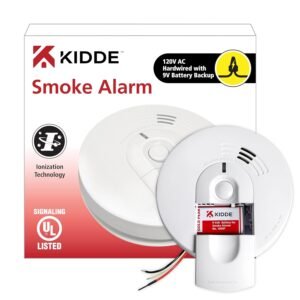
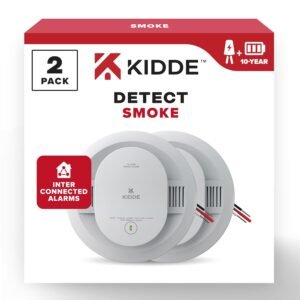
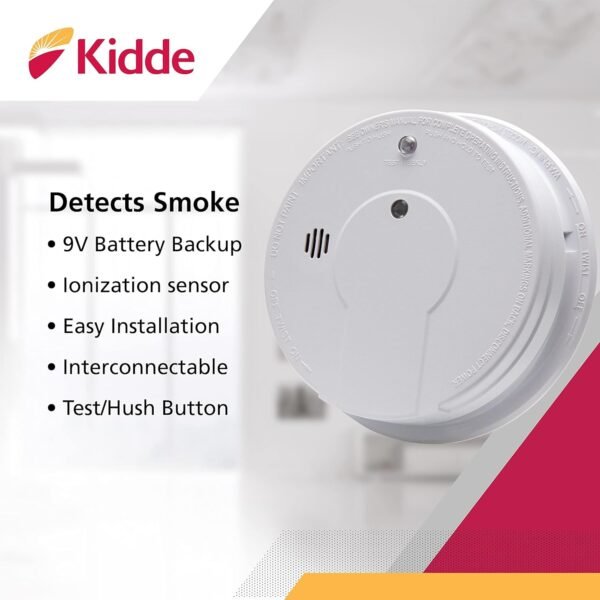
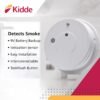
The Kidde Smoke Detector, Hardwired Smoke Alarm with 9-Volt Battery Backup, model i12040, is built around a familiar set of specifications. Its ionization sensor technology targets the invisible particles given off by fast flaming fires, the fire profile photoelectric alarms are slower to register. The interconnection capability is the feature that changes how the alarm behaves in a house: when one linked unit senses smoke, every other unit on the loop sounds, so an alarm in a basement is heard in a bedroom two floors up. The 85-decibel alarm is the standard output rating for residential smoke alarms, measured at 10 feet. The test-hush button silences a nuisance activation from cooking smoke or shower steam without removing the battery or disabling the unit, which is the behaviour that keeps alarms in service.
- Ionization sensor technology aimed at fast flaming fires
- Interconnects with other compatible Kidde devices across the dwelling
- 85-decibel alarm output, the residential standard
- Test-hush button to silence nuisance alarms without disabling the alarm
Limitations of the Hardwired Smoke Alarm
The Kidde hardwired detector carries a few downsides worth weighing. Installation is mains electrical work rather than a battery swap, so it should follow local electrical code and will need a qualified electrician for anyone not comfortable with household wiring. That cost belongs in the purchase decision. The low battery chirp is deliberately persistent, which is the point, though it is the most common complaint in owner ratings. The ionization sensor is more reactive to cooking aerosols and steam than a photoelectric equivalent, and the hush button manages that rather than removing it. The alarm is rated to an upper temperature of 37.8 degrees Celsius, which rules out unconditioned attics and garages in most climates.
- Installation requires electrical wiring knowledge or a qualified electrician
- Low battery chirp is persistent by design
- Ionization sensing is more prone to nuisance alarms near kitchens
- Not rated for very high-temperature locations
Design and Build Quality
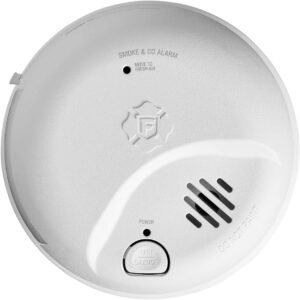
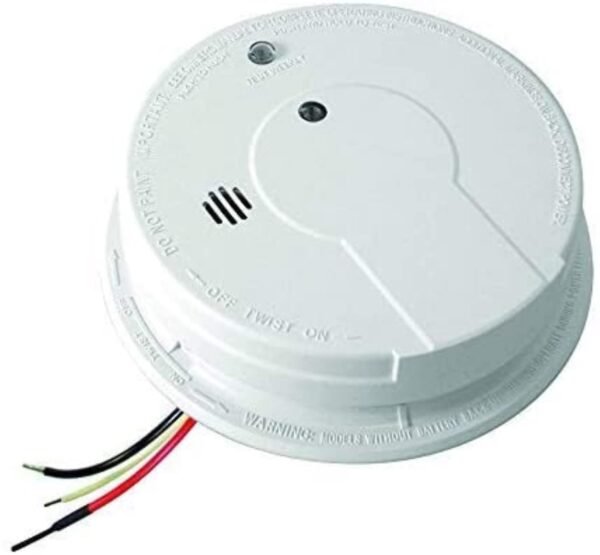
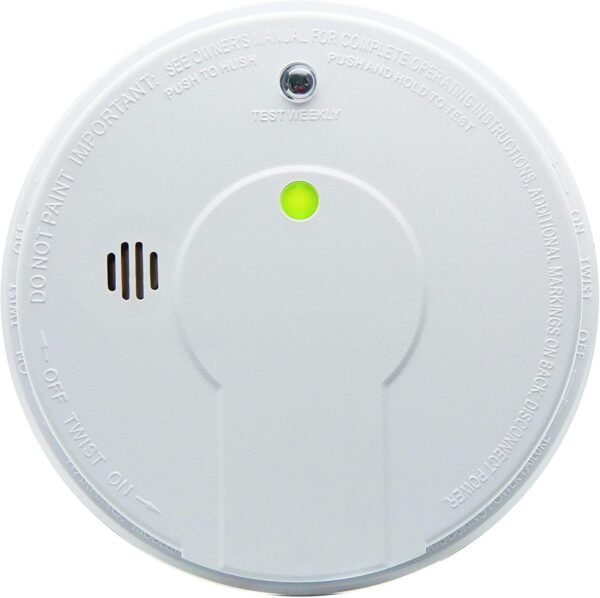
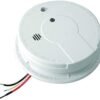
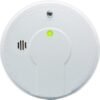
The white housing is conventional and sits unobtrusively on a ceiling or wall. Listed dimensions are about 2 inches deep by 6 inches wide and high, shallow enough not to intrude while staying reachable for the weekly test. A tamper-resistant mounting discourages casual removal, a relevant detail in households with children. The red LED indicator gives a visual cue during an alarm and during testing, confirming the unit is powered and responding.
Features and Functionality
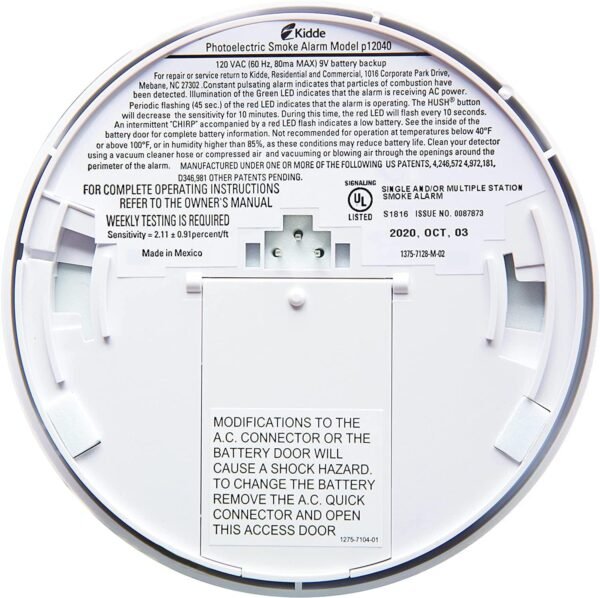
The 9-volt alkaline battery backup is included and covers mains failure. The test-hush button serves two functions, testing both the supply and the backup cell, and silencing a nuisance activation temporarily.
The interconnect figure is where the published data contradicts itself. One part of the listing states the alarm links with up to 18 Kidde devices, while another states up to 24 interconnected devices including smoke, heat, and carbon monoxide alarms plus strobes and relay modules. Those two numbers cannot both describe the same limit. Kidde’s documentation for this family generally distinguishes a cap on total devices on a loop from a lower cap on initiating devices, which would explain a pair of figures like these, but the listing does not say which number is which. Anyone planning a loop near either limit should work from the installation manual supplied with the alarm rather than from the retail listing.
Ionization sensing covers fast flaming fires; pairing it with a photoelectric alarm for living areas on another level is the usual way to cover smouldering fires as well, and our combination smoke and carbon monoxide alarm coverage shows where a dual sensor unit fits the same plan. The listing states the model meets UL 217 and complies with NFPA standards.
Price Worthiness and Value Assessment
On features and specification, the i12040 offers reasonable value. Hardwired alarms cost more than battery-only units, and what the extra buys is continuous power plus the ability to link devices together. For a dwelling where the wiring already exists, the price-to-performance balance is stronger still, because the installation cost largely disappears. Buyers on a tight budget will find standalone sealed-battery alarms cheaper, at the cost of interconnection and of mains power. The nearest sibling in the same hardwired family is the Kidde i4618 with its front-load battery door, which changes how the backup cell is accessed.
Alternative Offerings and Market Rivals
Among competing smoke alarms, this Kidde model’s strengths are interconnection and ionization sensing. First Alert’s photoelectric alarms respond earlier to slow smouldering fires and later to flaming ones, which is why pairing sensor types across a house is a common recommendation rather than a compromise. Some rivals add Wi-Fi and phone alerts, which this model does not have, and buyers who want smoke and carbon monoxide covered from one sealed unit can compare the Kidde P3010CU combination alarm.
The Kidde alarm’s tamper resistance, its stated UL listing, and its 10-year warranty are solid points. Its mains supply removes the annual battery dependency that battery-only alarms carry. Against that sit the installation requirement and the nuisance-alarm tendency of ionization sensing. Buyers wanting smoke and carbon monoxide from one position on the ceiling should compare a hardwired Kidde alarm with a sealed ten year cell and the combination units alongside it.
Installation and Everyday Use
Installation centres on getting the wiring correct and secure. The supplied instructions are adequate, but this is work governed by local electrical code and is a job for an electrician where there is any doubt. A miswired alarm can sit on a ceiling looking installed while doing nothing.
Once commissioned, the alarm is largely maintenance free between the weekly test and the backup battery change. The test-hush button is the control that gets used most in kitchens, and the red LED confirms the unit is live. Kidde specifies that the backup cell takes over when mains power drops, which is the scenario the 9V cell exists for.
Safety Features and Reliability
The ionization sensor is oriented to fast flaming fires. The interconnection feature is the more consequential capability in a larger or multi-storey house, because it removes the assumption that somebody will be within earshot of the room where a fire starts. The tamper-resistant design reduces accidental disabling.
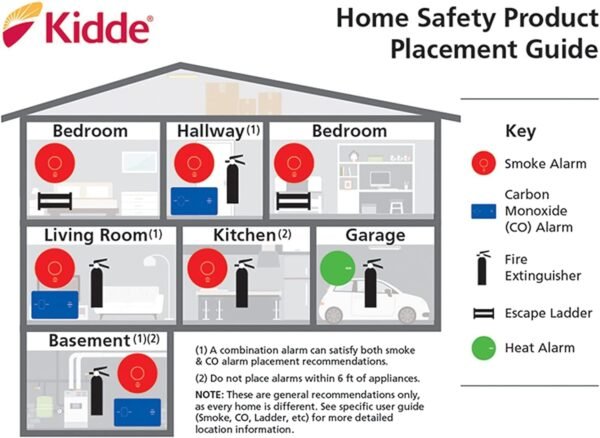
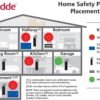
Alarm placement, the number of units required, and whether interconnection is mandatory are all set by local building and fire code and by the manufacturer’s installation instructions. Nothing on this page substitutes for either. Within those rules, this is a conventional hardwired alarm that covers the fundamentals, and the wider smoke detector and fire alarm category covers the sealed-battery and photoelectric options that complement it.
The i12040 pairs standard safety features with a plain, serviceable design. The installation requirement and the sensitivity profile of ionization sensing are the two real caveats. Interconnection, mains power with battery backup, and a compliant alarm output make it a reasonable choice for buyers upgrading a wired system, provided the interconnect limit is confirmed from the manual rather than the listing.