Description
Highlights of the Kidde i9010 Smoke Alarm
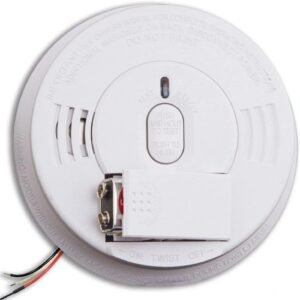
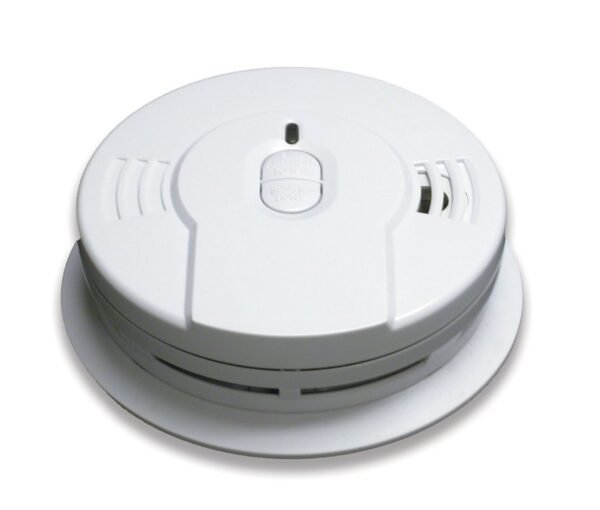
The Kidde i9010 10-Year Sealed Lithium Battery-Operated Smoke Alarm with Memory and Smart Hush is built around one design decision: the power source is not user serviceable. The sealed-in 10-year lithium battery takes the annual battery change off the maintenance list entirely, which matters because a missed change is how most alarms end up dead on the ceiling. Automatic activation happens as the alarm locks onto its mounting bracket, so there is no pull tab or switch to forget. The Smart Hush feature silences nuisance alarms from cooking smoke temporarily, which is the alternative to the far worse habit of pulling an alarm down and leaving it down. The alarm memory function uses a rapidly flashing LED to show the unit sounded since the last reset, useful for anyone returning to an empty house or a rental between tenants.
- Sealed 10-year lithium battery eliminates battery changes
- Automatic activation when mounted
- Smart Hush silences nuisance alarms temporarily
- Alarm memory shows if the unit was previously triggered
Limitations to Keep in Mind
The alarm has clear limits. It uses ionization sensing technology, which answers flaming fires quickly but is slower on the smouldering fires a photoelectric alarm catches earlier. Relying on this model alone therefore leaves a gap, and Kidde’s own guidance in this category is to run both sensing types, typically by adding a photoelectric living area alarm in the rooms where a slow fire is likelier. The end-of-life chirp uses a signal close enough to a low battery warning that people misread it, which on a sealed unit is a meaningful confusion because there is no battery to change. Deactivation at end of life needs a small screwdriver, and the sealed construction means the whole alarm is discarded after ten years rather than refurbished.
- Ionization sensor less effective for smouldering fires
- End-of-life chirp can be mistaken for a low battery
- Requires a tool for deactivation at end of life
- Whole unit is disposable once the sealed battery is spent
Installation and User Experience
Mounting is the simplest part of the specification thanks to the self-activation mechanism. The alarm powers up as it twists onto the bracket, with no switches and no tabs, which is why sealed alarms of this type are popular with landlords and property managers running many units. The compact size, 5.6 inches in diameter and 1.55 inches deep, and the neutral white finish keep it unobtrusive on a ceiling. The Test/Reset button gives the full alarm tone on a press, which is how the weekly test is meant to be carried out. The LED indicator flashing every 40 to 45 seconds is quiet enough not to distract in a bedroom and visible enough to confirm the alarm is live. Placement and quantity remain a local code question rather than something the product decides.
Safety Features Worth Noting
The tamper-resistant design is more relevant than it sounds, because it resists casual removal in rentals and shared houses where alarms are most often taken down and never replaced. The End of Life alert is the feature that makes a sealed alarm workable at all: it announces the end of the ten year service period rather than letting the unit fail silently. Kidde lists the alarm as meeting UL 217, which is the standard named on the product listing. Because the sealed lithium battery is the only power source, mains outages have no effect on the unit, which is the practical advantage battery alarms hold over hardwired models without backup.
Comparing to Popular Competitors
Against photoelectric models from First Alert and against Nest Protect, the i9010 competes on maintenance-free operation rather than features. Many rival alarms still want annual battery changes or a wiring run. The First Alert SM310 dual sensor alarm answers the sensing gap differently by combining both methods in one housing, which is worth pricing up before buying two separate units. The Nest Protect adds smart home integration and voice alerts at a considerably higher price. Within Kidde’s own range, the battery operated i9050 covers the same ionization sensing with a replaceable cell. For homes or rentals where installation speed and long service life are the priorities, the i9010 fits, provided the photoelectric side is covered somewhere in the house.
Value Assessment: Is It Worth It?
The price to quality ratio holds up once the decade of sealed power is counted, since the running cost over that period is nothing at all. There are no smart features here, and the straightforward design and the maintenance schedule are the argument for it. Buyers comparing sealed alarms on price usually shortlist the slim First Alert SM210 alongside it. The purchase makes most sense for rental properties and for awkward locations such as high ceilings and stairwells, where getting a ladder to an alarm once a year is the real cost. It balances price against service life, which is why this format now dominates our smoke detector and fire alarm reviews.
Practicality in Everyday Life
The design suits households that would rather not think about the alarm at all. The Smart Hush feature handles cooking related alerts without disabling detection, which keeps the unit on the ceiling. The alarm memory’s flashing light records that the alarm sounded while nobody was in the room, information a plain alarm cannot give. The audible output is loud enough for a sleeping household, which is the whole design brief. The sealed battery removes the yearly reminder, and the end-of-life signal replaces it once. What the specification does not do is cover smouldering fires as quickly as photoelectric sensing, so pairing sensor types across a home is the sensible way to use this alarm rather than treating it as the only unit in the house.