Description
Size, Weight and Glock Fitment
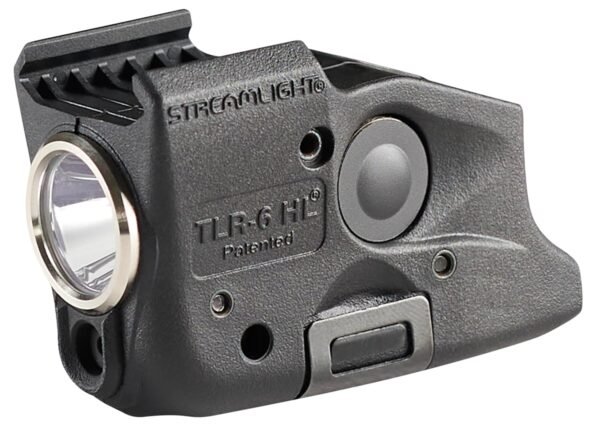
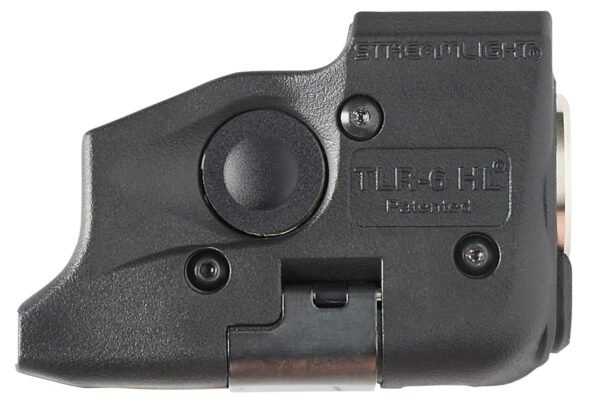
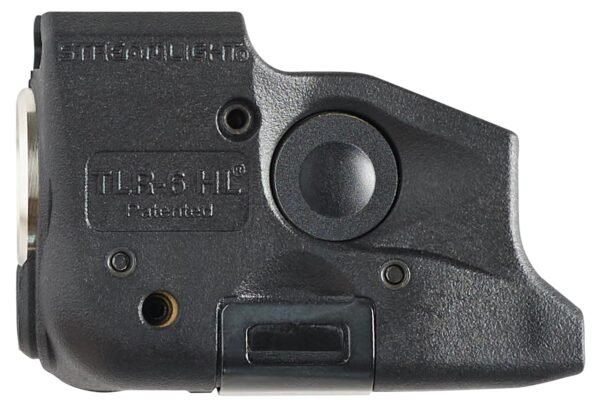
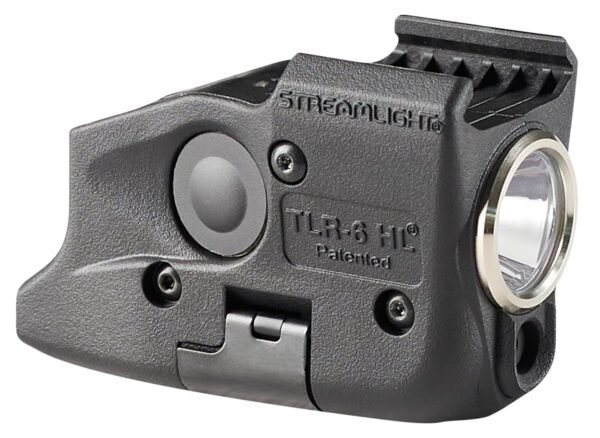
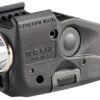
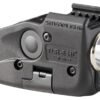
The Streamlight 69343 TLR-6 HL is built as a rail-and-trigger-guard unit for railed Glock frames, and the listing names Gen 3, Gen 4 and Gen 5 models. The polymer construction holds listed weight to a little over an ounce, which is the specification that matters most on a pistol, since added mass ahead of the trigger guard changes how the gun returns after a shot. Worth noting is that the fitment list published with the product mixes frame sizes: it is headed as covering compact railed handguns, then names the Glock 17, 21 and 22 alongside the 19 and 30, and the first group are full-size frames rather than compacts. The mounting hardware may well cover both, but the description and the model list do not agree, so check the specific frame and generation against Streamlight’s own fit chart before ordering.
Output, Laser Specification and Illumination Range
The published figures are a 300 lumen LED output and 4,250 candela, quoted with a beam distance of 130 meters. Those two numbers reconcile: the standard relation from 4,250 candela gives roughly 130 meters, so the throw claim is supported by the intensity figure rather than being an independent marketing number. For a pistol light this is a close-range specification by design, with enough centre intensity to identify at indoor and yard distances rather than to reach across open ground.
The aiming laser is where the imported data breaks down, and this one is not a rounding difference. The listing describes a class 3R red laser and in the same block quotes a wavelength of 510 to 530nm. That band is green light. A red aiming laser sits in the region of 635 to 650nm, so the colour description and the wavelength figure cannot both be correct for the same emitter. The class 3R designation and the sub-5mW output figure are consistent with each other and with either colour, so the ambiguity is specifically about which laser is in the box. Confirm the colour against the manufacturer sheet before buying, because green and red lasers differ substantially in daylight visibility and in price. Windage and elevation are adjusted through bushing-mounted screws, and the listing states that zero is retained across a battery change.
Battery, Charging and Power Management
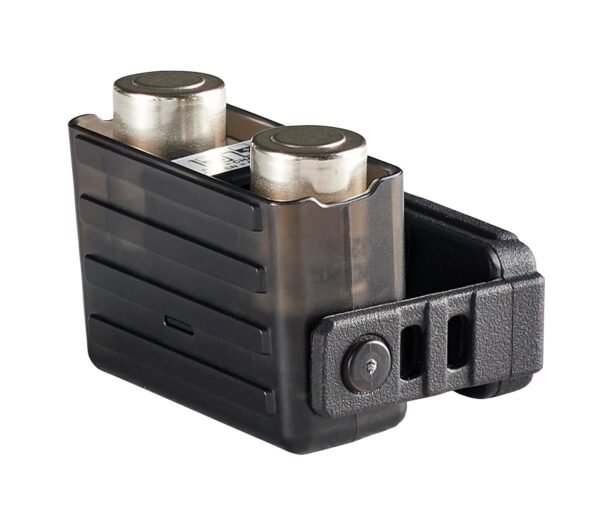
The tool-free rechargeable battery system is the design point that follows from the zero retention claim: the cell can be swapped without dismounting the light, so the laser alignment is never disturbed by routine charging. The package is listed with a two-bay charging case, a USB-C cable and three lithium-ion batteries, with roughly an hour of combined light and laser use quoted per cell. An hour is short in absolute terms and unremarkable for the size class, where the housing sets a hard ceiling on cell capacity. Three cells and a dual charger are the manufacturer’s answer to that, and they are the reason the package price sits above a bare light. Ambidextrous push-button switches handle activation from either side.
Specification Strengths
- Compact polymer housing at a little over an ounce, adding minimal mass to the frame.
- Combined 300 lumen LED and aiming laser in a single rail unit.
- Tool-free cell replacement with zero retention across the swap.
- Ambidextrous switching rather than a single-side control.
Drawbacks to Weigh Before Purchase
- Roughly an hour of combined runtime per cell, which makes the spare cells part of the working kit rather than an accessory.
- Frame-specific fitment, and a published fit list that contradicts its own compact heading.
- Laser visibility falls away in bright daylight, and the published wavelength leaves the colour unresolved.
- No night vision compatible output, which some duty users need.
How the TLR-6 HL Compares in the Segment
Against other subcompact rail units, the argument for this model rests on the dedicated fit and the cell swap that does not disturb zero, rather than on output. Universal-fit competitors cover more frames but give up the snug seating that a frame-specific body provides. Lights with a single primary cell run longer per cell and cost more to feed. Within the same size class, the Nightstick TCM-10 at a 650 lumen rating takes the opposite approach with modular rail inserts and no laser, and the Nightstick TCM-5B for narrow subcompact rails covers a similar frame range. Buyers who want a full-size unit with a longer reach move to the SureFire X300U-B at a 1000 lumen rating, which is a larger housing on a larger frame.
Price Position Relative to the Specification
The package is not the cheapest route to a pistol light, and the charging case, cable and three cells are where the difference goes. For a Glock owner who wants light and laser in one unit and does not want to re-zero after every charge, the specification matches the money. For a buyer who wants the highest output per dollar, or who owns several frames, the frame-specific fit works against the price. The wider tactical flashlight and weapon light category holds cheaper single-function lights and more expensive duty units on either side of this one.
Handling and Switching
The ambidextrous buttons are placed to be worked with the support hand thumb from either side, the layout that dominates this segment. Published owner feedback reports the switches are usable with gloves but lose feel, a limitation shared across the class rather than specific to this model. The low mass is the strongest practical argument on the sheet, since a heavy light on a compact frame changes handling more than the same light does on a full-size gun.
Build, Sealing and Maintenance
The polymer body in black is described as sealed against dust and moisture, though the listing publishes no IP figure, so it should be read as weather resistance rather than a rated immersion depth. Maintenance amounts to charging cells and checking the clamp screw, since the tool-free cell change removes the usual reason to dismount the light. For a smaller frame-specific unit at the opposite end of the size range, the SureFire XSC built for the Springfield Armory Hellcat shows how far the micro-compact category has been taken.
The specification adds up to a light-and-laser unit sized for railed Glock frames, distinguished by the cell swap and the ambidextrous switching. The published 300 lumens and 4,250 candela are modest and internally consistent. The unresolved laser wavelength and the mismatched fit list are the two items to settle with the manufacturer first.