Description
Design and Installation
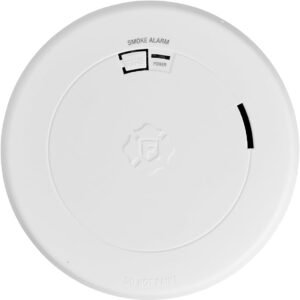
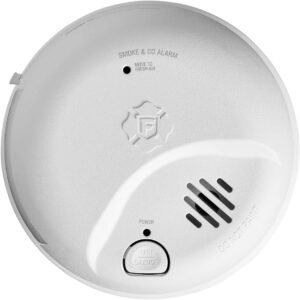
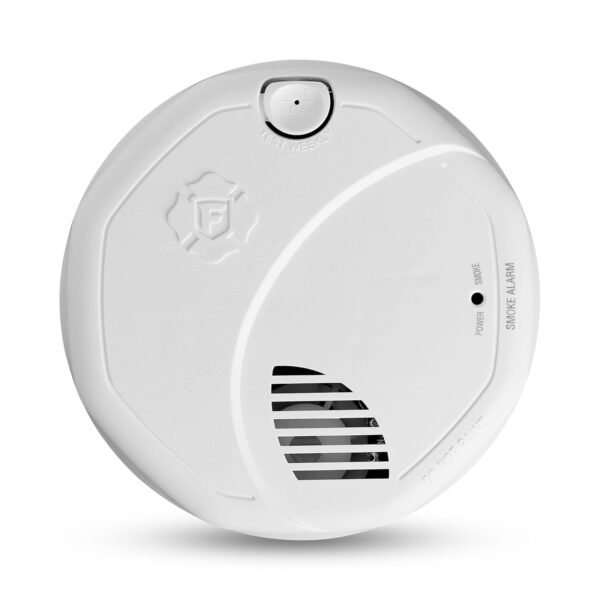
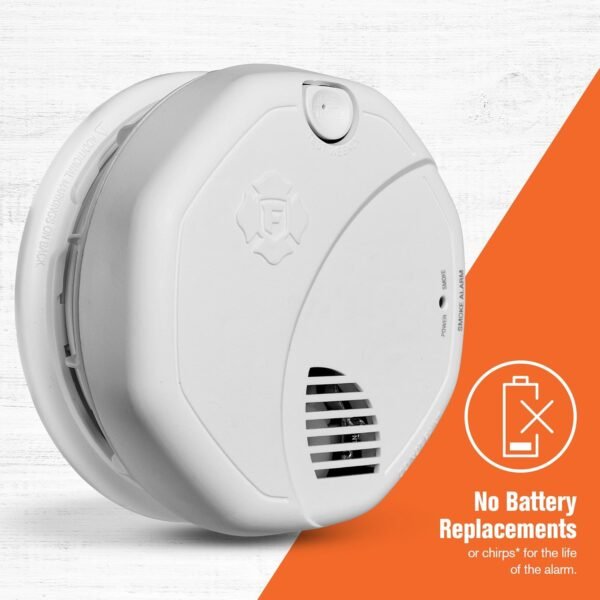
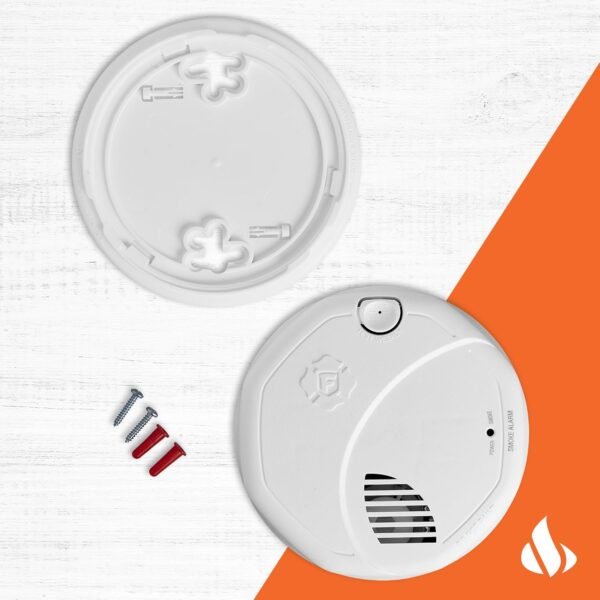
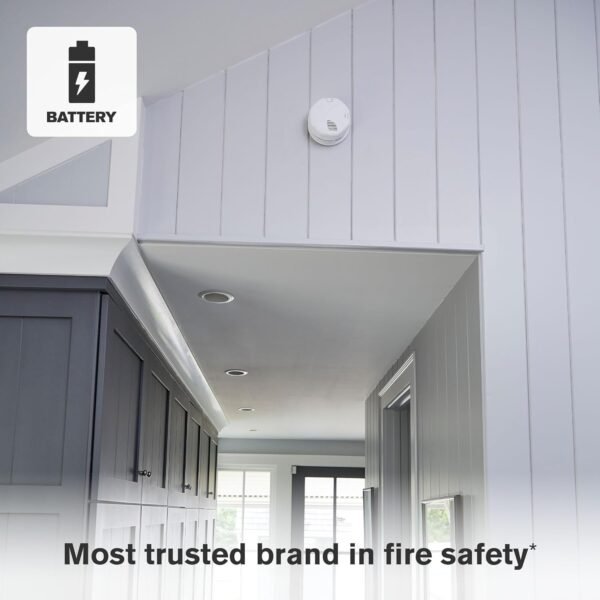
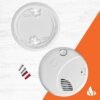
The First Alert Smoke Alarm, 10-Year Sealed Battery Dual Sensor Detector with Test & Silence Button, SM310 is listed at 5″ diameter and 2″ height, a footprint that keeps the housing close to the ceiling line in a normal room, and the white housing is the standard finish for ceiling or wall mounting. Published weight is 0.54 pounds and the mounting plate and hardware are supplied, so fitting is a plate-and-twist job rather than a wiring job. The battery is sealed for the stated 10-year life of the alarm, which removes the battery door, the annual swap and the low-battery chirp that follows a missed replacement. How many alarms a dwelling needs and where each one belongs is set by local building code and by the instructions packed with the unit, so the figures here describe the device and not a placement plan. Buyers weighing sealed-battery units against mains-powered ones can compare the specs with the hardwired First Alert 9120B with battery backup.
Sensor Technology
The SM310 carries photoelectric and ionization sensors in one housing. The two respond to different fire signatures: photoelectric sensing is generally faster on slow, smoldering fires that throw off large smoke particles, while ionization sensing is generally faster on fast flaming fires that produce fine combustion products. Pairing them is the manufacturer’s answer to the fact that neither sensor leads on both fire types. What a dual-sensor listing claims is broader coverage, not freedom from nuisance alarms, and cooking aerosols or shower steam can still trip any alarm mounted close to a kitchen or bathroom. The test and silence button does both jobs, sounding the horn on demand and quieting a nuisance alarm for a timed period instead of forcing a battery pull. Single-sensor alternatives sit either side of it, among them the ionization-only Kidde i9040 alarm.
Service Life and Maintenance
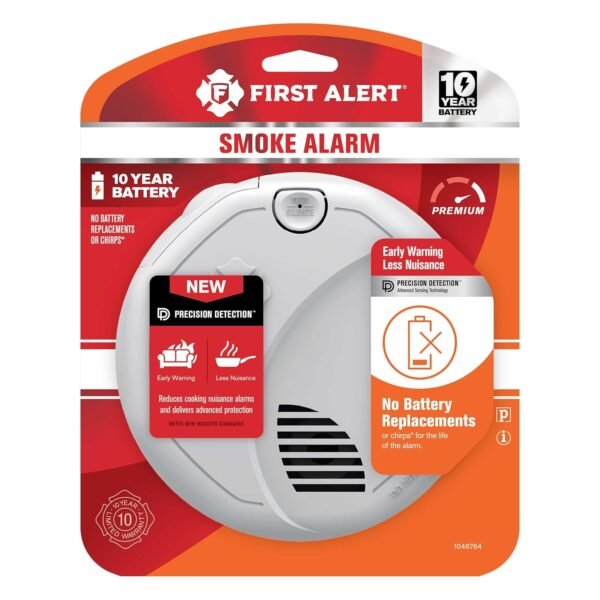
The 10-year sealed lithium battery is the defining spec. Because the cell is not replaceable, the alarm is a fixed-term device: it runs for its rated decade and is then retired whole. The listed end-of-life warning signals when that point arrives, which matters because the sensing chamber ages whether or not the alarm has ever sounded, and an alarm past its date is the failure mode people rarely notice. Maintenance across the decade is limited to periodic button tests and keeping the vents clear of dust. Sealed-battery models now dominate the residential shelf, as a scan of the smoke detector and fire alarm listings shows, and the format is what most current codes assume for battery-only alarms.
Points the Specs Support
- Two sensing technologies in one unit, covering smoldering and flaming fire signatures
- Sealed 10-year lithium cell, with no battery access and no scheduled replacement
- Test and silence button combining the on-demand test and the timed hush
- End-of-life warning flagging the retirement date of the whole unit
- Compact 5 inch by 2 inch housing in a standard white finish
Limitations Worth Knowing
The trade-offs follow from the design. A sealed cell cannot be topped up, so a unit that fails inside its term is replaced rather than repaired. There is no smart connectivity: no app, no phone notification, no remote status, which rules the SM310 out for anyone who wants to see alarm state from away. The 2 inch depth is more visible than the slimmest current formats on a low ceiling. The hush function quiets a nuisance alarm for a set interval only and does not disable the sensor, which is the intended behavior but surprises buyers who expect an off switch. Dual-sensor units also carry a higher list price than the plain ionization alarms they replace.
Where the Price Sits
Against entry-level ionization-only alarms, the SM310 asks a premium for the second sensor and the sealed cell. The arithmetic that favors it is the decade of skipped battery purchases and the absence of a chirping alarm at three in the morning, which is the single most common reason people disable a smoke alarm and leave it disabled. Against the slim 10-year units at a similar price, the question is simply whether the second sensing technology is worth the extra depth. The slim First Alert SM210 with its 10-year cell is the closest same-brand comparison for that call.
How It Compares
Set against connected alarms with app integration and voice announcements, the SM310 is deliberately plain: it sounds where it is mounted, and the buyer pays nothing for a radio or a hub. Set against basic single-sensor alarms, the dual-sensor arrangement is the differentiator, and the sealed cell removes the maintenance step that single-sensor alarms with replaceable batteries keep. The photoelectric Kidde P3010B with a 10-year battery shows what the same price buys with one sensing technology instead of two. Connected models remain the choice where remote status is the requirement, though they add setup, a network dependency and cost.
Practical Considerations
The button is the whole user interface, and pressing it is the only way to confirm the horn and electronics still work, which the manufacturer schedules weekly. Alarms in this class sound loudly by design; the volume is a specification, not a fault, and it is the reason the hush function exists. The end-of-life signal is the other feature to plan around, because it appears roughly a decade after the manufacture date rather than the purchase date, so the date stamp on the back is worth reading before mounting. None of this makes the device a substitute for an escape plan or for the alarm placement rules in local code.
Drawbacks to Keep in Mind
- The sealed cell means the whole alarm is consumable on a 10-year cycle
- No connectivity, so there is no remote alert or status check
- The 2 inch depth stands off a low ceiling more than slim-profile alarms
- The hush is timed rather than a switch, which is not always understood
- Priced above the basic ionization alarms it is meant to replace
Read as a spec sheet rather than a promise, the SM310 is a fixed-term dual-sensor alarm with the maintenance step designed out. What it signals is smoke in the room where it is mounted, and the value of that signal still depends on correct placement, a tested horn and an evacuation plan the household has actually rehearsed.