Description
Benefits of the System Sensor 2W-B Smoke Detector
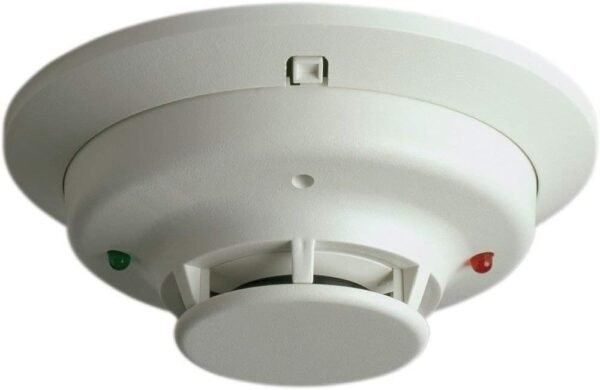
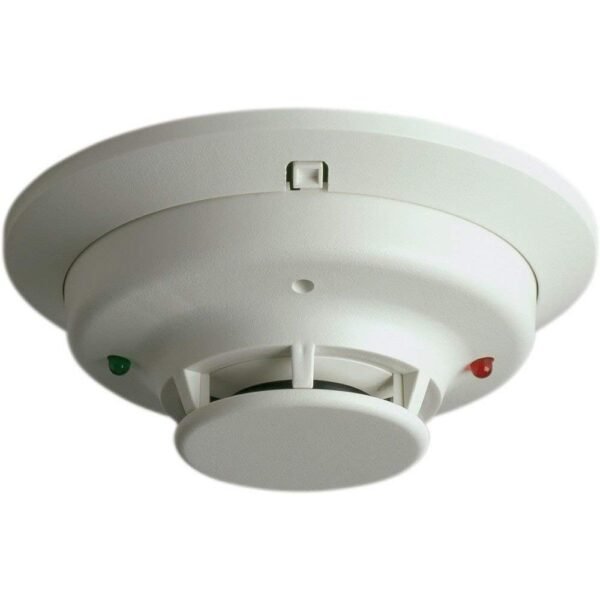
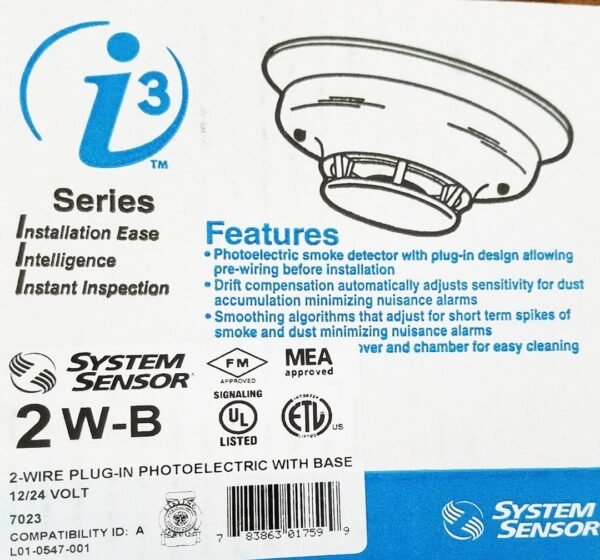
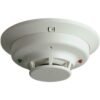
The System Sensor 2W-B i3 Series 2-wire, Photoelectric i3 Smoke Detector is a panel-connected device rather than a standalone household alarm. It has no onboard sounder logic of its own to speak of and no batteries, and it is specified to be wired into a fire alarm control panel. The photoelectric sensor technology is the reason it is specified for slow, smoldering fires, the fire type that develops the largest smoke particles and the one ionization sensing is slowest to catch.
The visual alert from a bright red LED is clear enough to identify which head is in alarm, which matters when a panel reports a zone rather than a device. The built-in remote maintenance signaling reports detector status back to a control panel or central monitoring station, which is what makes a large installation manageable without walking every head. The removable detector cover and chamber support the cleaning schedule that panel-connected detectors need, and dust in the chamber is the usual cause of drift in a commercial environment.
- Photoelectric detection suits slow smoldering fires
- Visual red LED identifies the head in alarm
- Remote maintenance signaling reports status to the panel
- Removable cover and chamber support scheduled cleaning
Drawbacks of the Smoke Detector to Keep in Mind
The limits follow from what this device is. There is no battery backup, because the head depends on a 12/24 VDC supply from the system it is wired to. Whether standby power exists at all is therefore a property of the fire alarm control panel and its power supply, not of the detector, which rules this out as a drop-in replacement for a residential alarm.
Listings for this model also describe it both as unable to interconnect and as designed for integration into a building fire alarm system, which reads as a contradiction until the terms are separated. There is no residential style peer-to-peer interconnect between heads. Any linking between devices happens at the panel, so what a set of these detectors can do together is decided by the panel they report to. Confirm panel compatibility before specifying.
The lack of a hush button is the third limit. A nuisance alarm needs a reset at the panel or a power cycle rather than a press at the head, which is normal for this class and inconvenient in a busy building. The specified operating temperature range of 32°F to 120°F also rules out unheated or high-temperature areas.
- No battery backup at the head
- No peer-to-peer interconnect between detectors
- No hush button, so resets happen at the panel
- Limited operating temperature range
Design and Build Quality Assessment
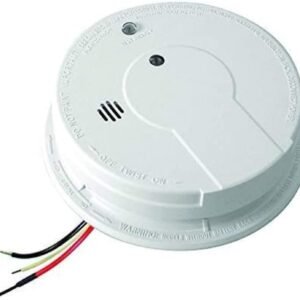
The build is straightforward and serviceable. At roughly 2 inches deep by 5.3 inches wide and high, the profile is compact for a commercial head and sits without drawing attention on a ceiling or wall. The listed weight of 0.39 pounds keeps mounting simple, and the base is what carries the load and the wiring terminals.
The plain housing suits commercial and industrial interiors, where matching a residential decor is not the point. The plastic is specified for ordinary indoor service, and the red LED visual alarm is bright enough to locate but not so harsh that it is unusable in an occupied space. Compared with the residential alarms in our smoke detector and fire alarm reviews, the design language here is functional rather than domestic.
Comprehensive Feature Overview
The detector runs from a 12/24 VDC supply, which is the standard arrangement for integration into building fire alarm systems. It carries drift compensation and smoothing algorithms that hold sensitivity within range as the chamber accumulates dust, and that reduce the nuisance activations dust and airborne particles otherwise cause.
There is no digital readout at the head. The remote maintenance signaling covers that gap by reporting status back to the system, which is what larger installations rely on. The unit does not list a locking pin or tamper-resistant provision, which is worth noting for public areas where heads are within reach. Systems needing device-level addressing rather than zone reporting move to an addressable head such as the Notifier FSP-951.
The photoelectric sensor type is specified for slow-burning fires. Having no battery simplifies the maintenance schedule, at the cost of depending entirely on the system supply. The listing states the device meets UL and CSFM standards without naming editions, so check the marking on the unit if a specific listing is required for your jurisdiction or your authority having jurisdiction.
Comparing to Popular Competitors
Against other 2-wire photoelectric heads, this detector competes on serviceability. The System Sensor unit leads on remote maintenance signaling and drift compensation, while competing heads sometimes offer options this one does not, including onboard power provisions and different reset arrangements.
For commercial and industrial work where panel integration is the requirement, the signaling features are the reason to specify it. For a house, the calculation is different, and a residential installation is better served by a hardwired residential alarm with battery backup that sounds on its own without a panel behind it.
Competing heads sometimes offer snap-in mounts or a hush provision, which is easier on the people maintaining the system. Those are absent here, and the photoelectric chamber with drift compensation is the trade in return.
Value for Money and Cost Efficiency
On price to quality, this is a budget-conscious head for commercial buildings and industrial environments that need photoelectric detection wired to a panel. The absence of battery backup and peer-to-peer interconnect makes it a poor fit for home use, and within its intended market those omissions are not deficiencies but the normal division of labour between head and panel.
The three-year manufacturer’s warranty is stated for the unit. For a specifier who needs a low-maintenance photoelectric head that drops into an existing wired system, the cost per point is the number that matters, and this model keeps it low. Monitoring inputs from other devices on the same system typically calls for a module such as the Notifier FMM-1.
Installation and User Experience
Installation follows standard practice for the class. The included base fits standard electrical boxes, and the two-wire connection lands on a fire alarm circuit. There is no battery compartment to service, and the flip side is that the head does nothing until the system supply is live. This work belongs to a qualified fire alarm installer and must follow local code and the requirements of the authority having jurisdiction.
The absence of a hush provision is felt during non-fire activations from dust or steam, particularly near kitchens or HVAC vents, since clearing one means going to the panel. The drift compensation algorithms reduce how often that happens over the life of the installation.
The red LED alert is effective for locating an activated head during a walk-through. The unit is designed for people who maintain systems, not for a homeowner fitting an alarm on a Saturday, and the closely related System Sensor 2WT-B covers the same role with a thermal element added.
Positive Features Summarized
- Photoelectric smoke detection suited to smoldering fires
- Visual red LED alert identifies the activated head
- Built-in remote maintenance signaling aids system monitoring
- Removable cover simplifies cleaning and upkeep
Negative Attributes Summarized
- No battery backup at the head, so standby power depends on the panel
- No peer-to-peer interconnect between detectors
- No hush button, so nuisance activations are cleared at the panel
- Operating temperature range rules out unheated or hot areas