Description
Design and Installation
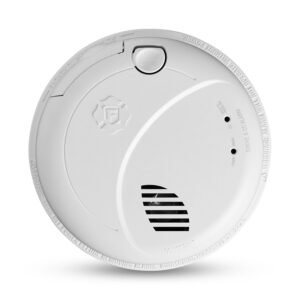
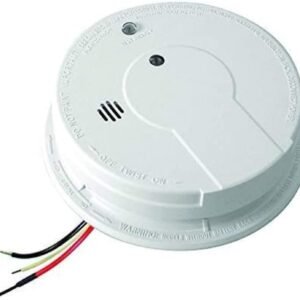
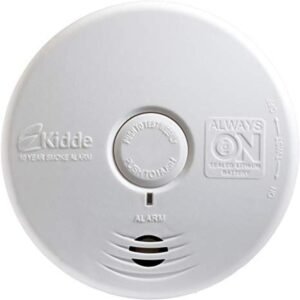
The Kidde Smoke Detector Alarm Battery Operated Model i9050, Pack of 2 is sold as a two unit set, and two numbers in the listing need untangling before anything else. The stated dimensions of 11.77 by 5.24 by 1.81 inches and a weight of 15.2 ounces are carton figures for the pair, not the size of a single alarm; the same listing describes the product as compact, which the carton plainly is not. Similarly, the listing calls for two 9V batteries while also describing them as a per unit requirement, which for a two pack normally means one cell in each alarm. Both points should be confirmed against the manufacturer specification sheet before ordering, particularly if replacement cells are being bought in bulk. The red and white housing is easy to spot, and installation is a bracket, screws and a cell, with no wiring involved.
Sensor Type and Alarm Output
Sensing is ionization, the type documented as responding faster to the small particles produced by fast flaming fires and more slowly to smoldering ones than photoelectric sensing. The audible alarm is loud by design, at the output level residential alarms are built to. The test button on the face runs the self test and is the only routine control on the unit.
The response profile is the whole argument for and against this alarm. A photoelectric unit such as the System Sensor 2W-B photoelectric detector reverses it, reacting sooner to a smoldering source. Fire safety guidance commonly recommends covering both sensing types across a dwelling rather than treating either as sufficient on its own.
Battery Life and Maintenance
These are battery operated alarms taking a replaceable 9V cell, which puts a recurring maintenance item on the calendar in exchange for no wiring and no electrician. A low battery chirp signals when the cell is near the end, and the chirp is deliberately hard to ignore. Across a two pack that is two cells to buy and two ladder trips per replacement cycle, which is the running cost trade against sealed 10 year units that never need a cell at all.
Benefits of Using This Smoke Detector
- Ionization sensing aimed at fast flaming fires
- Audible alarm at the standard residential output
- No wiring, so no electrician and no ceiling box requirement
- Low battery chirp flags a flat cell before the alarm goes quiet
- Two unit pack covers two locations from one purchase
The specification is narrow on purpose. Detection, a horn and a test button are what the unit provides, and the two pack is aimed at adding coverage to rooms that currently have none.
Areas for Improvement
- Replaceable cells mean a recurring purchase and a recurring ladder trip
- The alarm output is loud at close range with no volume setting
- No interconnect, no radio and no voice alerts, so a triggered unit sounds alone
- Ionization sensing is slower on smoldering fires than photoelectric
- Listing figures for size, weight and battery count are ambiguous
The absence of interconnect capability is the limit that matters most in a multi story house, where an alarm sounding in a basement may not be audible in an upstairs bedroom. That is the scenario hardwired interconnected alarms such as the Kidde i12040 hardwired alarm are built for, and whether interconnection is required in a given dwelling is set by local building code.
Price Worthiness and Value Considerations
On specification per dollar, a two pack of basic battery alarms is among the cheapest ways to add coverage in the smoke detector and fire alarm category. No wiring means no electrician, which is the largest single cost avoided. Against that, replaceable cells and a shorter practical service life than sealed units narrow the gap over a decade of ownership.
Product Competitors and Market Comparison
Against connected alarms with app notification and scheduled self test, this unit offers none of it at a small fraction of the price and with no network setup. Against other basic battery alarms it competes on price per unit and on using a standard 9V cell rather than anything proprietary. The closest sibling in the same range is the Kidde i9040 compact ionization alarm, which shares the sensing type in a single unit format.
Buyers with a hardwired circuit already in place have a different comparison to make, since a mains connected alarm with battery backup such as the BRK SMI100-AC hardwired alarm adds interconnect capability that battery only units cannot offer at any price.
Placement and Ongoing Maintenance
Because ionization sensing reacts to cooking smoke and steam more readily than photoelectric sensing, placement is the main lever for reducing nuisance alarms: keep the unit out of the direct path of kitchen and bathroom doorways while staying inside the coverage local code requires. The low battery chirp is the ongoing maintenance signal, and answering it promptly is what keeps a mounted alarm functional rather than disabled.
What these alarms do is signal detected particles crossing a threshold in the room where each one is mounted. They do not identify a source, do not communicate with each other and do not replace the alarm layout a local building code sets out for a dwelling.