





Description
Highlights of the Kidde Hardwired Smoke & Carbon Monoxide Detector
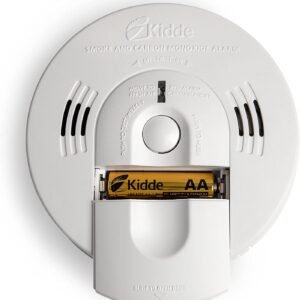
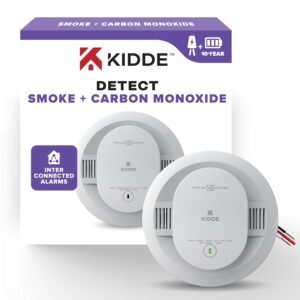
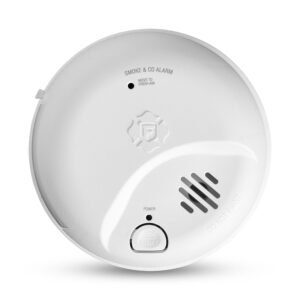
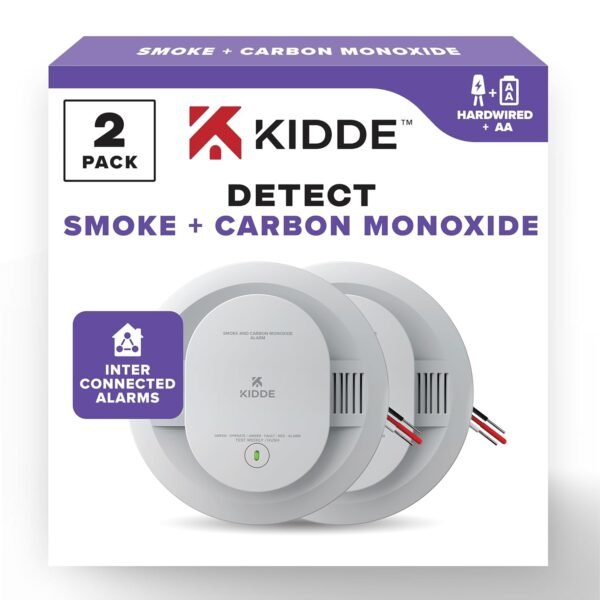
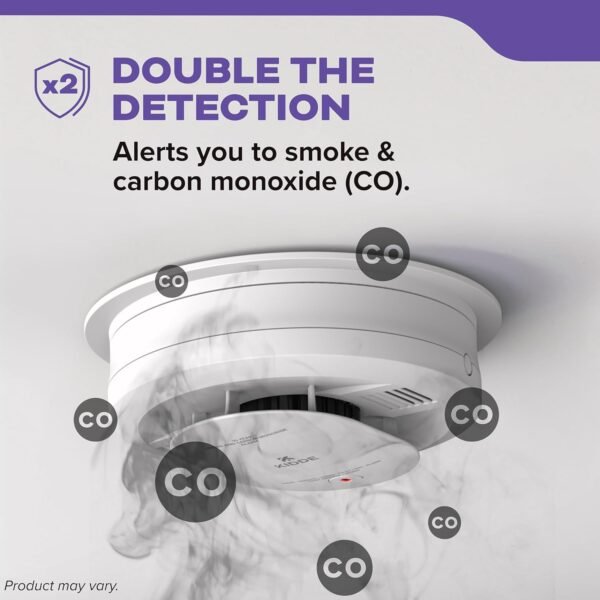
The Kidde Hardwired Smoke & Carbon Monoxide Detector, AA Battery Backup, Interconnectable, LED Warning Light Indicators, 2 Pack puts two sensing jobs in one housing. It offers dual detection for smoke and carbon monoxide, which halves the number of devices on a ceiling that would otherwise need one of each. The enhanced sensing technology is Kidde’s term for the logic that reduces nuisance alarms caused by cooking fumes, a recurring complaint against older combination units. The 5-inch circular housing suits kitchens, hallways and bedrooms alike, and the LED warning lights give a three colour status code, green for normal operation, amber for a fault, and red when smoke or CO is detected.
The device runs on hardwired 120V AC power with two AA alkaline cells for backup, so the alarm stays active through a mains outage. The twist-and-click mounting bracket handles the mechanical fitting, while the wiring itself should follow local electrical code and is a job for a qualified electrician in most homes. A self-test runs on the unit’s own electronics, and Kidde still specifies a manual button test every week.
Drawbacks Worth Noting
The design carries a few costs. The backup batteries need replacing every six months, or whenever the unit chirps a low battery warning, which is upkeep that sealed ten year models remove entirely. The interconnect feature is the reason a detection in the basement is heard in a bedroom, but mixing models or brands on one loop complicates the wiring and the compatibility list has to be checked first. The 85-decibel alarm is the standard output level and can still startle in a small flat or a hallway with hard surfaces. The 10-year end-of-life beep is a safety feature rather than a fault, and it is not silenced by replacing a battery. Households that want the cooking problem solved by placement rather than by sensing logic often look at Kidde’s kitchen rated P3010K combination alarm.
Value Assessment of the Smoke and CO Alarm
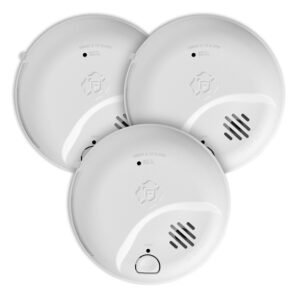
Measured against the features it carries, the price sits where it should. This is not a smoke detector alone but a combination smoke and carbon monoxide alarm, and the listing states it meets UL 217 9th Edition and UL 2034 4th Edition. The battery backup and interconnect are the two specs that separate it from a basic single-purpose alarm. Buyers replacing a whole floor of ageing detectors get more coverage per unit fitted, which is where the two pack pricing does its work.
Product Comparisons
Among combination detectors, this unit sits against competitors such as the Nest Protect and First Alert’s hardwired SC9120B combination alarm. Unlike the smart detectors, this Kidde has no Wi-Fi and no phone notifications, which rules it out for anyone who wants remote monitoring. Against battery-only combination alarms, the hardwired supply with battery backup is the more robust arrangement through an outage. The closest comparison in Kidde’s own catalogue is the 30CUA10, which swaps the AA cells for a sealed ten year backup and removes the six month battery routine.
Good Aspects of the Kidde Smoke and Carbon Monoxide Detector
- Two hazards covered by one device reduces the number of units on the ceiling.
- LED status indicators make the alarm’s condition readable at a glance.
- Backup cells keep the alarm active through a mains failure.
- Self-test and bracket mounting simplify maintenance and fitting.
Areas for Improvement
- The battery replacement every six months is frequent next to sealed ten year designs.
- The interconnection process gets fiddly with mixed models and needs the compatibility list.
- Alarm sound intensity may be excessive in close quarters.
- The lack of smart features means no remote monitoring.
Safety Features and Usability
Carbon monoxide is read by an electrochemical sensor, the standard sensing method for CO in residential alarms, while the photoelectric sensor for smoke is the type least troubled by burnt toast and steam. The specified operating range of 10% to 95% relative humidity and a temperature rating up to 100°F cover conditioned living space rather than a garage or a loft. The end-of-life notification is the feature that stops a decade-old alarm quietly ageing past its rated life, and it is safety relevant rather than an inconvenience. Households that also want a CO reading in a room with no ceiling wiring often add a standalone carbon monoxide alarm such as the Kidde C3010.
Installation Notes and Interconnect Behaviour
The mounting hardware and instructions are included, and the physical fitting is quick once the ceiling wiring is in place. The hush button silences a nuisance alarm without taking the detector out of service, which is the difference between a temporary silence and a disabled alarm. The three colour LED code is easier to read than a chirp pattern, particularly for children and older occupants who will not be counting beeps.
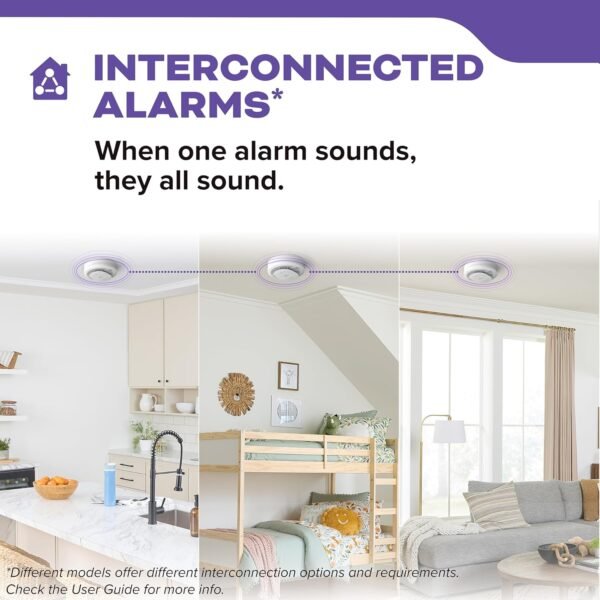
Interconnect is the feature that changes behaviour most in a real building, since a test at one unit sounds every alarm on the loop. How many alarms a home needs, and which rooms they belong in, is a code question rather than a product question, so follow local requirements and the manufacturer’s instructions. The rest of our combination smoke and carbon monoxide detector reviews cover the same trade-offs between sensing type, power source and backup interval.