





Description
Highlights of the Kidde Hardwired Smoke & Carbon Monoxide Detector
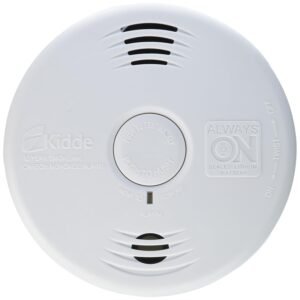
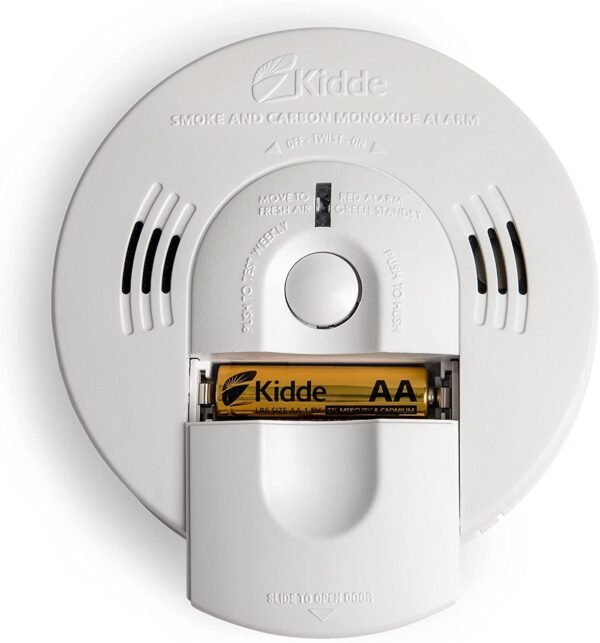
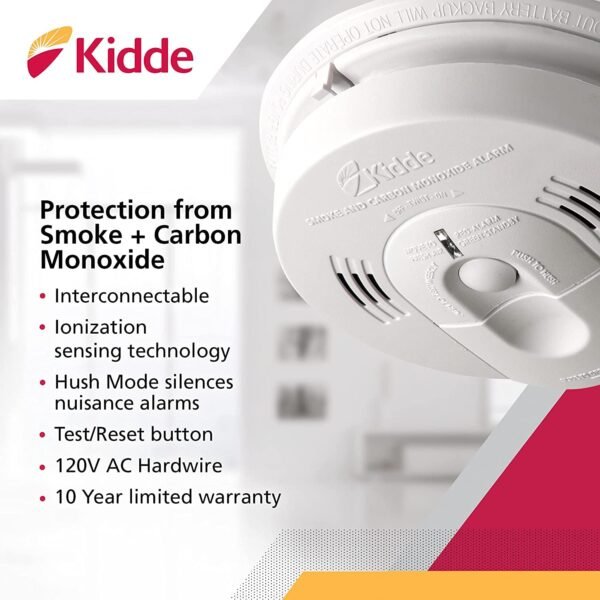
The Kidde Hardwired Smoke & Carbon Monoxide Detector, Battery Backup, Interconnectable, LED Warning Light Indicators 1 Pack puts two detection jobs in one housing. It combines smoke detection and carbon monoxide monitoring in a single device, which is the practical reason buyers choose a combination alarm over two separate units. Kidde specifies ionization sensor technology on the smoke side, a sensing method that reacts quickly to the small particles thrown off by fast flaming fires. The audible alarm is rated at 85 decibels. Buyers who want the same feature set without running cable can look at the battery powered KN-COSM-BA version of this alarm instead.
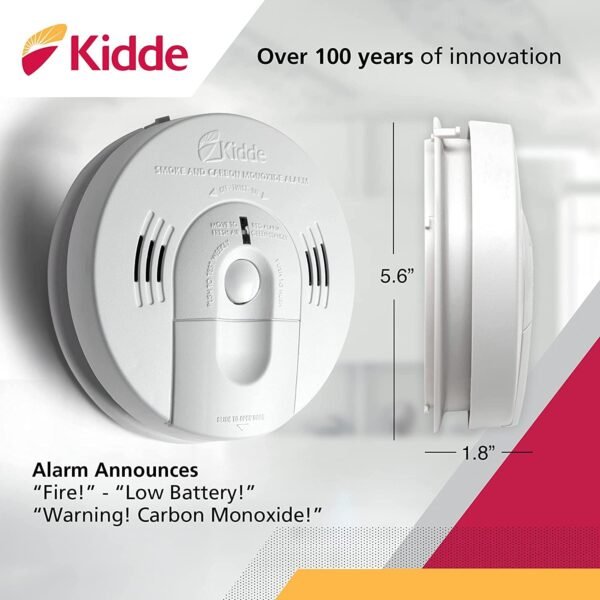
One notable feature is the voice alert system, which announces “Fire! Fire!”, “Warning! Carbon Monoxide!”, or “Low Battery!” rather than repeating a single tone. Spoken warnings name the hazard instead of leaving people to decode a beep pattern, which matters in households with children or older adults. That is not universal at this price, as the rest of our combination smoke and carbon monoxide detector reviews show, since many units in the same band signal every condition with the same chirp.
- Voice warnings for fire, CO, and low battery
- Hardwired with 2-AA battery backup for power outages
- Interconnectable with up to 24 Kidde devices
- Tamper-resistant design to prevent accidental removal
Limitations of the Kidde Combination Alarm
A few drawbacks are worth mentioning. The installation process requires hardwiring, which rules the unit out for anyone without existing alarm wiring or the electrical experience to add it. That work should follow local electrical code, and in many homes it means a qualified electrician. While the device is interconnectable with up to 24 units, wiring complexity grows quickly in larger houses, so an interconnected system takes planning rather than an afternoon.
The ionization sensor responds well to fast flaming fires but is the sensor type most associated with nuisance alarms near cooking areas. The Smart Hush feature silences those alarms for about 9 minutes, though repeated trips remain an annoyance. The published operating range is 10% to 95% humidity with an upper temperature rating of 37.8 degrees Celsius, so siting matters. Households that want a sealed unit with no wiring at all often compare it against Kidde’s sealed ten year combination alarm.
- Requires professional installation for hardwiring
- Occasional false alarms near kitchens or bathrooms
- Sensitive to environmental conditions affecting performance
Voice Alerts and Smart Hush: Convenience in Action
The voice alert system is the feature that separates this model from a plain horn. It states the hazard type, and the Smart Hush feature allows quick silencing of a nuisance alarm without disabling the unit. That matters during cooking, when an unexplained alarm is the thing most likely to make someone pull a battery. The green LED flashing every 2 seconds during Hush mode is a clear visual reminder that the alarm is temporarily muted but still powered.
The peak level memory function is another practical addition. If the device records carbon monoxide levels of 100 ppm or higher, it announces “Carbon Monoxide Previously Detected” when tested, which gives an investigator or service technician something to work from rather than a guess. Weekly testing is still the manufacturer’s instruction, and nothing in this feature set replaces it.
Battery Backup and Power Reliability
A power cut is exactly when a hardwired detector would otherwise go quiet. Kidde specifies that the two AA backup cells keep the alarm active through a mains outage. The battery safeguard design prevents the unit being mounted without batteries fitted, which closes off the most common way a backup ends up missing.
The device also provides a low battery warning system using chirps and flashes, which is deliberately hard to ignore. After 10 years of operation, the unit chirps every 30 seconds to signal end of life, and that replacement interval is the point of the feature: the alarm tells you it is finished rather than failing quietly on the ceiling.
Interconnectivity: Safety Spread Across the Home
Interconnecting up to 24 Kidde devices, with a maximum of 18 initiating devices, builds a detection network that suits multi level or larger floor plans. Interconnected alarms are what let a detector in one room sound the units in bedrooms and common areas, so the hazard is announced where people actually are. Larger wired systems often pull in accessories as well, and the SM120X relay module is the usual route for tying strobes or external devices into the same loop.
How many alarms a home needs, and where each one goes, is a local building and fire code question rather than something a product listing settles. Wiring this many devices takes planning and electrical knowledge, which is the barrier for most homeowners, so confirm the requirement for your address before you buy a quantity.
Product Comparisons: How It Stands Among Peers
Set against other combination smoke and CO detectors such as First Alert’s hardwired SC9120B or the Nest Protect, this model competes on the basics. The ionization sensor technology cuts both ways: it picks up fast flaming fires earlier than photoelectric sensing, and it is the sensor more prone to cooking related false alarms. Nest Protect carries a split sensor arrangement covering both methods plus smartphone integration, neither of which this Kidde offers.
On the other side, the hardwired design with battery backup gives power continuity that battery only models cannot match once a cell drains. The voice alert system is more specific than the generic tones used by many competitors. For buyers whose priority is a wired interconnect across a whole house, this unit is built for that job; anyone who wants app notifications or smart home control should look at a different product line.
Worth Every Penny: Value for Money
Weighed against the feature list, the combination alarm sits in reasonable territory on price. The 10-year limited warranty covers the expected service life of the unit, and folding smoke and carbon monoxide detection into one device reduces the number of separate alarms a house needs to carry.
Installation may still require a professional, but the service life, battery backup, voice alerts, and interconnectivity are the features buyers in this category tend to prioritise. For anyone replacing older standalone smoke alarms or CO alarms, this device covers both hazards on one wiring run without a large jump in cost.
Drawbacks to Keep in Mind
Every product has downsides, and this detector is no exception. The hardwired installation is a dealbreaker for renters and for anyone unwilling to work on household wiring. The ionization sensor’s sensitivity also brings occasional false alarms near kitchens and bathrooms, which is the complaint owner ratings mention most often in this category.
The unit uses a standard size and neutral white finish, so it reads as a conventional ceiling alarm rather than a discreet one. The absence of wireless or smart home integration will matter to buyers who want app notifications or remote monitoring.
- Complex installation for non-professionals
- False alarms triggered by cooking smoke
- No smart home or wireless connectivity
- Slightly bulky compared to some sleek models
The Kidde Hardwired Smoke & Carbon Monoxide Detector covers two hazards in one wired device, with clear hazard identification and a wide interconnect limit. The setup effort and the ionization sensor’s nuisance alarms are the real trade-offs, and placement and quantity remain code questions, but on published specification it is a strong entry in its category.