




Description
Positive Features That Stand Out
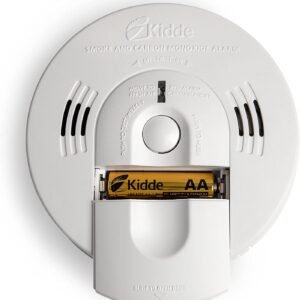
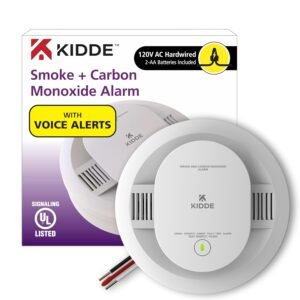
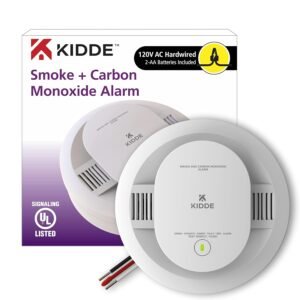
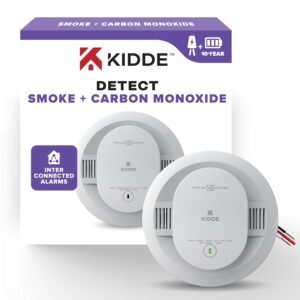
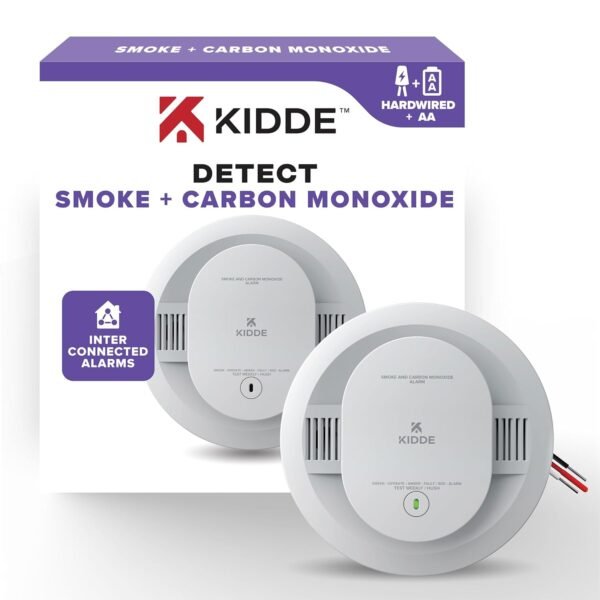
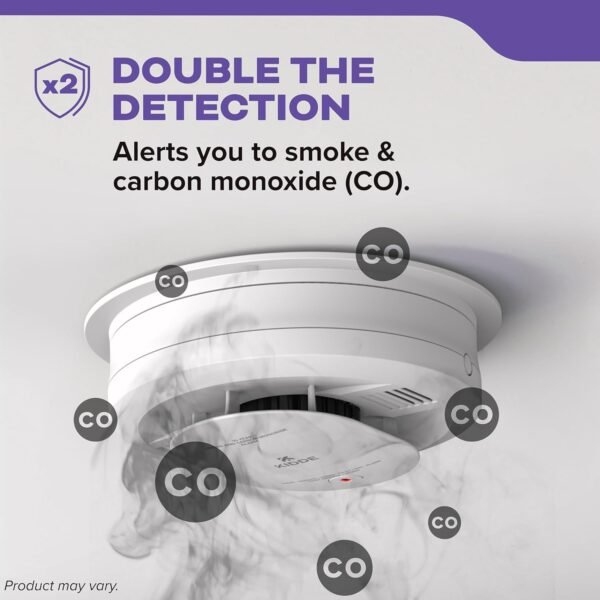
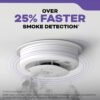
The Kidde Smoke Detector, AA Battery Powered, LED Warning Light Indicators, 1 Pack, White, 30CUAR is a combination smoke and carbon monoxide detector rather than a smoke alarm alone, so 2-in-1 detection covers both hazards from a single mounting point. The pairing of photoelectric and electrochemical sensors is the standard arrangement for combination units, with the photoelectric chamber reading smoke particles and the electrochemical cell reading carbon monoxide.
Listings for this model contradict themselves on power. The product name says AA Battery Powered, while the specification describes a hardwired 120V AC alarm with two AA alkaline cells as backup. Those are different products to install and different products to maintain, so confirm the power source on the listing you are buying from before ordering. On the hardwired reading, the AA cells carry the alarm through a mains outage. The LED warning light indicators use a three colour code, green for normal, amber for a fault, and red for an active alarm, which gives a status reading for anyone who cannot rely on hearing the alarm first.
- Dual detection for smoke and carbon monoxide
- Backup cells keep the alarm active through a mains failure
- LED indicators for clear status reporting
Shortcomings to Keep in Mind
The device carries a handful of limits. The installation, even with the twist-and-click mounting bracket, is a ceiling job that ties into house wiring on the hardwired version. That work should follow local electrical code, and most households will want a qualified electrician rather than a weekend attempt.
The backup batteries ship with the unit but need replacing every six months, or whenever the alarm signals a low battery, which is upkeep that sealed ten year models do away with. The specified humidity and temperature range also has an edge to it, at 10% to 95% relative humidity and up to 100°F, so unconditioned spaces sit outside the rating. Buyers who want a genuinely battery-only combination alarm are better served by a sealed battery combination unit such as the X-Sense SC07.
- Wiring work calls for electrical knowledge
- Backup batteries need replacing twice a year
- Limited operating temperature and humidity range
Design and Usability Insights
The 5-inch circular housing is the common form factor for this class and sits neatly in hallways, kitchens and bedrooms. The white finish disappears against most ceilings. A single button handles both test and hush, so silencing a nuisance alarm is one press rather than a menu, which matters when a pan has smoked and the alarm is eight feet up.
The three colour LED code is worth learning before it matters, since amber signals a fault rather than a hazard and is easy to misread as a low battery. The self-test checks the unit’s own electronics on a cycle, and Kidde still specifies a manual button test every week. That weekly test is the part owners skip and the part that catches a dead alarm.
Interconnect Capability and Safety Impact
The interconnect capability is the feature with the largest effect on how a house behaves during an alarm. With several units wired to the same loop, a detection in one location sounds every connected alarm, which is what puts a warning in a bedroom when the smoke is in a basement.
Interconnect options vary by model and generation, so compatibility has to be checked before mixing units on one loop. Placement and quantity are set by local code and the manufacturer’s instructions rather than by a product listing, and adding an interconnected alarm does not replace an inspection or the code requirements for your building.
Alternative Offerings in the Market
Set against the Nest Protect or First Alert’s hardwired SMICO100-AC, the differences are clear enough. The Nest Protect adds smart home integration and voice alerts that this Kidde does not offer. The Kidde answers with a lower cost hardwired design with battery backup, which suits buyers who want dependable detection and no app to manage.
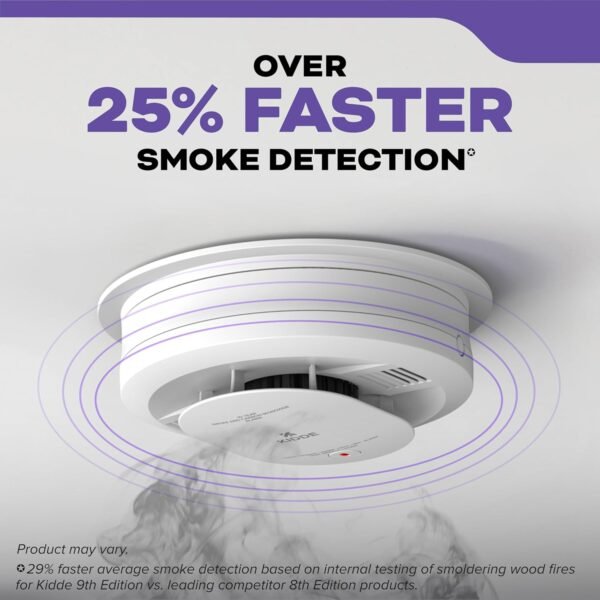
First Alert models often use comparable sensing technology with different interconnect arrangements and alarm outputs. Kidde’s enhanced sensing technology is aimed specifically at nuisance alarms from cooking, which is the complaint that drives most detectors off the ceiling and into a drawer.
Price Worthiness and Value Proposition
On value for money, this combination detector balances features, coverage and cost sensibly. It is not the cheapest alarm available, and the dual sensors, mains supply with battery backup, and interconnect are what the extra buys.
For a buyer who wants smoke and carbon monoxide covered by one device with clear visual indicators, this model earns a place on the shortlist. The listing refers to current UL safety standards without naming an edition, so check the marking on the unit itself if a specific edition matters for your jurisdiction. Its 10-year limited warranty runs alongside the rated ten year life of the alarm. Homes that need a carbon monoxide reading in a room with no ceiling wiring often add a dedicated carbon monoxide alarm like the KN-COB-IC instead of a second combination unit.
Functional Features and Everyday Experience
Day to day, the test and hush button is the control that gets used, mostly when cooking smoke reaches the sensor. The alarm output is listed at 85 decibels, the standard level for residential smoke alarms in this class.
The self-test means the device checks its own components rather than failing quietly, though the manual weekly test remains the instruction from the manufacturer. The alarm also signals end of life with a distinct beep after its 10-year lifespan, which is the prompt to replace the unit rather than reset it. Buyers who would rather not schedule battery changes at all can compare the sealed battery 30CUD10, which uses the same combination sensing with a ten year cell.
Drawbacks Worth Considering
- Requires a manual test every week to confirm operation
- Installation is a wiring job on the hardwired version
- Battery replacement every six months adds upkeep
On its published specifications, this smoke and carbon monoxide detector covers two hazards from one mounting point, with the mains supply and battery backup, dual sensors, and interconnect doing the work. The trade is upkeep and an installation that has to be done properly. Anyone comparing it against the rest of our combination smoke and carbon monoxide detector reviews should settle the power source question first, since the listing itself is not consistent on that point.