Description
Benefits of the Kidde Hardwired Carbon Monoxide Detector
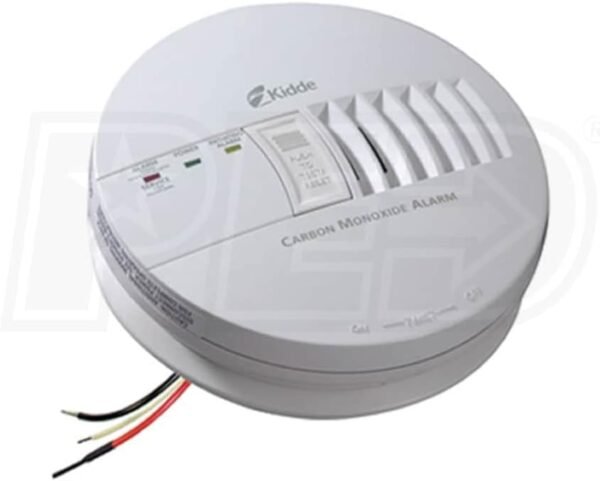
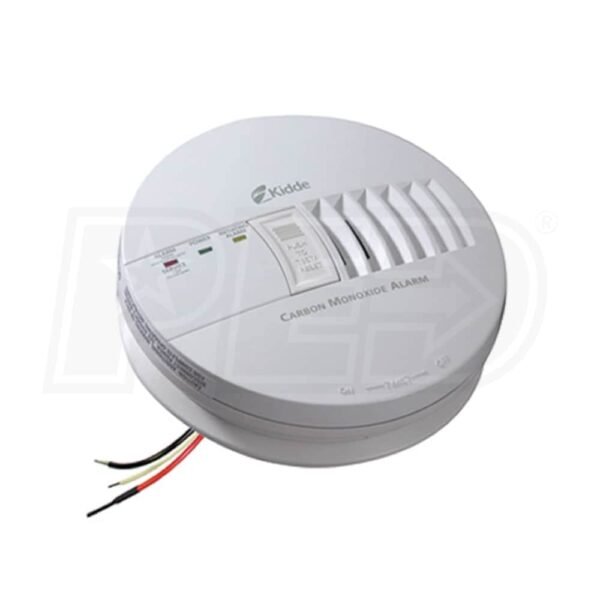
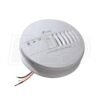
The Kidde Hardwired Carbon Monoxide Detector with 9-Volt Battery Backup, model KN-COB-IC is built for a fixed installation rather than a shelf. Sensing is electrochemical, the sensor class used across mainstream residential CO alarms and the type specified here. Power comes from a 120V connection with a 9-Volt alkaline battery backup, so the unit is specified to keep operating through a mains outage, which matters because the appliances most often implicated in CO events are the ones running during a power interruption. Published alarm output is 85 decibels.
The interconnect terminal is the other structural feature. Up to 24 Kidde devices, including smoke alarms, heat detectors and other CO alarms, can share one loop, and a triggered unit sounds every alarm on it. That is how a multi story property gets an alarm in a basement heard in an upstairs bedroom, and whether interconnection is required in a given dwelling is set by local building code rather than preference. A heat detector such as the Kidde HD135F fixed temperature heat detector can sit on the same loop where particle sensing is unsuitable.
- Electrochemical sensor, the standard type for residential CO alarms
- Mains power with battery backup for continued operation during an outage
- Interconnect capability across up to 24 Kidde devices
- 85 decibel output with LED status indication
Limitations to Keep in Mind
The install is the first constraint. This is a hardwired device, and while the adjustable mounting bracket helps with alignment, the connection still has to be made correctly at the box and in accordance with local electrical code. Where that is not straightforward, a licensed electrician is the right answer and the labor cost belongs in the purchase decision.
The second constraint is service life. The published life of 6 to 7 years means this is not a fit and forget device, and the end of life chirp is the mechanism that announces the term is up. Worth noting alongside it: the 5 year limited warranty ends before the published service life does, so the last year or two of operation sits outside warranty cover. Compared with sealed 10 year units such as the Kidde C3010 sealed battery CO alarm, the replacement interval here is noticeably shorter.
- Requires wiring competence or a licensed electrician
- End of life chirp signals the unit needs replacing, not recharging
- Service life of 6 to 7 years, with warranty cover ending sooner
Installation and Design Features
The housing measures 5.75 inches in diameter by 1.8 inches deep, a conventional ceiling or wall footprint that sits close to the surface. The tamper resistant locking feature makes casual removal of the unit or its battery harder, which is a deliberate choice in households where a chirping alarm might otherwise be taken down.
The LED scheme carries more information than most alarms in the carbon monoxide detector category. The green LED indicates mains power and flashes every 7 seconds when the unit is running on battery backup alone, which is how an outage state is distinguished at a glance. The red LED flashes alongside the alarm tone during a CO event and blinks once every 30 seconds to flag a maintenance condition. The amber LED identifies the unit that sensed CO first, which is the practical way to locate a source when an interconnected loop is sounding across several rooms.
Alarm Thresholds and Backup Behavior
The published alarm thresholds are the most informative numbers on the sheet: 70 ppm sustained over 1 to 4 hours, 150 ppm over 10 to 50 minutes, or 400 ppm over 4 to 15 minutes. Those are time weighted figures, and reading them explains a behavior that is often mistaken for a fault. A CO alarm is designed not to sound on brief low level exposure, because the standard it is listed against ties concentration to duration. A sensor that does not react at once to a small transient reading is doing what the specification calls for.
On backup behavior, the 9-Volt cell takes over when mains power drops and the green LED shifts to a 7 second flash to show it. The backup cell is replaceable, so it is a recurring maintenance item across the life of the unit rather than a sealed component. What the device signals is a CO concentration crossing those published thresholds in the space where it is mounted. It does not identify the appliance responsible, does not summon anyone and does not replace the alarm coverage a local building code sets out.
Comparative Analysis with Other Carbon Monoxide Detectors
Against battery only CO alarms, this model adds mains power, interconnect capability and the source indicating amber LED, at the cost of an install that needs wiring. A plain battery unit such as the First Alert CO400 battery powered alarm goes up in minutes and stays standalone.
Against connected alarms, this one has no radio and no app, so there is no remote status and nothing to configure. Connected units add remote notification and depend on a network staying up to deliver it. For a property where the priority is a wired loop that keeps working during an outage, the trade here reads sensibly.
Value Assessment
On published specification per dollar, this alarm covers the features that matter in a fixed installation: mains power with backup, an interconnect terminal, tamper resistance and a clear status indication scheme. The 5 year limited warranty is standard for the class even though it stops short of the service life.
The install cost is the variable that decides the total. Where a suitable circuit already exists and the wiring is straightforward, the unit is good value. Where a circuit has to be run, the labor will exceed the price of the alarm, and a sealed battery unit becomes a more sensible comparison. Where both smoke and CO coverage are needed at one position, a combination unit such as the Kidde KN-COSM-IBA hardwired combination alarm covers both hazards from one head on the same loop.
Drawbacks to Consider
- Installation may require a licensed electrician and must follow local code
- Service life under a decade means planned replacement
- No remote notification or smart home integration of any kind
- Backup cell is replaceable, so it remains a maintenance item
Alternative Offerings in the Market
Wireless CO alarms with app notification cover the case where someone wants a phone alert while away from the property, and they depend on a working network and on batteries that need changing. Sealed 10 year units remove battery maintenance entirely but cannot join a wired loop.
This hardwired model suits a property where mains power and interconnection across several rooms are the priorities and where the wiring is already in place. The specification is conventional and complete for its class, and the alarm layout it belongs to is a matter for local code and a qualified installer rather than for a product comparison.