




Description
Highlights of the Kidde Hardwired Smoke & Carbon Monoxide Detector
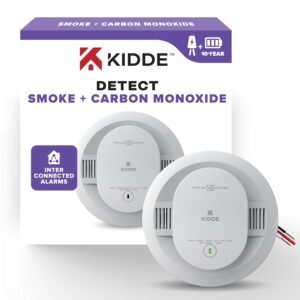
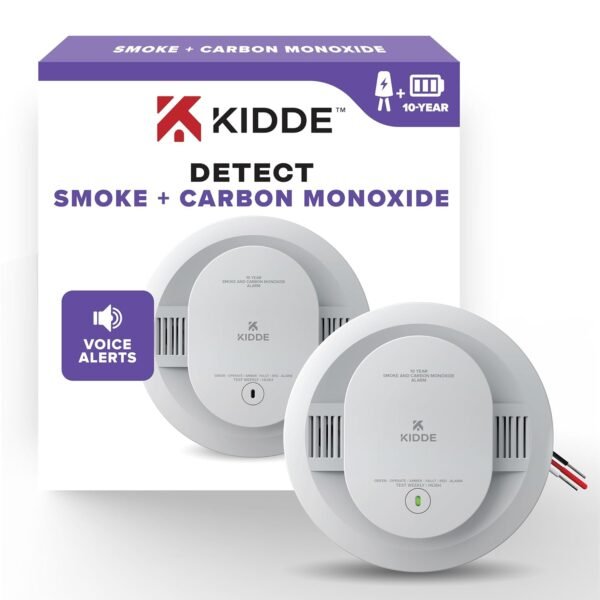
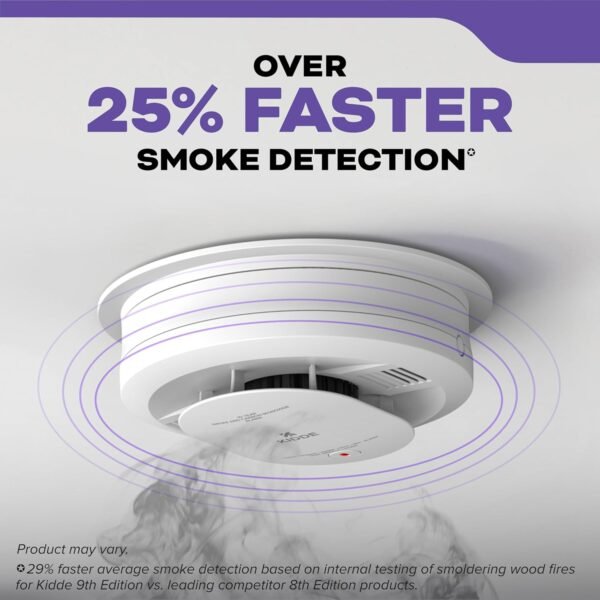
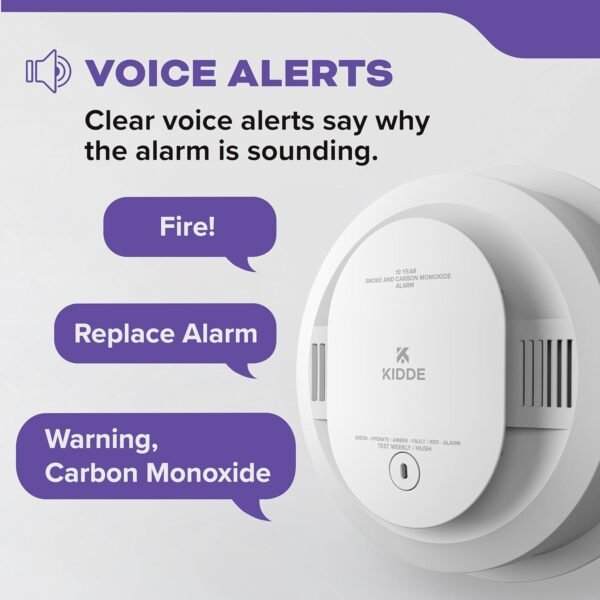
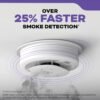
The Kidde Hardwired Smoke & Carbon Monoxide Detector, 10-Year Battery Backup, Voice Alerts, Interconnectable LED Warning Light Indicators 1 Pack is a dual-function alarm rather than a smoke alarm with an extra feature. This 2-in-1 detection system puts smoke sensing and carbon monoxide sensing in one ceiling fixture, which halves the number of devices to mount, wire and maintain. One inconsistency in the listing data is worth naming: the product page slug identifies this as a 30CUA10-V smoke detector, while the product name, the category and the description all describe a combination smoke and carbon monoxide unit. Confirm the model marking on the box before ordering, since Kidde sells closely related hardwired alarms in both smoke-only and combination form. Kidde lists enhanced sensing technology aimed at cutting kitchen-triggered nuisance alarms, and voice alerts that announce either “Fire!” or “Warning Carbon Monoxide!” rather than leaving a tone pattern to be interpreted. The interconnect capability is the other structural feature: on a wired loop, one unit detecting a hazard sounds the rest.
- Dual smoke and CO detection in one device
- Enhanced sensing technology aimed at reducing nuisance alarms
- Spoken alerts that name the hazard instead of signalling it by tone
Areas for Improvement
Several limitations come with the specification. This is a hardwired unit running on 120V AC, so installation is electrical work: it should follow local electrical code, and where there is no existing circuit or the wiring is unfamiliar, a qualified electrician is the right call. For renters, that alone rules the model out. The 5-inch diameter housing is also on the larger side and sits visibly on a ceiling next to slimmer alarms. The 10-year lithium battery backup removes the routine battery change, but it does not remove maintenance: Kidde still specifies a weekly manual test of every unit, which is the check that actually confirms the alarm sounds.
- Installation is electrical work and may require an electrician
- Larger housing is more visible than slim-profile alarms
- Weekly manual testing is still required despite the self-test function
Voice Alerts and LED Indicators
The voice alerts are the feature that most changes how the alarm behaves in use. Spoken warnings name the hazard rather than relying on a single tone pattern, which matters in households with children or older adults, and it matters more still where smoke and carbon monoxide call for different responses. The LED indicator system works alongside it: green for normal operation, amber for a fault, and a flashing red light with the 85-decibel siren during an alarm. Between the two, the unit reports its state without anyone needing to remember chirp codes, though the manufacturer’s instructions remain the authority on what each signal means.
Battery Backup and Longevity
The 10-year battery backup is one of the more consequential specifications here. A sealed lithium cell keeps the alarm operating through a mains outage without the AA or 9V replacement cycle that hardwired alarms usually carry, and Kidde’s warranty runs for the same decade, matching the expected service life of the unit. It is worth reading that figure precisely: the ten years describe the backup cell and the device lifespan, not a performance guarantee, so the weekly test and the end-of-life signal still govern when a unit needs replacing. Buyers comparing this against the closely related Kidde 30CUA10 combination alarm will find the same power arrangement described in slightly different terms across listings.
Safety Standards and Reliability
Kidde lists compliance with UL 217 9th Edition, UL 2034 4th Edition, and FCC standards, the current editions covering smoke alarms and carbon monoxide alarms respectively. The photoelectric sensor handles smoke and is the type that responds earlier to smouldering fires and is less prone to cooking nuisance alarms, while the electrochemical sensor covers carbon monoxide. The self-testing alarm function monitors internal components continuously, which supplements rather than replaces the weekly button test Kidde specifies. Which rooms need an alarm, and how many, is set by local building and fire code together with the installation instructions.
Competing Products
Against other combination alarms, this model’s distinguishing pair is a hardwired supply with a 10-year sealed backup, a combination several competitors do not offer together. Nest Protect adds Wi-Fi and phone notification at a considerably higher price and with a network setup step. First Alert’s hardwired equivalents, including the First Alert SC9120B combination alarm, cover similar ground with different backup arrangements, and some rely on replaceable cells rather than a sealed one.
The Kidde unit’s argument is long service life rather than connectivity, and it offers no smart-home integration, which will decide the matter for some buyers. Those who want wireless interconnect between alarms without running cable typically end up at the wireless-interconnect Kidde P4010DCSCO-W instead. For straightforward, wired dual detection, this model covers the requirement.
Value Assessment
On features against price, the price-to-quality ratio holds up. The combination of smoke and carbon monoxide detection, the 10-year backup, and the voice alerts put it above basic hardwired alarms without moving into connected-device pricing. Competitors offer slimmer housings or app integration; this one puts the money into detection, backup power and clear signalling. Buyers comparing options across the whole class can work through the rest of our combination smoke and CO detector reviews before settling on a model.
Household Fit and Installation Hardware
Spoken warnings matter most day to day, because they name the hazard without anyone needing to interpret a beep pattern first. Interconnection extends that across the building: one unit detecting a hazard sounds the linked alarms as well, which is the point of interconnect in homes with several bedrooms or more than one floor. Another Kidde hardwired option in the same family, the Kidde 900-CUAR-V combination alarm, appears in many of the same comparisons.
Mounting hardware and a twist-and-click bracket are supplied, so the physical fixing is straightforward once the wiring is in place and inspected as local code requires. A sealed backup cell means no battery swaps across the life of the unit, which reduces the maintenance load to the weekly test and attention to the end-of-life signal.
Positives
- Reliable dual detection for smoke and carbon monoxide in one device
- Spoken alerts name the hazard rather than signalling it by tone
- Sealed 10-year battery backup covers mains outages without cell changes
- Enhanced sensing aimed at reducing cooking nuisance alarms
Limitations
- Hardwired installation is electrical work
- Larger housing than slim-profile alternatives
- Requires weekly manual testing despite self-check functions