Description
Highlights of the First Alert 10 Year Back Up Hard-Wired Smoke and Carbon Monoxide Detector
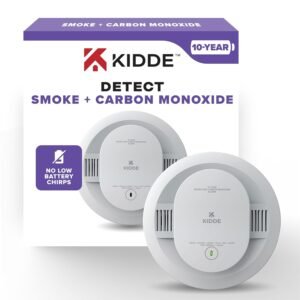
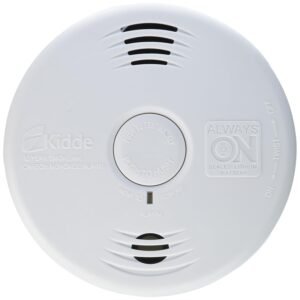
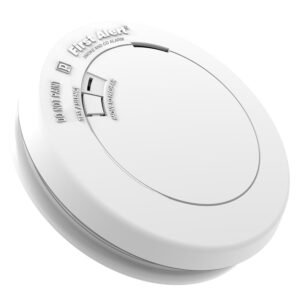
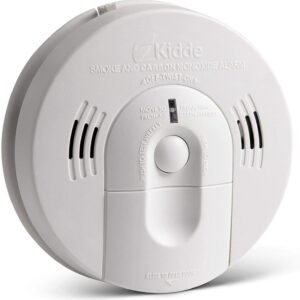
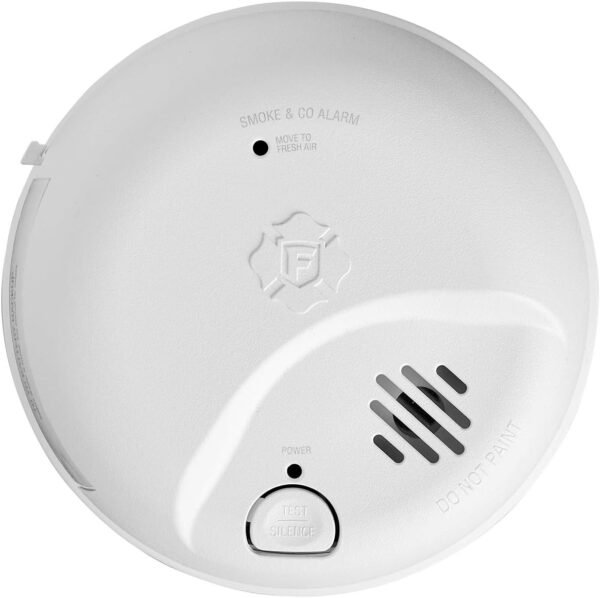
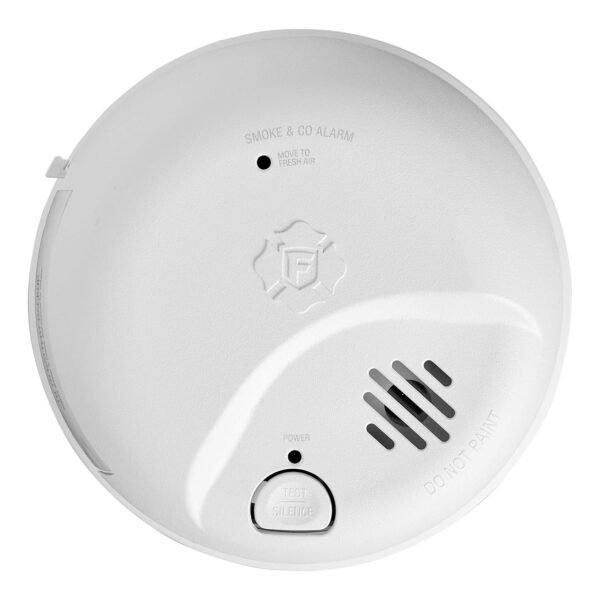
The First Alert 10 Year Back Up Hard-Wired w/Battery Back-Up Ionization Smoke and Carbon Monoxide Detect pairs ionization smoke sensing with carbon monoxide monitoring in one hardwired unit, which is the format most new build wiring is designed around. First Alert lists Precision Detection advanced sensing technology as its answer to cooking triggered nuisance alarms, the single most common reason a working alarm gets pulled off the ceiling. The 10-year battery backup is the headline claim, keeping the alarm live when the mains supply drops during a storm. The quick connect plug is aimed at replacements, letting a compatible alarm come off its existing harness without the circuit being rewired, the same approach used on the First Alert SMICO100 combination alarm.
- Early warning interconnect feature sounds every compatible alarm on the loop together
- Visual alarm indicator identifies which unit triggered the alarm
- Stated 10-year battery backup life
- The device is hardwired with battery backup, so it keeps working through an outage
Drawbacks to Consider
Several points count against it. The ionization sensor reacts well to fast flaming fires and more slowly to smoldering ones than a photoelectric sensor does, which is a real difference in behavior rather than a marketing distinction. The alarm tone is deliberately shrill and carries further than most people expect indoors. The listing also contradicts itself on power: it is sold as a 10 year battery backup unit, yet the same copy says backup batteries are not included and must be bought separately. Those two cannot both be true, since a sealed 10 year cell is not a user supplied battery. Confirm which version you are ordering, because it decides whether there is a battery to change at all. The all white housing is plain, in line with the category.
- Ionization sensor less sensitive to smoldering fires
- Alarm sound can be too piercing for some users
- Listing is inconsistent on whether the backup cell is sealed or user supplied
- Basic design lacks visual appeal
Installation and Setup
The quick connect plug is the part that shortens a replacement job, snapping into an existing hardwired network rather than requiring the wiring to be redone. That still leaves 120V work at the ceiling, which has to follow local electrical code and is a job for a qualified electrician wherever the existing circuit is old, unlabeled or being extended. The alarm indicator light is bright enough to read during testing or when an alarm sounds unexpectedly. The interconnect capability ties the unit into the rest of the alarms on the loop so a single detection raises all of them, which is the whole point of a wired system in a multi level house.
Performance and Sensor Technology
The ionization sensor is the faster of the two common sensing types on fast burning materials, and the slower on smoldering fires, which is why some households mix sensor types across a floor rather than standardizing on one. The carbon monoxide sensor works on an entirely separate principle and alarms on CO concentration over time. The audible alarm is clear and hard to mistake for anything else. What the specification does not do is remove the placement question: how many alarms a home needs and where each one belongs are matters for local code and First Alert’s instructions, not for convenience. The nearest cross brand comparison in a hardwired combination format is the Kidde 30CUAR combination alarm.
Value Assessment
On price to quality, the figure that matters is the stated 10-year service life, since combination alarms are replaced rather than repaired at end of life and the running cost is dominated by how often that happens. Cheaper units frequently skip the hardwired plus battery backup combination entirely, which is the feature that keeps an alarm sounding during an outage. Anyone comparing an older hardwired combination alarm should look at the First Alert PC1210, which sits in the same family at a different specification.
Product Comparisons
Among combination smoke and CO alarms, this model competes against Nest Protect and Kidde’s hardwired range. Against Nest Protect it gives up smart home integration and app notifications, and gains a simpler failure profile with no Wi-Fi dependency. Kidde’s combination alarms cover similar ground, with differences in backup battery life and sensing type rather than in overall approach. Where a household wants smoke detection alone in some rooms and combination units elsewhere, the First Alert SMI105-AC smoke alarm is the smoke only sibling on the same wiring.
Everyday Use in the Home
Owner ratings in this category tend to focus on two things: how often an alarm nuisance trips, and how easy it is to identify which unit started an interconnected group sounding. The visual alarm indicator addresses the second directly, showing the triggering unit without every alarm being checked on a ladder. The shrill tone is a common note in owner feedback, including from households with pets. Buyers cross shopping the format usually work through the rest of our combination smoke and CO detector reviews before settling on a sensor type.
Key Benefits
- Stated 10-year battery backup keeps the alarm powered during outages
- Interconnect feature raises every linked alarm from one detection
- Precision Detection technology aimed at cooking related nuisance alarms
- Quick connect plug speeds up replacing a compatible hardwired alarm
Areas of Concern
- Ionization sensor may miss some types of smoldering fires
- Alarm sound is quite sharp and may be disturbing
- Listing text disagrees with itself about backup batteries
- Basic design might not blend well with all home decors
Overall this is a conventional hardwired combination alarm whose strengths are the wired interconnect, the quick connect harness and the stated long backup life. The sensor type and the contradictory battery description are the two items to settle with the seller before ordering, since both change what the unit does after it is on the ceiling.