Description
Positive Features of this Hard-Wired Smoke and Carbon Monoxide Detector
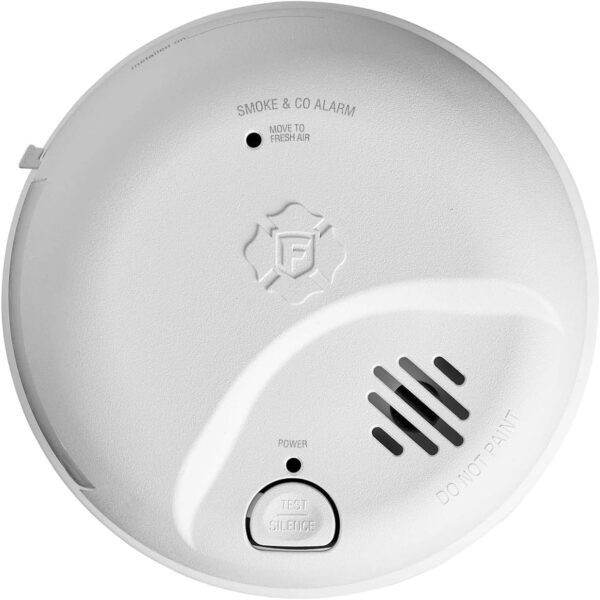
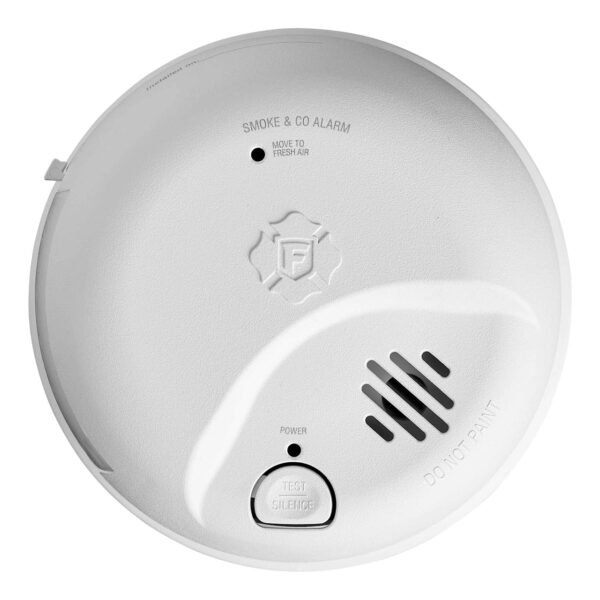
The First Alert Hard-Wired w/Battery Back-Up Ionization Smoke and Carbon Monoxide Detector, SMICO100-AC puts two separate jobs into one housing, and that is the main argument for it. The combination of ionization smoke detection and carbon monoxide sensing covers two household hazards from a single ceiling position. Its hardwired power source, backed by a battery backup, is specified to keep the alarm active when mains power drops. First Alert lists the unit at 9″ diameter by 4″ width and 7″ height and 11.2 ounces, although those three figures cannot all describe the same round alarm, so treat the published dimensions as approximate and measure the mounting position before ordering.
The 10-year limited warranty is long for a hardwired alarm at this price and signals how long First Alert expects the housing to stay in service. The loud alarm sound is the point of the device rather than a bonus, and owner ratings frequently mention that it carries through a closed bedroom door. The unit is also built to sit on existing hardwired circuits, which makes it a straightforward like-for-like swap when older alarms reach end of life. Its ionization sensor is the type that reacts fastest to fast-flaming fires. Buyers comparing the same model as it appears under our combination listing can read the SMICO100-AC combination alarm write-up alongside this one.
- Dual-function smoke and carbon monoxide detection
- Hardwired with battery backup so the alarm stays powered in an outage
- Compact and lightweight design
- Loud, effective alarm sound
- 10-year warranty offers long-term cover
Downsides Worth Weighing on This Smoke and Carbon Monoxide Alarm
The model has clear limits. The installation process involves mains wiring, and the supplied instructions are thin in places, which is a poor combination for anyone who has not wired an alarm before. Hardwired work should follow local electrical code and often calls for a qualified electrician, whatever the packaging suggests about DIY fitting. The backup batteries are not included, so an otherwise complete install can stall at the last step.
The ionization sensor is quick on flaming fires and slower on smouldering ones than a photoelectric element, which matters if the rooms it covers hold upholstery, bedding or stored paper. The alarm also has no smart connectivity, so there are no app alerts and no remote monitoring. The housing is plain, with no colour options, and it disappears against a white ceiling rather than adding anything to a room. Households that want the photoelectric side of the pairing usually put the hardwired First Alert SC9120B on the same circuit.
- Installation requires electrical knowledge and careful attention
- Batteries for backup not included
- Ionization sensor less sensitive to smouldering fires
- No smart features or remote alert capabilities
- Basic design with no colour customization
Performance and Sensor Technology Insights
The ionization smoke sensor uses a very small amount of radioactive material to hold a current across a sensing chamber, and smoke particles disturbing that current is what triggers the alarm. That mechanism explains both its strength and its weakness: it is quick on fast, flaming fires and comparatively prone to nuisance trips from cooking smoke or bathroom steam. Owner ratings in this category frequently mention frying and grilling as the usual triggers, which is a placement question rather than a fault in the unit.
The carbon monoxide side uses a separate sensing element with its own alarm pattern, so the device distinguishes between the two hazards it is watching for. The hardwired supply means the sensors run continuously without drawing down a primary cell, and the battery backup is specified to take over when mains power fails. A test button verifies the horn and the sensing circuit, and the low-battery chirp is loud enough to force attention. Weekly testing remains the manufacturer’s instruction and is not replaced by any of this.
Installation Considerations and Everyday Upkeep
Fitting this alarm means working at a live ceiling box, so the breaker goes off first and the circuit gets checked before anything is connected. The mounting plate and wiring terminals need patience, particularly the connection for the battery backup, and the printed instructions would benefit from clearer diagrams. Once mounted, the alarm sits flush to the ceiling or wall, which limits dust collecting around the sensor vents.
Day to day, upkeep amounts to replacing the backup battery and vacuuming dust off the sensor area. Nuisance triggers from toast or shower steam are common with ionization sensing, so distance from kitchens and bathrooms is the practical fix. Local code, not convenience, decides where alarms are required and how many a dwelling needs. The rest of our smoke detector and fire alarm reviews cover the alternatives at the same mounting position.
Competitors and How This Product Stacks Up
Against other hardwired smoke and CO alarms, including the Nest Protect and the Kidde range, the trade-offs are clear. The First Alert SMICO100-AC leads with a plain dual-sensing design and battery backup, and gives up the smart home integration that Nest Protect offers through smartphone alerts and voice alarms. Kidde’s competing units are often specified with photoelectric smoke sensing, which responds sooner to smouldering fires, and the Kidde KN-COSM-IBA hardwired combination alarm is the closest direct comparison on that point.
On warranty, the 10-year term matches or beats most of the field. The price sits below premium smart detectors, which makes this a practical pick for buyers who want two sensing functions and a backup cell without paying for connectivity. If remote monitoring or wireless interconnect is the priority, other brands earn their higher price.
Value Assessment: Is This Detector Worth the Investment?
On price to quality ratio, this hardwired smoke and carbon monoxide detector is reasonable for what it does. It merges two safety functions into one ceiling position, carries a decade-long warranty, and keeps a powered backup that battery-only alarms cannot match during a long outage.
Buyers still have to weigh the wiring work and the sensor limitation against their own rooms. Anyone comfortable with mains work, or willing to pay an electrician, gets a no-frills device that does the job it advertises. Anyone who wants connectivity or faster response to smouldering smoke should look elsewhere, and households that only need the CO half can spend less on a standalone unit such as the First Alert CO400.
Detailed Look at Features and Settings
The alarm carries a test/silence button that verifies operation or temporarily mutes a nuisance alarm, which is the safe alternative to disconnecting a unit during a cooking mishap. The alarm sound is described as loud enough to carry to sleeping occupants, though the listing gives no decibel figure to check that against. Listing data is inconsistent about the backup cell, with some copy specifying a 9V battery and other copy an AA, so confirm the battery type printed inside the mounting plate before buying a replacement, since fitting the wrong cell leaves the unit without backup power.
Sensor calibration is factory-set with no user adjustment, which keeps operation simple and rules out tuning it to a difficult room. There are no voice alerts and no display, so the horn pattern is the only information the unit gives. It is designed to interconnect with compatible First Alert alarms so that one triggered unit sounds the rest, and that is the feature that matters most in a house with bedrooms on a separate floor. Interconnect wiring is code-governed work and belongs with an electrician if there is any doubt.
Taken together, ionization smoke sensing, carbon monoxide detection, and hardwired power with battery backup make this a plain, serviceable safety device, without the modern conveniences some buyers now expect.