




Description
Positive Features That Stand Out
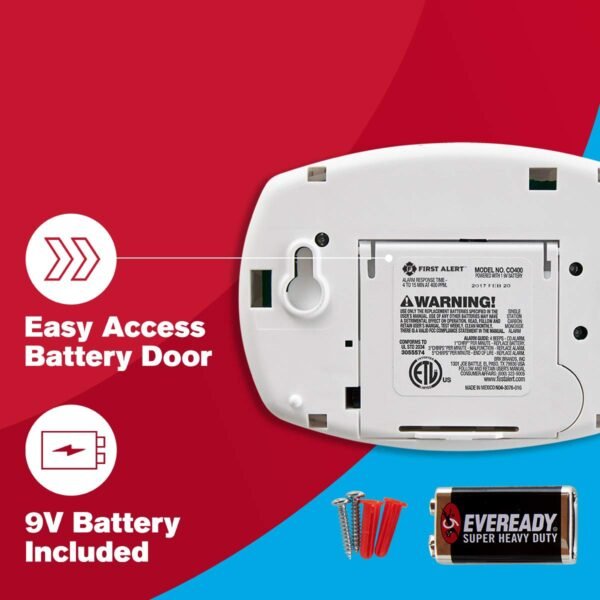
Looking at the published specifications for the First Alert CO400 Carbon Monoxide Detector, several key benefits stand out against the rest of the category. The unit uses an electrochemical sensor, the sensing method First Alert describes as its most accurate for carbon monoxide. The battery-powered design runs on a replaceable 9V cell, so the alarm keeps monitoring when household power is out, which is exactly when fuel-burning appliances and portable generators tend to raise CO risk in the first place.
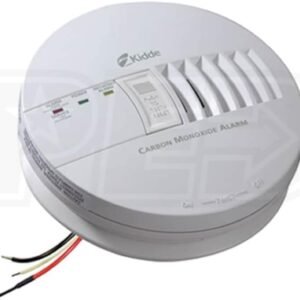
The alarm is rated at 85 decibels, the standard output for residential CO alarms, which matters because carbon monoxide is odorless and invisible. The test/silence button both verifies that the unit is working and quiets a nuisance alarm without pulling the battery, a detail that separates it from the most basic alarms. The compact housing can sit on a shelf or mount to a wall without an outlet nearby, so placement is not tied to receptacle locations. Buyers who want the same freedom in a mains-powered unit usually end up comparing it against a hardwired Kidde CO alarm, which trades that flexibility for permanent power.
Some highlights worth mentioning:
- The sensor is rated for up to five years, so replacements are not frequent.
- Visual and audible low battery alerts prevent unexpected failures.
- The included pull-down action chart sets out what steps to take if the alarm sounds.
Limitations Worth Noting
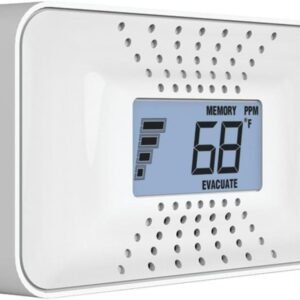
Against those strengths sit some areas for improvement. The test tone runs only 5 to 6 seconds, which is a short window to confirm the unit sounded properly. The housing has no digital display of current CO levels, a feature several competing models do offer. For anyone who wants to watch concentrations rather than simply be alerted at the alarm threshold, that is a real gap, and it is the main reason buyers step up to a display-equipped model such as the plug-in First Alert CO605.
The battery type is another consideration. A 9V cell is standard and easy to source, but it has to be changed on a schedule, where sealed alarms remove that task entirely. The alarm is loud by design, which is the point, though a nuisance activation at night is disruptive. The silence function exists to handle that without disabling the unit.
Some drawbacks to consider:
- Lack of a digital CO concentration display.
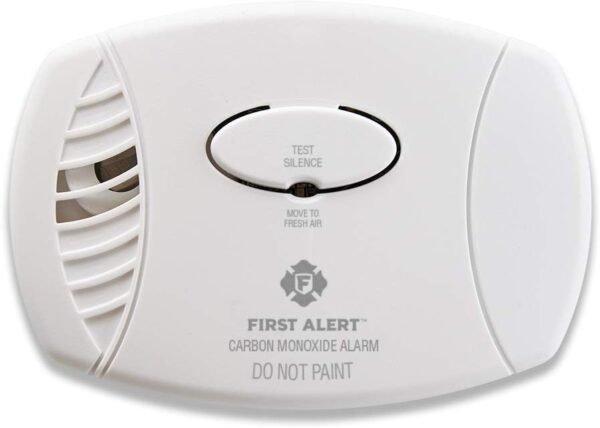
- Single test/silence button carries two functions, which is not obvious on first use.
- Replaceable 9V battery means a recurring maintenance task.
Design and Usability Insights
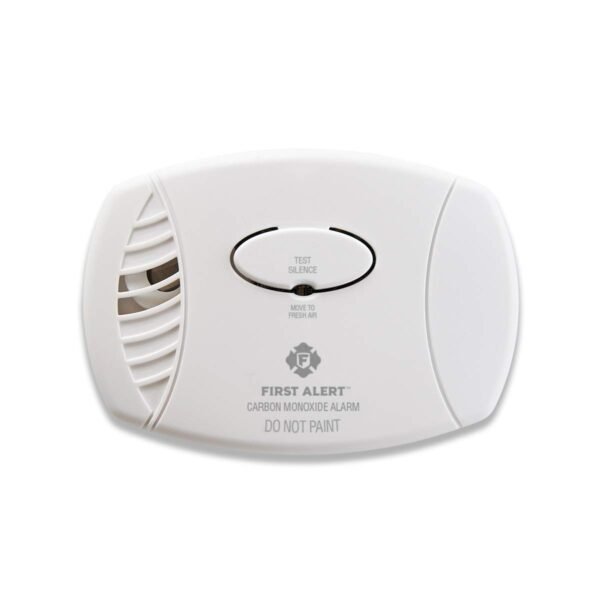
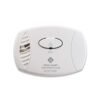
The compact white casing is less obtrusive than bulkier alarms. Measuring 1″ deep, 5″ wide, and 3″ high, it fits on a tabletop or a wall bracket. Setup involves no wiring, which keeps it practical for rentals, older houses, and rooms with no convenient power source. That simplicity is the trade: no wiring also means no interconnect, so this unit cannot sound other alarms elsewhere in the house the way an interconnect-capable sealed Kidde CO alarm can.
Operation is straightforward, with clearly labeled buttons and the pull-down guide on the front explaining what to do during an alarm event. That printed guide is genuinely useful for household members and guests who are not familiar with carbon monoxide response steps. The visual battery indicator flashes when power is low.
Sensor Performance and Alarm Reliability
The core of this detector is the electrochemical sensor, the type most widely used in residential CO alarms because it responds to carbon monoxide specifically rather than to combustion products generally. First Alert specifies that the unit monitors continuously and sounds the alarm when CO reaches and holds a hazardous concentration, and that it re-alarms if CO is still present after the silence period elapses.
First Alert lists the CO400 as UL certified. That listing speaks to the alarm meeting the standard it was tested against by the certifying body, not to any assessment carried out here. Alarm selection, placement, and the number of units a dwelling requires are governed by local building and fire code, and by the manufacturer’s own installation instructions, which should be followed over any recommendation on this page.
Competitive Options and How This Stands Out
There is no shortage of carbon monoxide detectors, and comparing this unit to connected models like the Kidde Nighthawk or Nest Protect shows the trade clearly. Unlike smart detectors with Wi-Fi and smartphone alerts, this model has no app integration. For plenty of buyers that is the appeal, since there is no account, no firmware, and nothing to reconfigure when the router changes.
Set against those competitors, the First Alert CO400 competes on straightforward operation and low cost rather than features. It is a basic device offering electrochemical sensing, an 85 decibel alarm, and independence from household power. It does not offer CO level readouts or voice alerts, which some rivals provide. Buyers who want carbon monoxide and combustible gas detection in one housing are looking at a different class of product, such as the Kidde KN-COEG-3 CO and explosive gas alarm.
For a basic, low-maintenance CO alarm without connected features, this sits in a well-populated part of the market. For buyers who want active monitoring or remote notification, other products offer more, usually at a higher price.
Price to Quality Ratio and Value Considerations
On value, the CO400 sits at the affordable end of the category. The five year sensor rating and included battery both count toward the running cost rather than just the purchase price, since the unit is not a single-season purchase.
Compared with pricier connected alarms, this model covers the core detection function without ongoing costs tied to connectivity or app services. Given that CO alarms are a code requirement in many jurisdictions rather than an optional purchase, the low entry price is the main argument for it. The broader carbon monoxide detector category spans everything from this unit up to hardwired, interconnected systems.
Features That Make a Difference in Everyday Use
The end-of-life chirp is one of the more consequential features, warning when the sensor has reached the end of its rated service life. Sensors degrade whether or not they have ever been triggered, so an alarm without an end-of-life signal can sit on a ceiling looking functional long after it has stopped being so. The low battery alert covers the shorter maintenance cycle.
The test/silence button addresses the most common reason people disable CO alarms, which is a nuisance activation at an inconvenient moment. Silencing rather than removing the battery means the unit stays in service while the cause is investigated. That single design decision does more for real-world reliability than most feature-list items.
Where a CO Alarm Fits in a Home Safety Plan
Carbon monoxide is often called the silent killer because it gives no sensory warning at the concentrations that matter. A CO alarm is a detection device, not a fix: it signals a problem with a fuel-burning appliance, a blocked flue, or a vehicle or generator running too close to the building, and the underlying fault still needs a qualified technician. The pull-down action chart supports that by putting the response steps on the unit itself.
The simple battery replacement and clear status signals keep the maintenance burden low, which matters because an alarm is only useful if it stays powered and in date. Households comparing several options at once can work through the rest of our carbon monoxide coverage before deciding how many units they need and where code requires them.
This review is compiled from published First Alert specifications, listing data, and owner rating patterns for the First Alert CO400 Carbon Monoxide Detector. Nobody at this site handled the unit. On the published numbers, its electrochemical sensing, 85 decibel alarm, and battery independence make it a reasonable baseline choice, with the missing display and the recurring battery change as the main compromises.