







Description
Highlights of the Kidde Hardwired Smoke Detector
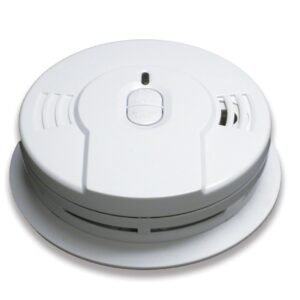
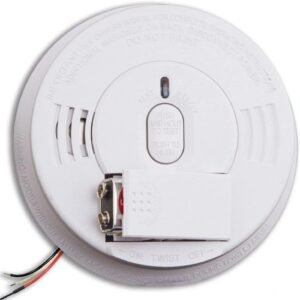
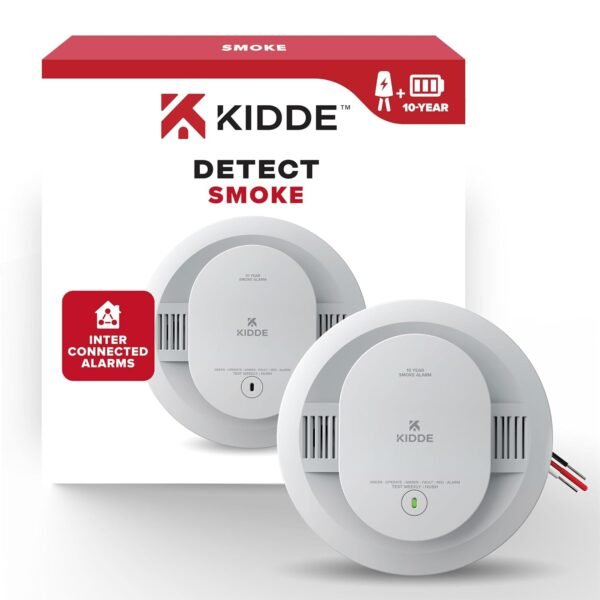
The Kidde Hardwired Smoke Detector, 10-Year Battery Backup, Interconnectable, LED Warning Light Indicators (model 20SA10) is specified around one idea, a mains-powered alarm that keeps talking to the other alarms in the building. Its photoelectric sensor technology is the type chosen to hold down nuisance alarms from cooking. The 85-decibel alarm signals with three long beeps and a flashing red LED, the temporal pattern used for smoke across current alarms. Because the unit is interconnectable, a detection at one alarm sounds every unit wired into the same loop, which is what a detector on a different floor is for. The same loop logic applies to the hardwired Kidde i12060A and other Kidde units on the same platform.
- Interconnect sounds every alarm on the loop at once
- Photoelectric sensing reduces nuisance alarms near kitchens
- LED indicators show alarm and fault status
Drawbacks Reported in Everyday Use
A few limits come with the design. The hardwired installation needs a mains connection, so the work has to follow local electrical code and, in most homes, is a job for a qualified electrician rather than a plug-in swap. The 10-year lithium battery backup removes battery changes but not testing, and Kidde still asks for a manual test of every alarm each week. The test and hush button silences a nuisance alarm, though owner ratings frequently mention a lag between the press and the silence during smoky cooking. The plastic casing is light and low profile, and reviewers who have handled metal-cased commercial detectors tend to describe it as the lighter build of the two.
- Mains wiring puts installation outside plug-and-play territory
- Manual weekly testing is still required despite the self-test
- Hush function can be slow to silence a nuisance alarm
- Plastic build is lighter than metal-cased alternatives
User-Friendly Design and Installation
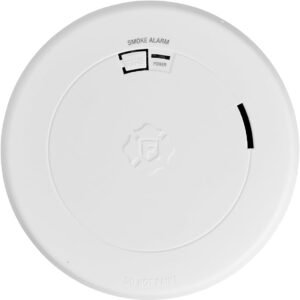
The alarm uses a 5-inch circular housing that sits close to the ceiling without drawing attention. The twist-and-click mounting bracket handles the mechanical half of the job, leaving the wiring as the part that needs care. The white finish matches most interiors, and the 1.88-inch depth keeps the unit shallow. The LED warning lights carry a three colour code, green for normal operation, amber for a fault, and red for smoke, so status is readable from the floor without the manual. A colour code that names the state rather than relying on beep counts matters in households with children or older adults, who are unlikely to decode chirp patterns.
Performance in Real-World Conditions
The photoelectric sensor is specified as less reactive to steam and airborne cooking particles than an ionization sensor, which is why photoelectric units are the usual choice for a hallway next to a kitchen. The alarm carries an operating humidity tolerance up to 95% and a temperature rating up to 100 degrees Fahrenheit, a range that covers conditioned living space rather than a garage or an attic. The self-test checks the unit’s own electronics on a cycle and is not a substitute for the weekly button test that the instructions require. Where a hardwired loop also has to trigger something other than an alarm, Kidde covers that with a smoke relay module such as the SM120X.
Value Proposition Compared to Other Safety Devices
Set against other hardwired models, this one pairs photoelectric sensing with a sealed ten year backup cell and leaves out everything else. The 10-year lithium backup removes a decade of nine volt purchases and low-battery chirps, which is where the running cost of a cheaper alarm actually lands. Buyers who want carbon monoxide detection in the same housing move up to a combination unit, and buyers who want smart features leave the Kidde line entirely. For a household that wants dependable smoke detection with interconnect and a long backup, the specification is narrow on purpose.
Alternative Offerings in the Smoke Detector Market
Against smart alarms such as the Nest Protect or First Alert Onelink, this model trades app connectivity for a 10-year backup and mains power. The Nest Protect adds voice alerts and phone notifications at a considerably higher price and a shorter battery interval. Within Kidde’s own range, the 20SAR hardwired alarm covers the same wiring job with a different backup arrangement, while the battery only i9010 suits rooms with no ceiling wiring to work with. Comparisons across the rest of our smoke detector and fire alarm reviews come down to the same three variables, sensor type, power source, and whether the units interconnect.
Positive Features That Make It Stand Out
- Ten year lithium backup removes battery changes for the life of the alarm
- Interconnectable alarms sound together across the wired loop
- Photoelectric sensing lowers nuisance alarms from cooking
- Three colour LED code makes status readable at a glance
- Self-test runs on a cycle alongside the required weekly manual test
Limitations Worth Considering Before Purchase
- Hardwired installation must follow local electrical code
- No smart home or app integration for remote alerts
- Plastic build is lighter than metal-cased detectors
- Hush button can be slow to silence a nuisance alarm
- Weekly manual tests remain essential despite the self-test