


Description
Highlights of the First Alert SMCO210 Smoke & Carbon Monoxide Alarm
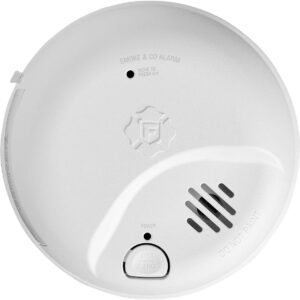
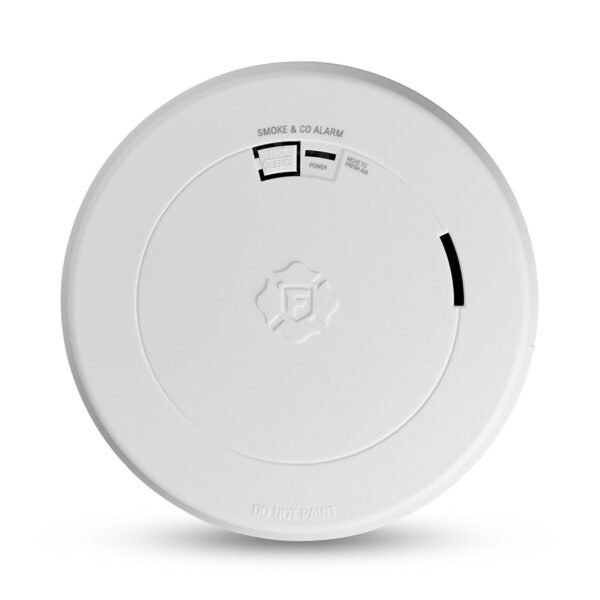
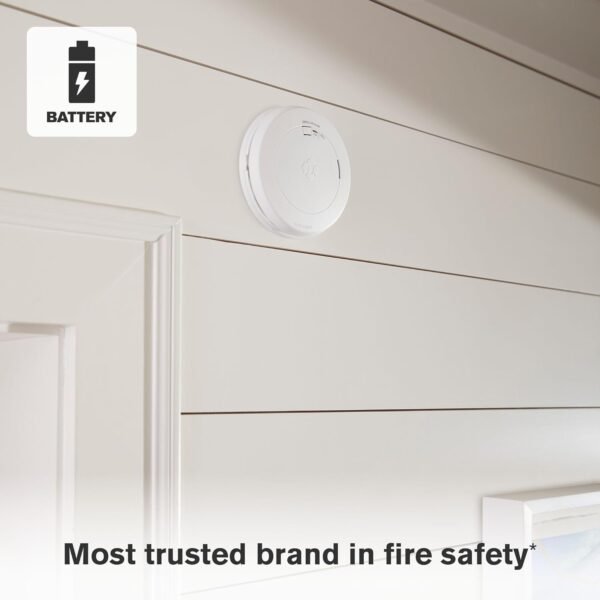
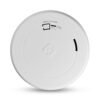
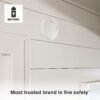
The First Alert SMCO210, 10-Year Sealed Battery Combination Smoke & Carbon Monoxide Alarm with Slim Profile Design leads on its shape. The slim profile is the first specification that separates it from ordinary alarms, at roughly 1 inch in height, so it sits close to a ceiling or wall instead of standing proud of it. The white plastic finish suits modern interiors, and the listed weight of 0.41 pounds keeps mounting to a bracket and two screws. First Alert uses the same slim format on the smoke only SM210, so the two can be mixed through a house without a visual mismatch.
The second headline is Precision Detection, First Alert’s name for the sensing logic that targets cooking nuisance alarms, the burnt toast and hot pan events that drive people to pull batteries out of alarms. Fewer nuisance alarms is a safety argument rather than a comfort one, because an alarm that has been disabled protects nobody. The unit also provides 2-in-1 coverage, detecting both smoke and carbon monoxide from a single mounting point.
Positive Features That Made a Difference
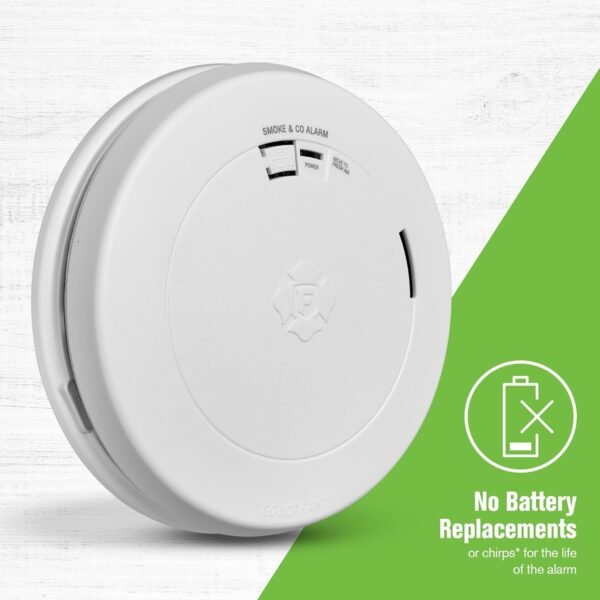
The 10-year sealed lithium battery changes the maintenance picture. An alarm that needs no battery replacements and produces no low battery chirps across its rated life removes the two jobs owners most often skip, and skipped jobs are how alarms end up dead on a ceiling. The end-of-life warning is the counterpart to that, signalling when the unit itself has reached the end of its rated service and needs replacing.
On sensing, the specification pairs a photoelectric smoke chamber with an electrochemical carbon monoxide cell, the standard combination for this class. The alarm output is loud enough to be heard through a closed bedroom door, which is the point of the rating. The mounting is straightforward, with instructions and hardware in the box and a standard bracket, though placement and quantity are code questions and should follow local requirements rather than convenience.
- Slim design fits unobtrusively in most rooms
- Precision Detection sensing targets cooking nuisance alarms
- Ten year sealed battery removes replacement and chirp maintenance
- Combination detection covers smoke and carbon monoxide
Limitations Worth Considering
The slim profile has an acoustic cost. A flat housing means a flat speaker, so while the alarm is loud, the tone carries less variation than bulkier models. In a home with a lot of background noise, or where an alarm has to be heard through several rooms, that difference is worth weighing against the tidier look.
The larger limitation is connectivity. There is no app integration and no remote notification, only sound and light warnings at the unit itself. It also does not interconnect with other alarms, so a detection in the basement stays in the basement. Buyers who want the whole house to sound together move to a wired platform such as First Alert’s hardwired SMICO105-AC, which is built for interconnected installations.
- Alarm tone is flatter than larger housings produce
- No smart home connectivity or app alerts
- Cannot interconnect with other alarms
Competitive Options in the Market
Against the Nest Protect or Kidde’s combination alarms, the trade-offs are legible. The Nest Protect adds phone notifications and self-testing, which make managing several alarms easier from one place. It also costs considerably more and needs periodic battery attention, which the sealed lithium cell in the First Alert avoids.
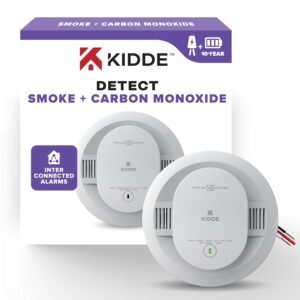
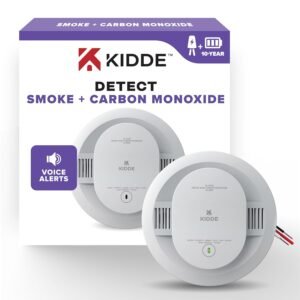
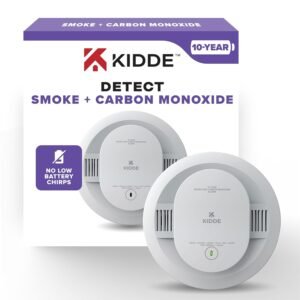
Kidde’s combination alarms are known for loud output and interconnect options, and older units in that line drew more complaints about kitchen nuisance alarms. The Precision Detection logic in the SMCO210 is aimed squarely at that problem. Where a buyer wants a sealed ten year cell with a different feature set, Kidde’s sealed battery P3010CU combination alarm is the closest equivalent on the other side of the aisle.
The sealed battery design also removes a decade of alkaline purchases, which is the quiet running cost of a cheaper alarm. Losing wireless interconnect is the price, and for a small home with one or two alarms that price is low. For a multi-storey house it is not.
Quality for Price: Is This Alarm Worth It?
The price to quality ratio reads fairly for what is specified. There is no smart home integration, and what remains is a set of fundamental safety features that work without configuration. The 10-year sealed battery alone accounts for much of the premium once the cost and hassle of a decade of battery changes is counted against it.
Mounting ease and the slim profile add practical value by keeping the alarm out of the way. For households that want a dependable, low-maintenance device without smart features, this alarm is a sensible fit. Buyers on a budget who want combination detection with minimal upkeep are the target market, and the specification matches them.
Owner Feedback and Practical Notes
Owner ratings for this model cluster around two themes. The absence of low battery chirps comes up repeatedly, since random chirping at night is the single most common complaint against alarms with replaceable cells. The slim housing is the other, particularly in kitchens and hallways where a deeper alarm is more noticeable.
The plastic build is rated for ordinary household conditions rather than damp or unconditioned spaces, and it is lighter in the hand than metal-cased commercial detectors. The end-of-life warning is a beep and a blinking light rather than a full alarm, which is deliberate, since it signals a replacement is due rather than a hazard in the room.
Installation and Settings Overview
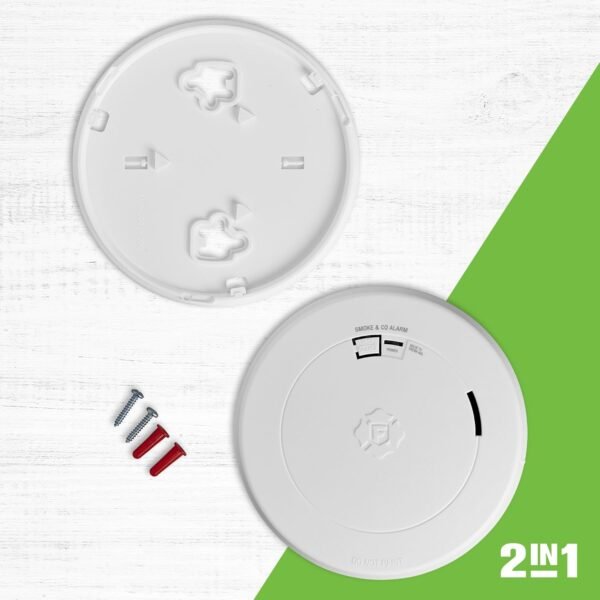
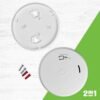
Setup is a bracket, a twist-lock and the supplied hardware, with instructions in the box. Testing runs from a single button that cycles the smoke and carbon monoxide functions, and manufacturers ask for that test weekly. Fitting an alarm does not substitute for local building or fire code, an inspection, or the instructions supplied with the unit.
The device has no sensitivity settings to adjust. The Precision Detection logic handles the discrimination between a real fire signature and everyday cooking smoke, which is what removes the calibration step. That suits a fit-and-leave device, and it also means there is no adjustment available if a location proves troublesome, in which case moving the alarm is the remaining option.
Areas for Improvement to Keep in Mind
Two additions would widen the appeal. Wireless interconnectivity would let several alarms sound together during an emergency, which is the single largest functional gap in this model. Smart alerts through an app would cover remote monitoring for owners who are away from the property often, or who manage a second home. A standalone carbon monoxide alarm with a digital readout, such as the First Alert CO710, is the usual way buyers add a CO level display alongside a combination unit.
The sound profile could also benefit from a richer tone or a volume option to suit different rooms. And while the 10-year sealed battery runs a full decade, the whole unit is discarded at the end of it, which reads as wasteful next to a replaceable cell design.
- Missing smart home features limit remote monitoring
- No interconnectivity with other alarms for whole-home alerts
- Alarm tone lacks depth and adjustable volume settings
This combination alarm balances simplicity, low upkeep and nuisance-resistant sensing for everyday household use, and it is a reasonable choice where interconnect is not required. Comparisons against the rest of our combination smoke and carbon monoxide detector reviews come down to whether a sealed cell or a wired loop matters more in a given house.