



Description
Benefits of the First Alert Combination Smoke & Carbon Monoxide Alarm SMICO100-AC
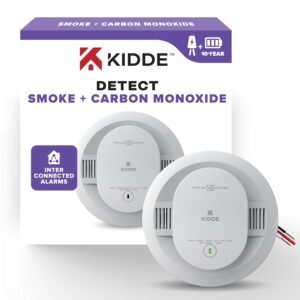
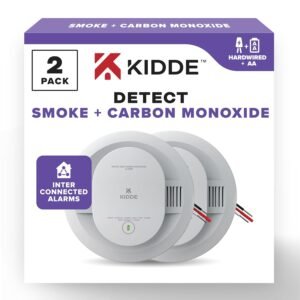
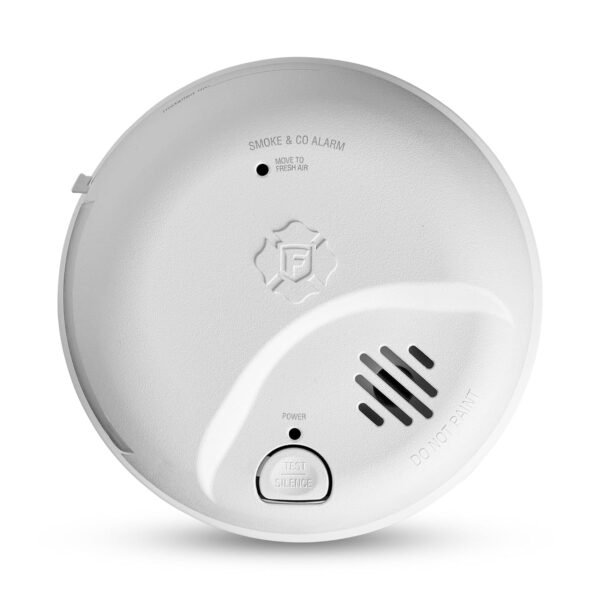
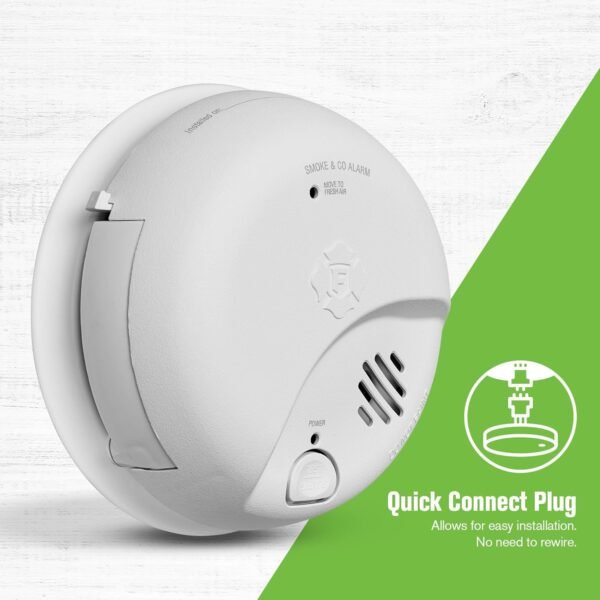
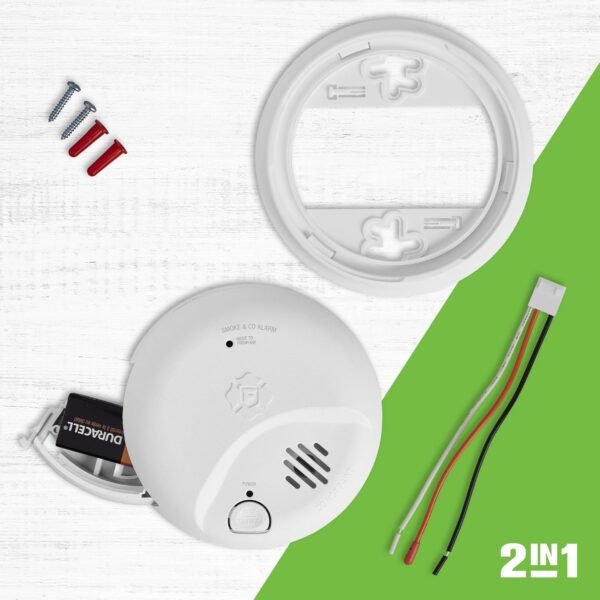
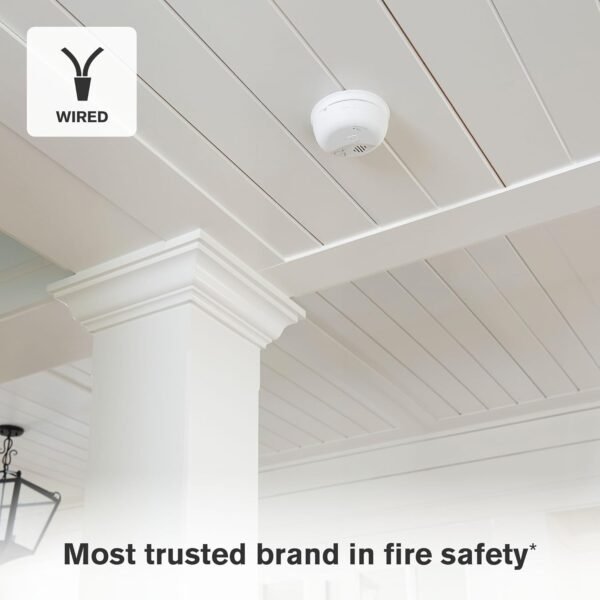
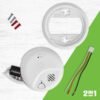
The First Alert Combination Smoke & Carbon Monoxide Alarm SMICO100-AC puts two detection functions in one ceiling position. First Alert markets the sensing as Precision Detection technology, which the company positions as reducing nuisance activations from cooking fumes, the single most common reason households disable an alarm. The interconnect feature is the more consequential capability: when one linked alarm sounds, every alarm on the loop sounds with it, so a hazard in an unoccupied part of the house is still audible where people are. Installation uses a Quick Connect Plug rather than loose conductors at the alarm, and a battery backup keeps the unit monitoring when mains power drops.
- Precision Detection is claimed to reduce nuisance alarms from cooking.
- Interconnect sounds every linked alarm at once.
- Battery backup covers mains failure.
Downsides of the Alarm System
Several limitations are worth weighing. The specification text describes an ionization sensor, which responds well to fast flaming fires and more slowly to smouldering ones than a photoelectric design. That is a meaningful distinction, and here the product data is not self-consistent: the listing brands the sensing as Precision Detection without naming a sensor type, while the specification text calls it ionization. Confirm the sensor marking printed on the alarm itself before relying on either description, because the two technologies suit different rooms. Buyers who specifically want photoelectric sensing for bedrooms and hallways generally compare this against a photoelectric combination alarm with a sealed ten year cell.
The listed size of 8 x 7.5 x 3.5 inches is larger than a typical ceiling alarm and may describe the retail packaging rather than the unit, so check the product drawing if clearance is tight. Battery replacement requires taking the alarm off its mount, which is awkward on a high ceiling or a stairwell. The alarm output is loud by design, which is not a fault but is noticeable in a small room.
- Ionization sensing responds more slowly to smouldering fires.
- Listed dimensions look like packaging rather than the alarm body.
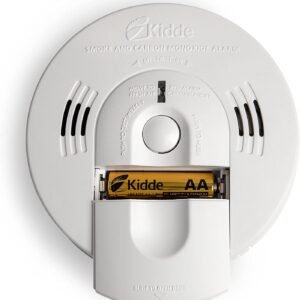
- Battery replacement requires removing the unit from its bracket.
- Alarm output is loud in small rooms.
Installation and Setup
Installation is more contained than on older hardwired alarms because the Quick Connect Plug terminates the wiring at a connector rather than at the alarm body. This is still mains work on a branch circuit and remains subject to local electrical code, so it belongs with a qualified electrician wherever there is any doubt about the existing wiring. Swapping a like-for-like alarm onto an existing compatible harness is a different job from creating a new hardwired position.
The test/silence button covers both the weekly function test and temporary silencing after a nuisance activation, without taking the unit out of service. That matters in kitchens, where burnt toast is the classic trigger. The battery backup is the reason a hardwired alarm keeps working through an outage, which is also when candles and portable heating raise risk.
Safety Features That Matter
Combining smoke and carbon monoxide detection in one unit reduces the number of devices on a ceiling and consolidates maintenance to one schedule. The two hazards are unrelated in origin: smoke comes from combustion in the dwelling, while carbon monoxide typically comes from a faulty or unvented fuel-burning appliance, a blocked flue, or an engine running too close to the building. A combination alarm covers both from one position, but it does not change where code requires alarms to be sited or how many are needed. First Alert states the alarm meets current industry standards, and the manufacturer’s installation instructions take precedence over any general guidance.
Interconnection is the feature that matters most in a larger or multi-storey house, where a single alarm may not be heard from another floor. Households comparing interconnect approaches often look at the First Alert SC9120B hardwired combination alarm alongside this model.
Price Worthiness Compared to Alternatives
On value for money, this alarm sits between basic standalone detectors and connected models. Cheaper single-function alarms exist, but covering both hazards would mean two devices and two maintenance schedules. Against high-end connected alarms, which carry app dependencies and higher prices, this model stays deliberately simple. The included 9V battery and adapter plug mean it is ready to fit without a separate parts order. The wider combination smoke and carbon monoxide detector category shows how the sealed-battery and hardwired options compare on running cost.
Competitive Options
Among competing products, Nest Protect and the Kidde combination range cover similar ground differently. Nest Protect adds smart home integration with phone alerts and spoken notifications, neither of which this model offers. The First Alert’s hardwired supply with battery backup does not depend on a network being up, which is a real advantage in an outage where Wi-Fi equipment loses power first.
Kidde’s equivalents frequently use photoelectric smoke sensing, which responds earlier to smouldering fires, and that is the axis on which this alarm is weakest if the ionization description is correct. Fewer nuisance alarms and a simpler installation are the counterweights. For a voice-announcing alternative in the same class, the First Alert SMCO210 combination alarm is the natural comparison.
Positive Features That Stand Out
- Precision Detection is claimed to reduce nuisance activations.
- Interconnection sounds every linked alarm together.
- Battery backup maintains monitoring during a blackout.
Areas for Improvement
- Sensor type is described inconsistently between the branding and the specification.
- Listed dimensions are larger than a typical ceiling alarm.
- Battery replacement means removing the alarm from its mount.
- No connected features for remote notification.
This assessment is built from published First Alert specifications, listing data, and owner rating patterns. On that basis the SMICO100-AC covers the fundamentals of dual-hazard detection with a straightforward hardwired installation and interconnect support. Its weak point is the unresolved sensor-type description, which is worth settling from the alarm’s own markings before deciding which rooms it belongs in. Households wanting the same dual coverage with a longer maintenance-free interval should look at the SMICO105-AC with its ten year backup cell.