Description
Compact Design and Extended Reach for Tight Spaces
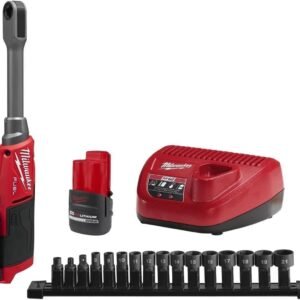
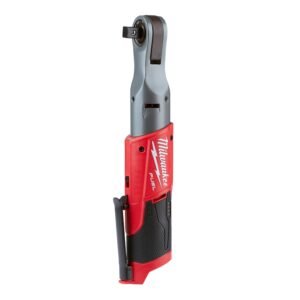
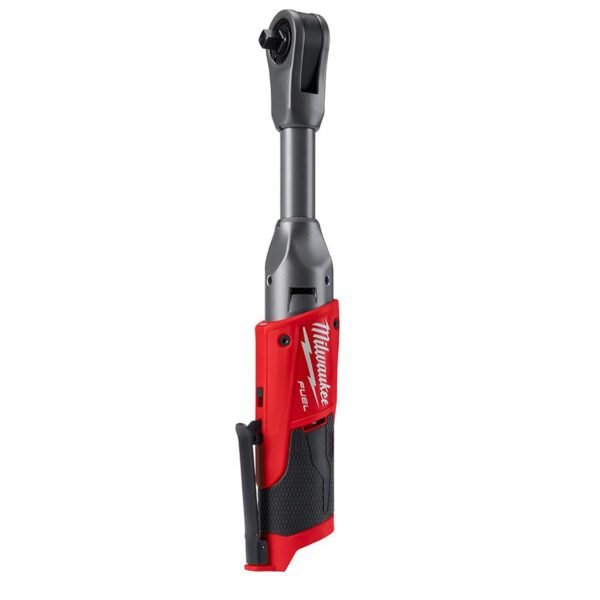
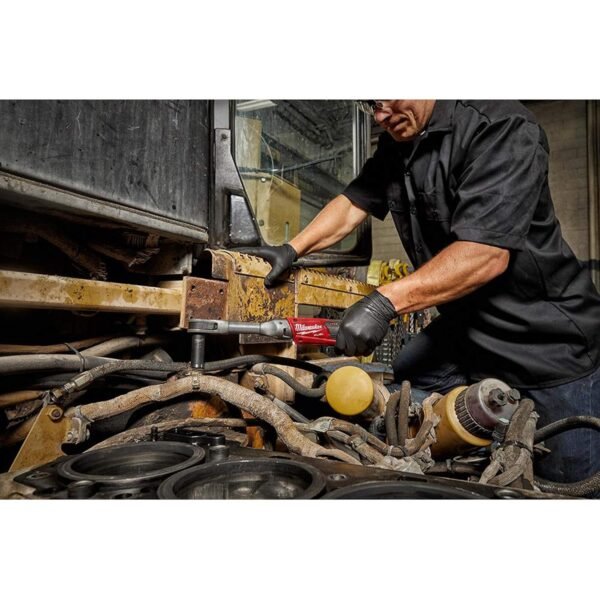
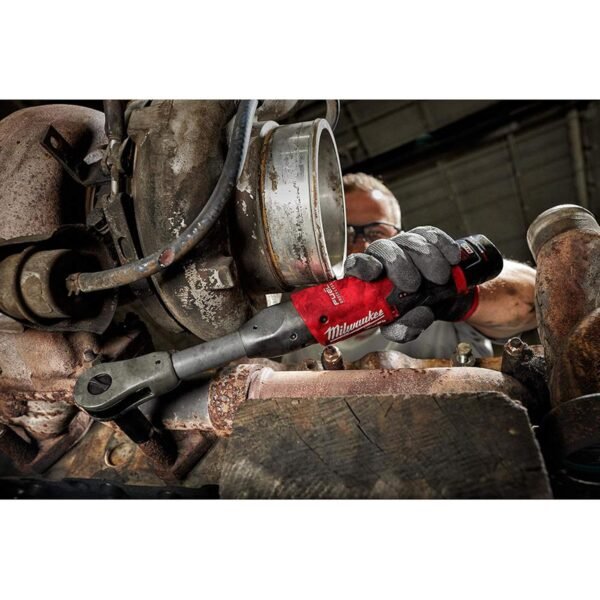
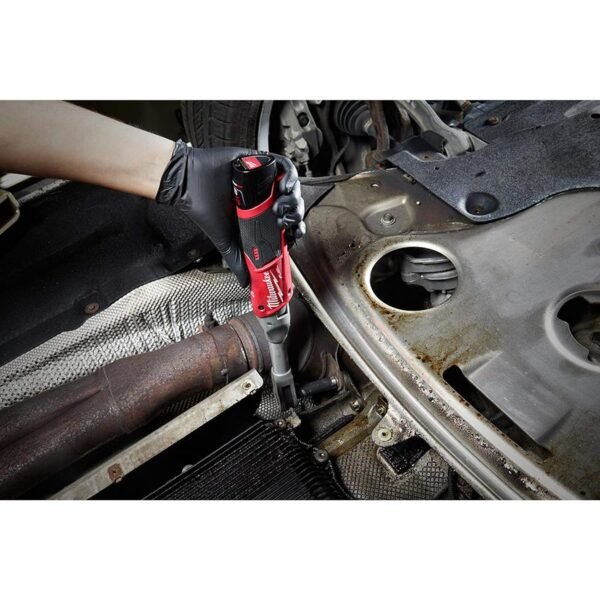
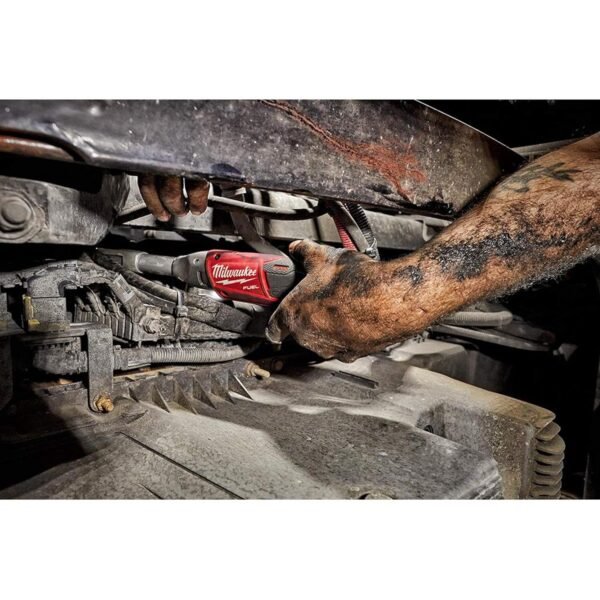
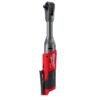
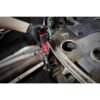
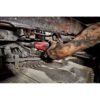
The Milwaukee 2560-20 M12 FUEL 3/8″ Extended Ratchet is defined by its geometry rather than its output. The slim head profile and extended neck put the drive well ahead of the operator’s hand, which is what allows the tool to reach fasteners buried behind manifolds, brackets, and framing where a conventional ratchet body cannot follow. Its 15-inch length paired with a 3-pound frame is the trade at the centre of the design: length buys access, and the mass keeps the extended body from feeling flimsy under load.
The specification suits work where clearance, not torque, is the limiting factor. The powder-coated finish is chosen to survive contact with brackets and grime rather than for looks, which matters on a tool whose whole job involves dragging a long neck through dirty spaces.
Powerful Performance with Brushless Motor Technology
The brushless motor is rated to 55 foot-pounds of torque, which is a strong figure for a 3/8″ ratchet and enough for most automotive and machinery fastening. Brushless designs hold output more evenly as the pack drains, which is the reason the specification matters beyond the headline number. Redlink Plus Intelligence adds electronic protection against overload and overheating, monitoring the tool and battery together and backing off before damage occurs rather than after.
One point in the source data needs flagging. The listing describes a “pneumatic operation mode” while also presenting the tool as a cordless alternative to pneumatic ratchets that need hoses and a compressor. Those descriptions are incompatible: this is a battery powered ratchet on the M12 platform, with no air inlet. Treat the pneumatic reference as an import error and confirm against Milwaukee’s own specification sheet if air operation is something you are actually shopping for.
Versatility and Battery Compatibility
Compatibility with the Milwaukee M12 battery range is the practical draw for anyone already running that platform, since no new packs or charger are needed. The tool covers tightening, loosening, and general fastening across the fastener sizes a 3/8″ drive reaches, and pack changes are quick enough not to interrupt a job with a second battery on charge.
It is sold as a bare tool, which suits professionals with M12 packs on the shelf and penalises first time buyers. Anyone starting fresh should compare the total against a kitted competitor, and should look at how the same access problem is solved differently by the M12 FUEL INSIDER extended reach box ratchet, which shrinks the head instead of lengthening the body.
Durability and Build Quality
The alloy steel construction and reinforced mechanism are the specifications that determine how long a ratchet survives, since the ratcheting pawl carries the whole load every time the tool is used. The cast steel yoke housing adds rigidity where the extended neck meets the head, which is the highest stress point on a tool shaped like this one. Owner feedback on the M12 FUEL ratchet line consistently reports the drive mechanism outlasting expectations, which is what the material choices predict.
The powder-coated finish serves durability as well as appearance, and it cleans up after work in dusty or oily conditions rather than absorbing the mess.
Downsides to Keep in Mind
The M12 battery requirement is a genuine added expense for newcomers, since neither battery nor charger is in the box. For hobbyists buying a single tool, that can nearly double the outlay.
Operating noise is noticeable at full torque, which is worth knowing for anyone working in a shared or noise sensitive space. The 3-pound weight is also worth reading carefully against the extended design: mass at the end of a 15-inch body produces more leverage on the wrist than the same mass in a short tool, so overhead and sustained work will tire the hand faster than the raw figure suggests. A shorter, faster tool such as the M12 FUEL high speed ratchet is the better fit when reach is not the problem.
Price Worthiness and Value Proposition
The value case rests on what the tool replaces. Against a pneumatic ratchet it removes the compressor, the hose, and the setup time, while still reaching 55 ft-lbs. Against a standard cordless ratchet it adds reach that would otherwise require extensions, and extensions reintroduce exactly the clearance problem the buyer is trying to solve.
The price is harder to justify for occasional use, particularly with batteries to buy. For anyone already committed to M12, it slots in at the cost of the bare tool alone, which is the scenario where this model looks strongest. The wider field is covered across our cordless ratchet wrench reviews.
Product Comparisons with Competitors
Set against cordless ratchets from DEWALT and Makita, this Milwaukee competes specifically on head profile and reach. DEWALT’s models generally match it on torque while carrying a bulkier head, which limits access in the tightest work; the DEWALT DCF510B with its sealed dual anvil head is the clearest example of that heavier, more protected approach. Makita’s 18V ratchets bring longer runtime from bigger packs without an equivalent to Redlink Plus electronics.
Pneumatic ratchets still lead on raw torque per dollar, at the cost of a hose and a compressor. Within the cordless field, the combination of reach, 55 ft-lbs, and electronic protection is what puts this model in contention. For a compact standard head on the same platform, the M12 2568-20 cordless ratchet is the alternative worth pricing.
Highlights: Where This Model Is Strong
- Published torque up to 55 ft-lbs from a brushless motor
- Extended reach with a slim head profile for confined spaces
- Alloy steel build with a powder-coated finish
Limitations to Consider
- Battery not included, requiring an additional purchase outside the M12 system
- Noticeable operating noise at full torque
- Three pounds on a 15-inch body causes hand fatigue in sustained use
The Milwaukee 2560-20 M12 FUEL 3/8″ Extended Ratchet is a specialist answer to a specific and common problem: fasteners that a normal ratchet cannot reach. Power, portability, and electronic protection are all there, offset by the battery requirement, the noise, and the leverage penalty of a long body. For anyone already in the Milwaukee ecosystem who regularly loses time to access, it earns the shelf space.