Description
Highlights of the Milwaukee 2568-20 Ratchet’s Performance
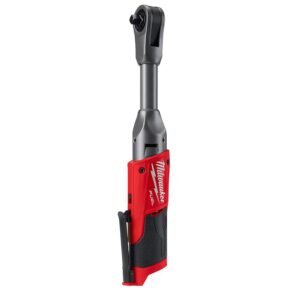
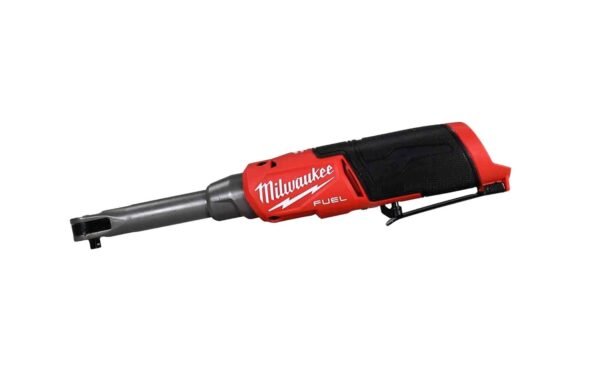
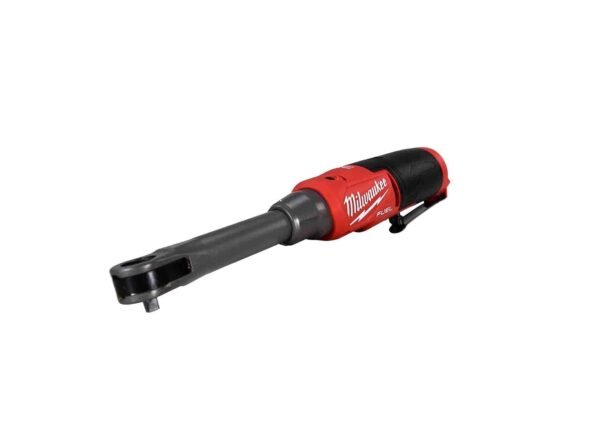
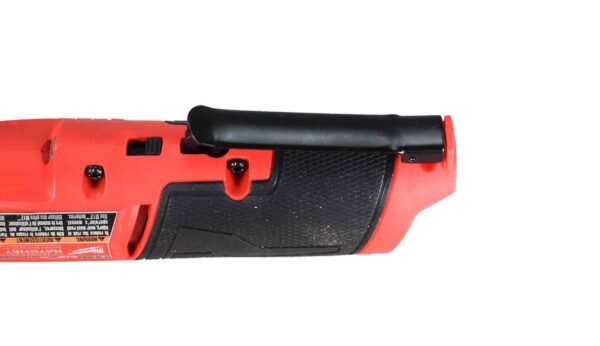
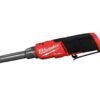
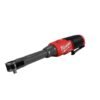
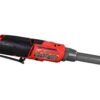
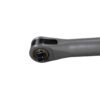
The Milwaukee 2568-20 12V Cordless 1/4″ Extended Reach Hi-Speed Ratchet publishes an unusual pairing for its size: up to 35 ft/lbs of maximum torque alongside 450 RPM. Most tools in this class pick one of those to lead on. The slim yoke housing is the design feature that makes the numbers usable, since a narrow neck reaches fasteners in engine bays and boxed assemblies that a wider body cannot enter. The variable speed metal trigger is what separates this from single speed ratchets, letting the operator set the pace instead of accepting full output on every fastener.
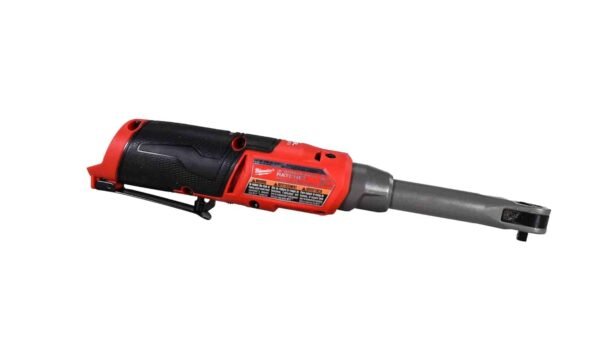
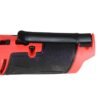
At 1.95 pounds it is genuinely light for a powered ratchet, which is the specification that determines fatigue over a long session more than any other. The listed length of just over 14 inches is deliberate: the extra body is what buys the reach the name promises. The powder-coated metal finish is a wear surface, chosen to survive scraping against brackets rather than for appearance.
Drawbacks Worth Noting
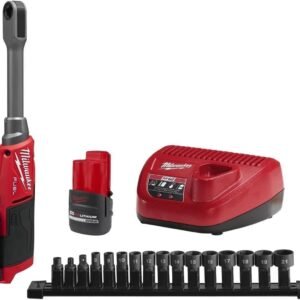
The battery is not included. As a tool only listing it assumes a Milwaukee 12V platform already in the kit, and buyers outside it need to add packs and a charger before anything works.
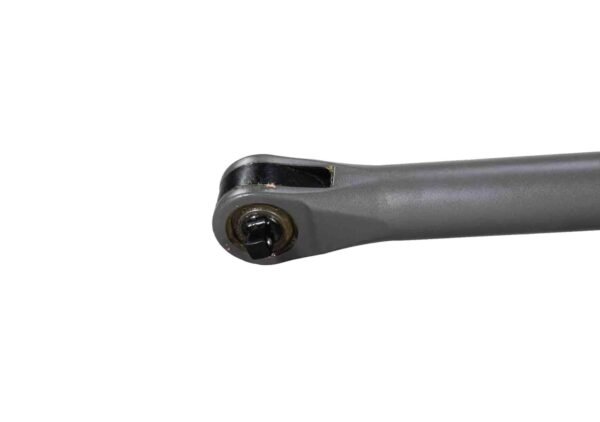
The fixed square head commits the tool to one drive size, with no interchangeable anvil, so covering a second drive size means a second tool. And the 35 ft/lbs ceiling is the honest limit of a 1/4″ drive at 12V: it handles the fasteners that drive size is meant for and will not free a seized suspension bolt. Work that regularly exceeds it points to a larger drive such as the M12 FUEL 3/8″ extended ratchet rated to 55 ft-lbs.
How the Design Stands Out
The slim yoke housing is the feature the whole tool is organised around. Narrowing the housing is what allows the drive into recesses that a conventional ratchet body cannot approach, and it is why this model exists alongside shorter Milwaukee ratchets. The metal trigger is responsive without being twitchy, which is what keeps small fasteners from being stripped or overtightened. The overall package suits everything from vehicle work to flat pack assembly.
The 14.35-inch length is the trade the buyer accepts for that reach. This is not a pocket tool, and in a genuinely narrow cavity the length itself becomes the obstacle. Where wrist contortion is the problem rather than absolute clearance, the extra reach is worth having.
Exploring the Features and Settings
Speed is modulated through the metal trigger up to the 450 RPM maximum, which runs down threads quickly on anything not already tight. There are no digital controls, preset modes, or electronic clutches. That simplicity means nothing to learn and nothing to fail, which on a jobsite tool is a legitimate design position rather than a shortfall.
Battery operation removes cords and outlets from the equation, which is what makes a ratchet usable under a vehicle or away from a bench. The 12V power source is matched sensibly to the 35 ft/lbs rating: a larger battery platform would add weight without a drive size able to use the extra output. The powder-coated finish is specified to resist chipping and fading under normal handling.
Positive Features That Make a Difference
- Light at 1.95 pounds, which reduces fatigue over extended use
- Up to 35 ft/lbs of torque, enough for most household and automotive fasteners
- Variable speed trigger for control and reduced risk of damaging fasteners
- Slim yoke housing for access in tight, hard to reach positions
The combination of portability and reach is what makes this a practical everyday ratchet rather than a specialist purchase.
Areas for Improvement: Known Limitations
- Battery not included, raising the real cost outside the Milwaukee 12V platform
- Fixed square head limits versatility compared with interchangeable anvil models
- Torque falls short for industrial or heavy duty fastening
- Longer than compact ratchets at 14.35 inches, which restricts the tightest work
None of these are hidden in the listing, and each maps to a clear alternative if it matters to your work.
Competing Brands and How This Model Stacks Up
Against comparable tools from DEWALT and Bosch, the Milwaukee competes on weight and access rather than output. DEWALT’s cordless ratchets generally publish higher torque while carrying more weight and bulk; the ATOMIC DCF513B at 70 ft-lbs is exactly that trade, with roughly a third more mass in the hand.
Bosch models more often offer additional speed settings and interchangeable heads for flexibility. The powder-coated metal housing here holds up well in rough conditions, and the slim profile reaches places where bulkier competitors cannot be positioned at all.
On power delivery, the 12V system balances output against runtime sensibly for a 1/4″ drive, though the missing battery remains the entry cost for newcomers. Buyers who want the same speed rating without the extended body should compare the M12 FUEL 1/4″ high speed ratchet, and the standard length option is the M12 2456-20 quarter inch ratchet.
Price to Quality Ratio
Measured against what it delivers, the pricing is defensible: professional level speed and torque for the drive size, in a light, durable body. For existing Milwaukee 12V owners the bare tool price is the whole cost, which is where this model looks strongest.
Starting fresh means adding batteries and a charger, and at that point cheaper kitted competitors deserve a look. Build quality and the reach advantage are what justify the premium for regular users, and the rest of the field is covered in our cordless ratchet wrench reviews.
Overall the Milwaukee 2568-20 combines usable torque, low weight, and genuine reach in a tool that stays simple to operate. The trade-offs are the empty box, the fixed head, and a length that is longer than compact ratchets, all of which are easy to weigh against your own work.