Description
Robust Design and Build Quality
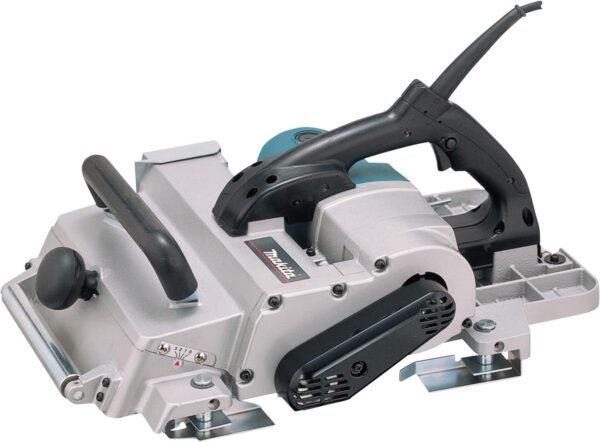
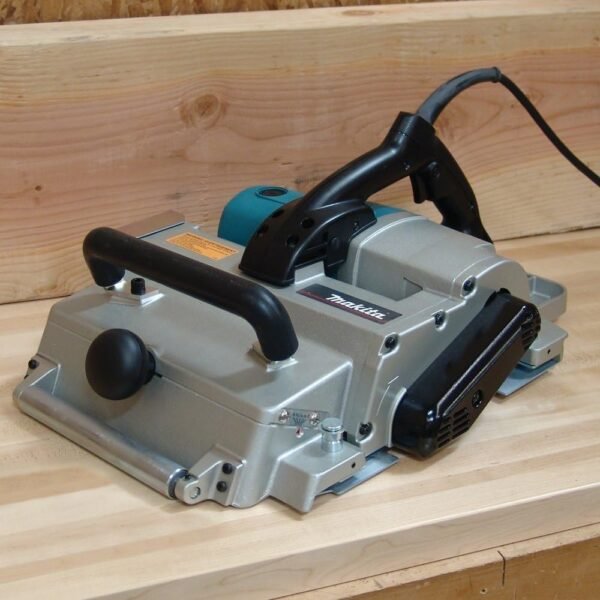
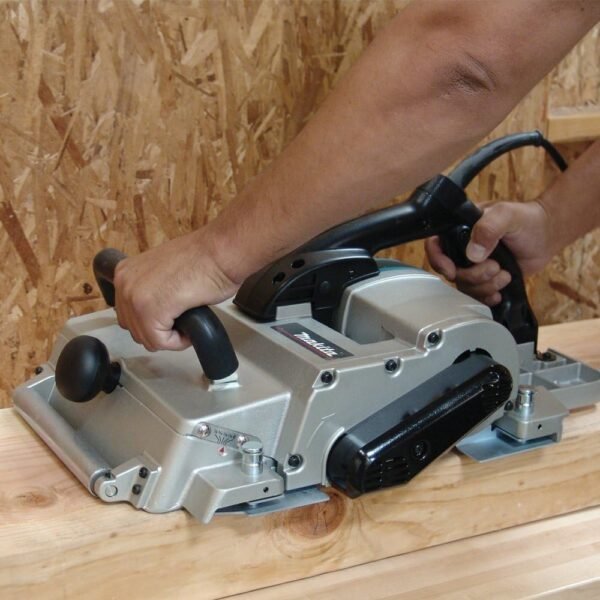
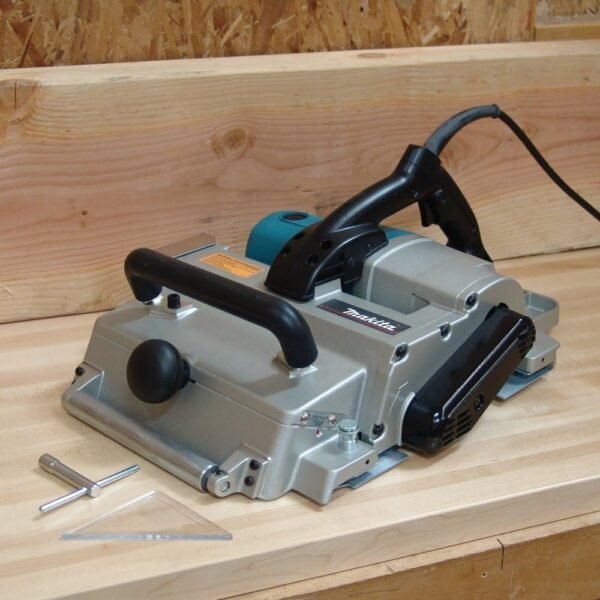
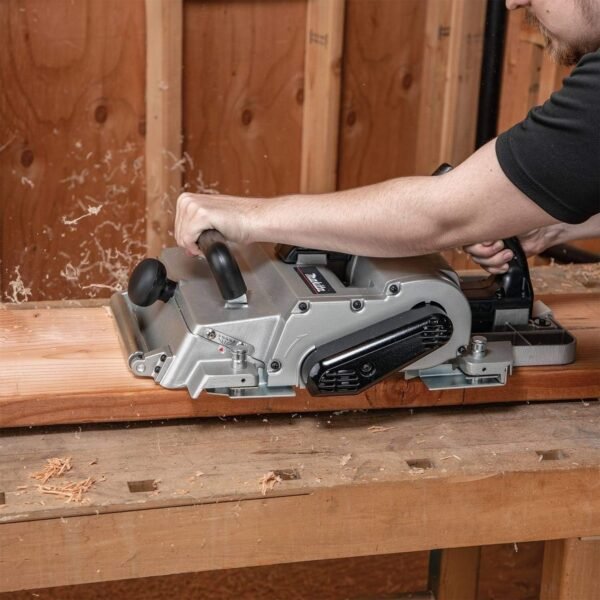
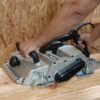
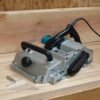
The Makita KP312 12-1/4″ Planer is specified with a cast iron base, the material that gives a planer of this size its flatness and vibration damping. At a listed 40.6 pounds, it is heavy for a portable tool, and that mass is what keeps the base stable through a full-width pass. A rubberised front handle handles the control side of the design, sitting where the operator applies downward pressure at the start of a cut. Ball bearing construction in the drive assembly is the durability specification, aimed at service life under continuous load. The front roller is the detail that makes a tool this heavy practical, since it carries the leading edge across rough or uneven stock such as logs and reclaimed timber.
Powerful Motor and Performance
The drive is a 15 AMP motor with a no-load speed of 12,000 RPM, which is at the top of what a corded portable planer draws from a standard circuit. That output supports the rated 12-1/4 inch cutting width and a depth of cut up to 1/8 inch in a single pass, a combination aimed at large timber and thick planks rather than trim stock. A poly “V” belt transfers power from motor to cutterhead, and the grooved profile is specified for grip under load so the blades hold speed through a full-width cut. Double-edged high-speed steel blades produce the finish quality, and the large ejection chute is sized to clear chips from both dry and damp wood without packing.
Intuitive Controls and Ease of Use
Depth of cut is set with a large, front-mounted depth setting knob, positioned for adjustment without releasing the handle. Alongside it, a guide rule helps line up successive passes to use the full cutting width on boards wider than the head. The 33-foot power cord is unusually long for a corded tool and reduces how often an extension lead is needed, and its exit point on top of the handle keeps it clear of the workpiece rather than dragging across it. Those are small specification choices, but they are the ones that determine how a heavy planer handles across a working day.
Practical Applications and Target Users
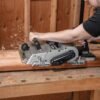
Makita positions this planer at timber framers, carpenters, log home manufacturers, and boat fabricators, trades that need wide, accurate cuts on heavy material. The rated width and depth suit hardwood slabs, rough sawn lumber, and reclaimed stock where several passes with a narrow planer would be impractical. A spring-loaded rest lifts the base clear of the bench when the tool is set down, protecting both the blades and the work surface. Listing data names that feature two ways, as a spring-loaded stand in one place and a spring-loaded rear foot in another, but both refer to the same rest mechanism. For general contractors and serious DIYers taking on heavy-duty work, the specification mix of power, width, and build quality is the draw.
Good Points
- Cutting width of 12-1/4 inches accommodates large boards and beams.
- 15 AMP motor at 12,000 RPM supports full-width passes.
- Ergonomic design with rubberised handle and front-mounted depth control.
- Large ejection chute reduces downtime from chip clogging.
Drawbacks
- The listed weight of 40.6 pounds makes it awkward for casual users or frequent relocation.
- The price point is steep for hobbyists who do not need this width or power.
- No cordless option, so a power source is required on every job site.
Comparing to Popular Competitors
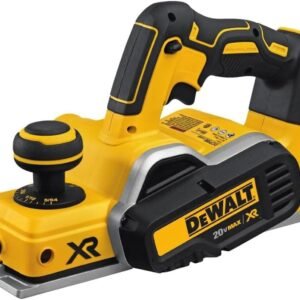
Among handheld planers, the Makita KP312 separates itself on cutting width and motor draw. Most competitors offer narrower heads and lower amperage, which is adequate for smaller work but slow on timber framing. Portable planers from DeWalt and Bosch typically cap out around 7 to 8 inches of cutting width, so the KP312’s 12-1/4 inch capacity is roughly half again wider than the segment norm. Anyone wanting cordless portability in the same category should look at the DEWALT DCP580B 20V MAX brushless planer, which trades width for freedom from a cord.
Rivals do counter with lighter tools, which matters if the planer moves between sites often, and some add cordless options or better dust collection. The KP312 answers on ruggedness, power, and chip clearance, which is why it suits large-scale wood processing. Ball bearing construction and externally accessible brushes add serviceability that many peers omit. Where stock can be brought to the shop instead, a benchtop machine such as the Makita 2012NB portable benchtop planer or the DEWALT DW734 benchtop planer delivers consistent thicknessing that a handheld tool cannot match.
Price Worthiness
Set against its class, this planer offers good value for money. It is not inexpensive, but the durability, cutting capacity, and motor rating justify the outlay for anyone planing wide boards or heavy timbers regularly, where the time saved per pass compounds quickly. Casual users will find the price hard to justify, while professionals get reliability and lower long-term blade and maintenance costs. The included socket wrench, triangular rule, and blade set add usable value in the box rather than as separate purchases. For shop-based work at a higher budget, an industrial machine such as the Powermatic 15HH planer covers a different requirement entirely.
Additional Thoughts on Maintenance and Accessories
The double-edged high-speed steel blades can be reversed once, which doubles usable edge life before replacement or sharpening. Externally accessible brushes mean routine motor servicing does not require stripping the housing, a genuine time saving on a tool run daily. The spring-loaded rest keeps blades off the bench between passes, which protects the edges and the work surface at once. These are the design decisions that separate a tool built for continuous professional use from one built to a price.
Overall this planer is aimed at large woodworking projects, combining cutting capacity, durability, and practical controls. Its limits are portability and price, both understandable at this specification level. For anyone shopping the handheld planer category for a wide-capacity, heavy-duty machine, it deserves a close look.