Description
Powerful Performance and Cutting Precision
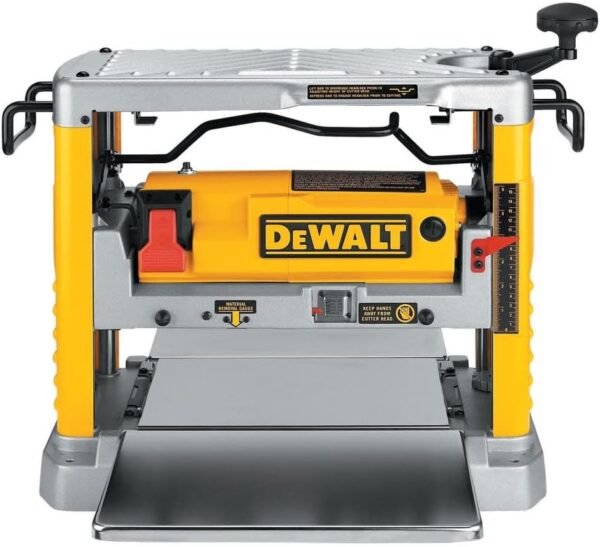
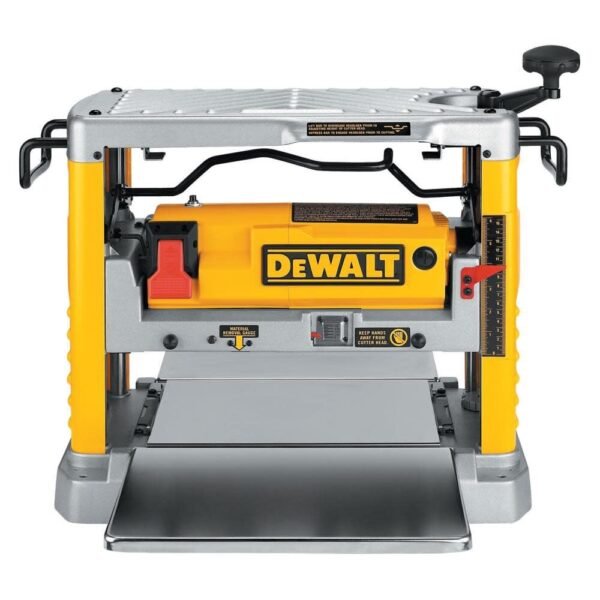
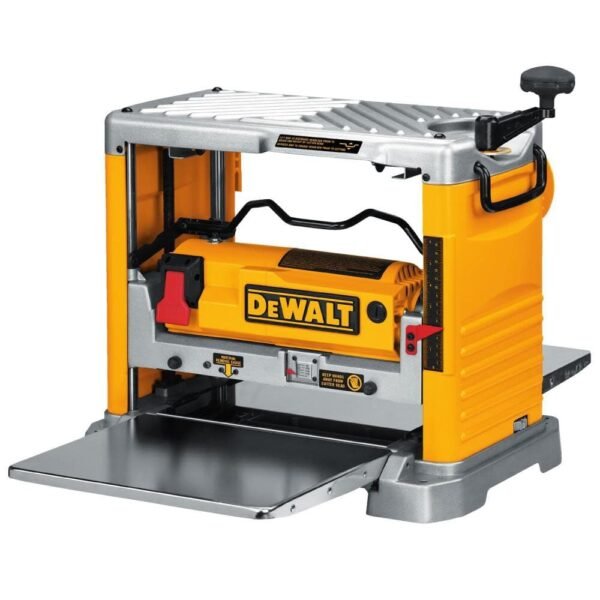
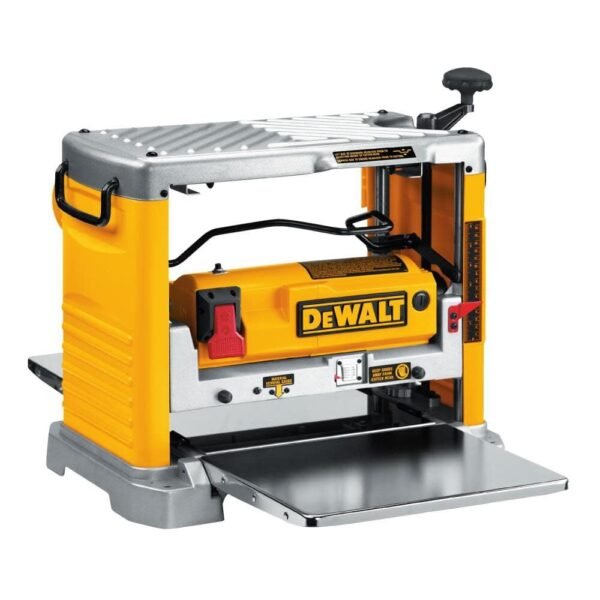
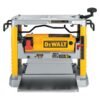
The DEWALT Benchtop Planer, 15-Amp, 12-1/2-Inch, 3-Knife Cutter, 20,000 RPM, Corded (DW734) is specified around a 15 amp motor rated for large, deep cuts in hardwood, which is the demand that separates a serious benchtop planer from a light-duty one. The cutter head is listed at 20,000 RPM, and combined with the three-knife design DEWALT specifies 96 cuts per inch. That figure is the one that predicts surface quality: more cuts per inch means shallower scallops between knife marks, and it is why a three-knife head finishes better than a two-knife head at the same feed rate.
Highlights of the Design and Usability
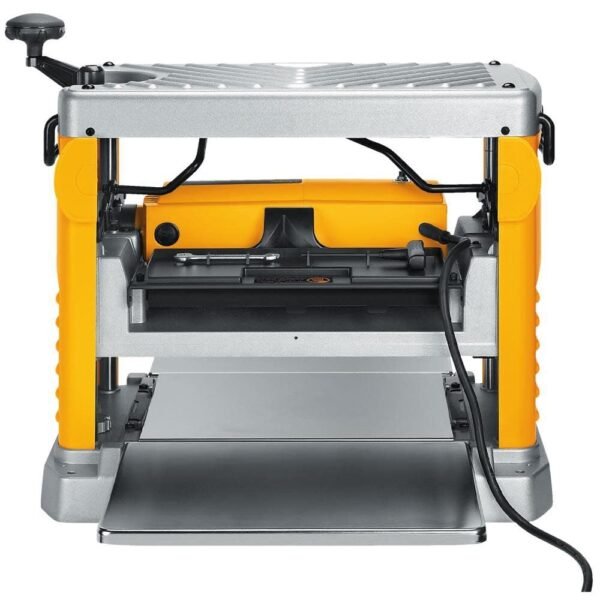
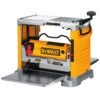
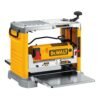
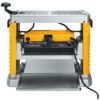
The design is robust and thoughtfully engineered for the category. It weighs nearly 80 pounds, which keeps it planted during a cut but places it firmly in the movable, not portable, bracket. The extra-long infeed and outfeed tables, listed at 33-1/2 inches in total, are the feature that supports longer boards and reduces the chance of kickback or an uneven cut at either end.
The four-column carriage lock is the specification aimed squarely at snipe, the shallow gouge that appears where a board enters or leaves the cutter head with the carriage free to flex. Locking the carriage on four columns rather than two is the standard engineering answer to that problem, and it is why this model is specified for finish-grade work rather than rough milling. Other machines in the same bracket appear in our benchtop planer category.
Positive Features That Stand Out
- Reversible knives: DEWALT states the disposable, reversible design both speeds knife changes and extends usable blade life by around 30%, which is a running-cost claim rather than a performance one.
- Material removal gauge: paired with the extra-large thickness scale, it allows a target depth to be dialed in without repeated trial passes.
- Turret depth stop: returns the machine to commonly used thicknesses without re-measuring, which is what keeps repeat parts consistent and speeds up repetitive tasks.
Downsides and Areas for Improvement
Several limitations follow from the specification and could be deal-breakers depending on the workshop:
- At close to 80 pounds the planer is heavy and bulky, so it needs a sturdy workbench or dedicated space. It is not a machine to carry out for quick jobs around the house.
- The noise level is on the louder side, normal for a universal-motor planer and relevant in shared buildings or where neighbors are close by. Ear protection is a requirement.
- Dust collection through the included hood is decent but not sealed, so an external dust extractor or shop vacuum connection makes a noticeable difference to how clean the workspace stays.
- The price point reflects its professional-grade build and performance, which is a stretch on a casual hobbyist budget.
Comparing to Popular Competitors
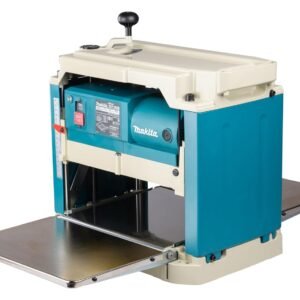
Against other benchtop planers such as the Makita 2012NB and the Ryobi 22-530, the DEWALT is specified higher on motor power and on the finish delivered by the three-knife cutter head. It is heavier and more rigidly built than the Makita, an advantage on hardwood where deflection shows up in the surface. The Ryobi is cheaper and built to a lower standard, with a less consistent finish as the trade.
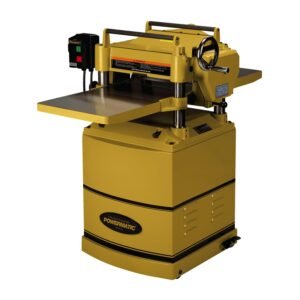
The Makita is generally rated better on noise and dust collection, so buyers who rank those factors first should weigh it seriously; the Makita 2012NB portable planer is covered in detail separately. The DEWALT’s edge is in knife life and ease of blade replacement, which matters most under frequent use. At the other end of the range, the Powermatic 15HH planer is the stationary step up for shops that have outgrown a benchtop machine.
Value Proposition and Cost Efficiency
Evaluating cost against features, this planer offers solid value for money for anyone who needs a reliable, heavy-duty machine. Build quality and cut precision are what justify the investment for professionals and committed woodworking enthusiasts. DEWALT lists a three-year limited warranty covering defects.
For casual users or beginners the price will feel steep, but for regular hardwood work or larger projects the machine is specified to keep up. The return comes through cut quality and the sanding time it removes downstream, which is the real economic argument for a good planer. Buyers who need portability instead should look at a handheld tool such as the cordless DEWALT DCP580B planer.
Features and Settings Explored
Looking deeper at the settings, the turret depth stop is the control that makes repeat thicknesses fast, since it returns to preferred dimensions without re-measuring every time. The material removal gauge shows how much stock a pass will take, allowing detailed adjustments in small increments rather than guesswork. That level of control is not universal in benchtop planers and is useful across work ranging from furniture legs to door panels.
The three-knife cutter head uses removable, reversible knives, and changing them is a straightforward bench operation once the sequence is familiar. Reversible blades hold an edge across two working lives before replacement, which reduces downtime compared with single-use designs. The feed tables provide a smooth transition in and out of the planer, helping to limit tear-out on softer woods where the grain lifts.
Practical Experience and User Feedback
What buyers in this bracket typically want is a finish that needs minimal sanding and controls that are readable without a manual, and the DW734 is specified against both: a large thickness scale, a material removal gauge, and a depth stop that takes measurement out of repeat cuts. The learning curve is short for anyone with basic machine experience.
The heft of the machine means it is set up once rather than moved between tasks, and once positioned it handles a workload lighter planers cannot. Noise is the trade for a 15 amp universal motor, and hearing protection is not optional, which is a small price for the capability.
The specification reads as a machine built for sustained work rather than occasional use, capable of jobs that lesser machines struggle with. DEWALT engineered this benchtop model with both power and precision in mind, which makes it a worthy addition to a serious woodshop. For surfacing work that has to happen away from the bench, the corded Makita KP312 handheld planer covers a different part of the job.