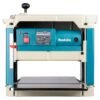
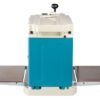
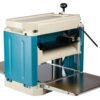
Description
Positives of the Makita 2012NB 12″ Portable Planer
The Makita 2012NB 12″ Portable Planer is aimed at woodworkers who want portability without giving up precision. The quiet operation at 83 dB is the specification that stands out first, since it is measurably lower than most benchtop planers and makes extended sessions easier on the ears. The 15 AMP motor with an 8,500 RPM no-load speed is rated to handle hardwoods and softwoods alike without bogging down.
The Interna-Lok automated head clamp is the feature that addresses snipe, the uneven cut at the start and end of a board that plagues this whole tool class. Makita specifies it to lock the cutterhead in position through the pass. The adjustable depth stop supports repeatable cuts, which is what cabinetry and fine furniture work require.
Blade changes are quick by design thanks to the disposable double-edge blades and the engineered blade change system, so there is no complicated mechanism to wrestle with. The included magnetic holders and wrenches keep blades and tools together, a small but real convenience. Overall, this portable planer combines power, precision, and user-friendly design in a compact package.
- Quiet operation reduces fatigue during work
- Powerful 15 AMP motor handles tough materials
- Interna-Lok clamp targets snipe directly
Drawbacks to Consider
Several aspects deserve pause. At over 28 kilograms (about 61.8 pounds), this is not a light machine for a tool sold as portable. Listing copy is inconsistent on this point: the same product is described as lightweight and compact in one section and as heavier than comparable portable planers in another, and the 61.8 pound figure is the one to plan around. Moving it between floors or tight spaces is a two-person job as often as not. The size, roughly 30 inches long and 19 inches wide, also makes it bulky for transport in smaller vehicles.
The price point sits above many other benchtop planers, which will deter casual woodworkers and hobbyists who do not need the advanced features. And while the dust collection port is a welcome inclusion, the dust hood is optional and not supplied in the standard package, so efficient dust management costs extra, and it is close to mandatory for indoor or finish woodworking.
The fixed feed rate of 28 feet per minute is another constraint. Flat stock is straightforward; warped or uneven lumber takes patience and repeated passes to bring to a clean finish, with no slower setting available to help.
- Heavier than comparable portable planers
- Dust collection hood sold separately
- Higher price compared to basic models
Stability and Design Features
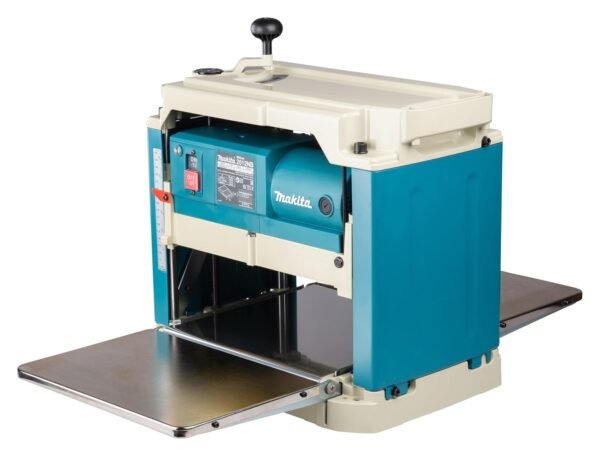
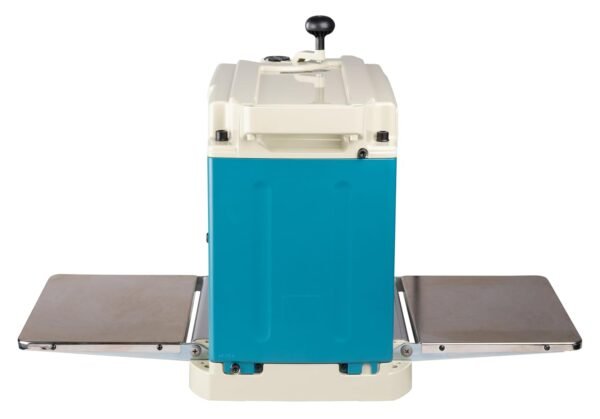
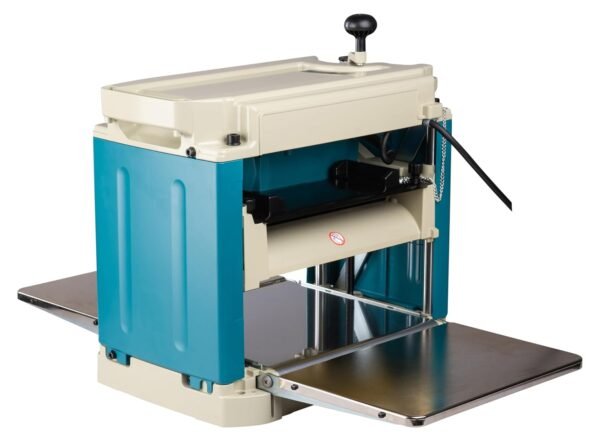
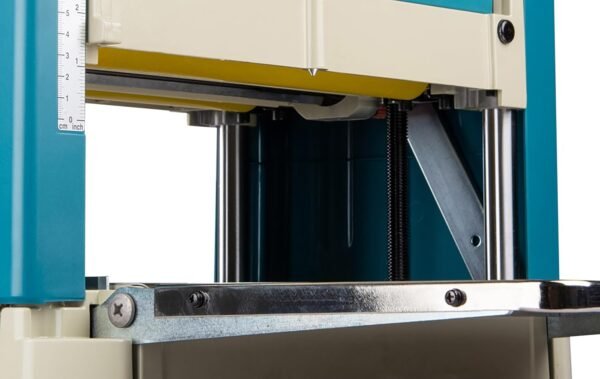
The four-post design paired with diagonal cross supports is what gives the planer its rigidity, and rigidity is the property that governs cut accuracy under load. The large table extensions on both sides are a considered addition, supporting longer boards so the stock does not tip or feed unevenly.
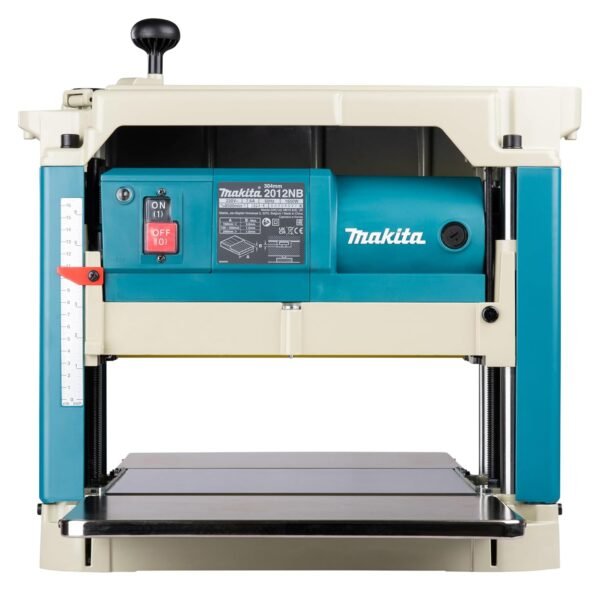
Ergonomics were clearly part of the brief. The large paddle on/off switch is easy to reach and operate with work gloves on. The compact form factor keeps bench footprint reasonable while still accepting boards up to nearly 12 inches wide. The LED indicator light is a simple but useful confirmation of power status at a glance.
The detachable toolbox built into the unit stores blades and wrenches on the machine itself. It keeps everything organized and prevents the mid-project hunt for parts.
Performance and Precision
The cutting capacity of 12 inches wide, 1/8 inch deep, and up to 6-3/32 inches thick covers a wide range of stock, from hardwood slabs to pine boards to reclaimed lumber. The adjustable depth stop controls how much material comes off in each pass, which is what finish work demands for accuracy.
The feed rate of 28 feet per minute is set to balance throughput against surface quality, fast enough to be productive and slow enough to avoid burning or chatter marks in normal stock. The disposable double-edged blades hold an edge and are quick to replace, which keeps downtime short.
A variable feed rate would add flexibility across different woods, and its absence is the main functional gap on the spec sheet. The built-in Interna-Lok automated head clamp is the counterweight, addressing snipe at the start and end of boards where most benchtop planers struggle.
Product Comparisons
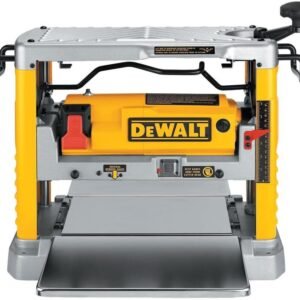
Compared with other benchtop planers such as the DeWalt DW735 or the Bosch 12-Inch Planer, this model holds its position. The Makita’s quieter operation is an advantage in smaller workshops and noise-sensitive settings. The ease of blade changes is better than many rivals that need more tools and time to swap. The closest direct comparison in this category is the DEWALT DW734 benchtop planer, and the rest of the field is covered in the benchtop planers category.
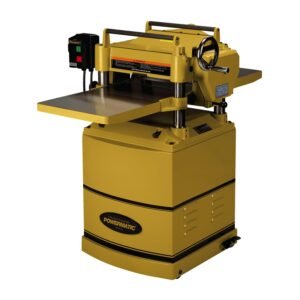
The DeWalt DW735 does offer a dual feed roller system that improves material feeding and reduces tear-out on difficult grain, which the Makita lacks. Bosch models sometimes carry a slightly higher feed speed and digital depth readouts, features absent here but not essential for most work. Shops that need serious capacity and a helical head instead should look at the Powermatic 15HH stationary planer.
The Makita leads on stability and snipe reduction thanks to the Interna-Lok clamp, which some competitors either omit or execute less effectively. Its compact design makes it more transportable than industrial planers, though it remains heavier than several other portable options.
Value for Money
Weighed on build quality, motor power, and advanced features such as the Interna-Lok clamp and quick blade changes, this planer offers solid value in its price bracket. It is not the cheapest option, but the engineering and specification justify the spend for professionals and serious hobbyists who need precise, consistent results.
Anyone starting out or needing basic thicknessing will find cheaper models that suffice, though the quiet operation and finish-quality focus here make the extra outlay worthwhile for committed woodworkers. Those who only need to dress edges on site are better served by a handheld tool such as the Makita KP312 corded electric planer.
The included accessories, covering the blade set, magnetic holders, and wrenches, add package value and reduce follow-up purchases. The optional dust hood is recommended but adds to the total cost.
Ease of Use and Portability
The compact footprint makes the planer easier to move between job sites than a stationary machine, though the weight remains a genuine obstacle. Setup involves minimal fuss, and the intuitive controls keep operation straightforward for anyone new to benchtop planers.
Blade changes are among the fastest in this class, and the LED power indicator is a useful safeguard against accidental startups. The design focuses on operator comfort, which shows in the low noise figure and the switch placement.
Despite the portable billing, this is not a grab-and-go tool for casual users. For professionals who move between locations regularly it does balance transportability and performance, and a cordless option such as the DEWALT DCP580B brushless planer covers the jobs where hauling 61.8 pounds makes no sense.
The Makita 2012NB 12″ Portable Planer makes its case on a blend of power, precision, and thoughtful design, which is what finish woodworking projects reward. Weight and price are the real limitations, and against them sit quiet operation, snipe control, and fast blade changes.