
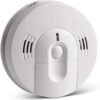




Description
Positive Features of This Combination Smoke and CO Detector
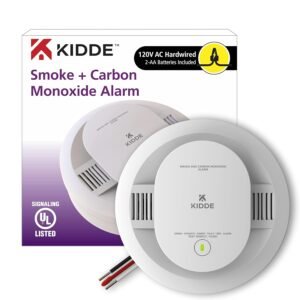
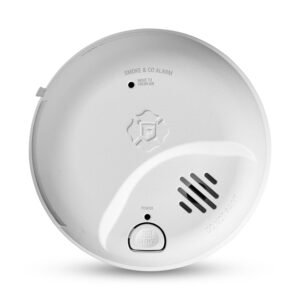
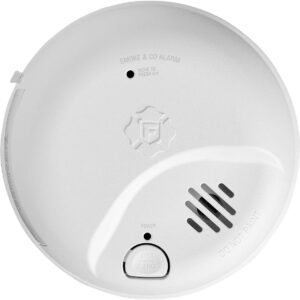
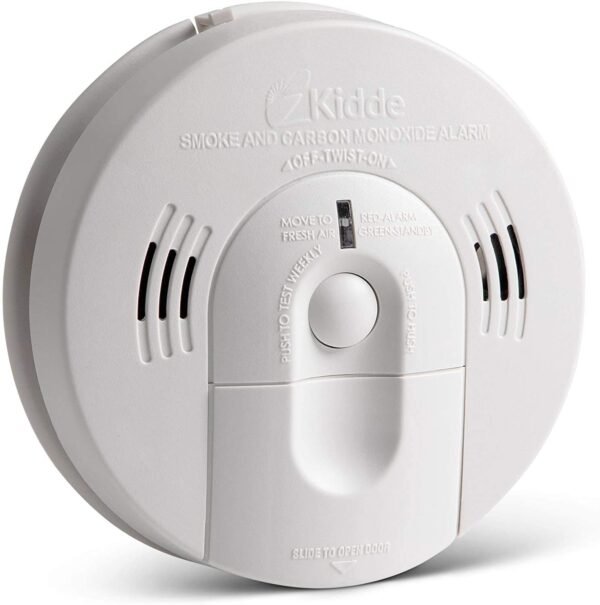
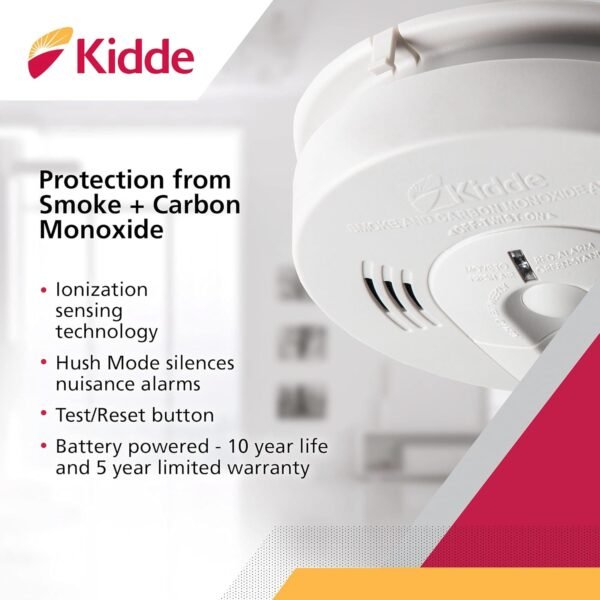
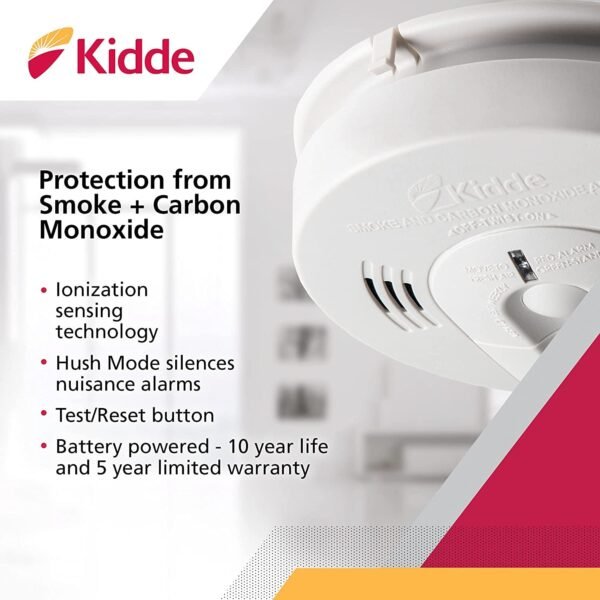
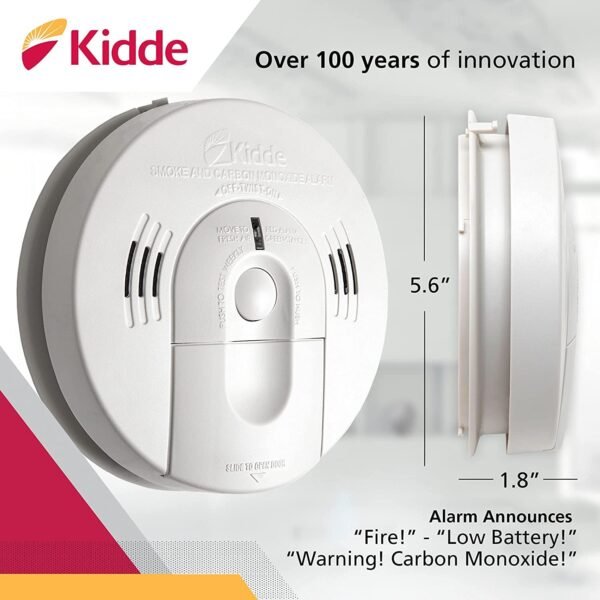
The Kidde Smoke & Carbon Monoxide Detector with Voice Alerts, Battery Powered, Combination Smoke & CO Alarm 1 Pack Previous Model Detector covers two hazards from one mounting point. Its dual functionality puts smoke and carbon monoxide detection in a single housing, using an ionization sensor for smoke and an electrochemical sensor for carbon monoxide, which is colourless and odourless and gives no warning of its own. The voice alerts are the feature that separates this model from a plain sounder, announcing either “Fire! Fire!” or “Warning! Carbon Monoxide!” instead of leaving occupants to interpret a beep pattern. Naming the hazard matters, because the two require opposite responses, ventilating and leaving for carbon monoxide against evacuating for fire.
The 85-decibel alarm is the standard output level for residential alarms in this class. The Smart Hush button silences a nuisance alarm for about eight minutes without taking the detector out of service, which covers the window when cooking smoke or shower steam reaches the sensor. The front-load battery compartment is the practical highlight, since batteries can be changed without dismounting the unit from the ceiling. As a battery-powered alarm, it keeps working through a mains outage by design rather than by backup.
- Combines smoke and carbon monoxide detection in one device
- Voice alerts name the hazard alongside an 85-decibel alarm
- Smart Hush button silences nuisance alarms temporarily
- Front-load battery door simplifies replacement
Limitations to Keep in Mind
The listing data contradicts itself on batteries. One part of the specification lists two AA alkaline cells as supplied, while another describes the unit as running on AAA batteries. Those are different cells with different service intervals, so confirm the battery type in the manual or on the unit before buying a supply of the wrong size. Whichever applies, alkaline cells in a battery-only alarm need checking on a schedule, and a low battery warning that is ignored will repeat until the alarm goes quiet altogether.
The ionization sensor is the second consideration. Ionization sensing reacts sooner to fast flaming fires and is more prone to nuisance alarms from cooking and steam than photoelectric sensing, which the hush feature mitigates rather than solves. Households that want the opposite bias look at the sealed ten year Kidde P3010CU combination alarm. The housing is also on the larger side at about 5.6 inches square and 1.8 inches deep, so it is more visible on a ceiling than slimmer designs. Repeated voice announcements can wear thin where nuisance alarms are frequent, and the unit is battery-only, which rules it out for anyone who wants a mains-powered alarm.
- Listing data disagrees on whether the cells are AA or AAA
- Larger housing is more visible on ceilings
- Ionization sensing is more prone to nuisance alarms from cooking or steam
- Voice alerts become repetitive where nuisance alarms occur often
Design and Installation Experience
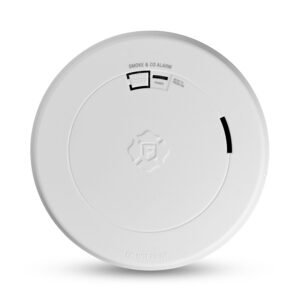
Installation is a bracket and a twist, with no wiring involved. The tamper-resistant design discourages unauthorised removal, which is the reason this style of alarm shows up in rental properties and in homes where an alarm sits within reach. The white finish blends with most ceilings, though the depth of the housing keeps it noticeable. The pop-up front door battery compartment is the design decision that pays off over ten years, because alarms that need dismounting for a battery change are the alarms that go unserviced.
The Test-Hush button does double duty, confirming the alarm sounds on demand and silencing a nuisance activation temporarily. The specified operating humidity range of 10% to 95% relative humidity covers most indoor conditions, and the manufacturer’s instructions still set minimum distances from kitchens and bathrooms. Placement and the number of alarms a building needs are code questions, so follow local requirements rather than convenience.
Performance and Daily Use
In normal operation the alarm stays out of the way, which is what a detector should do. The green LED flashing every 60 seconds confirms the unit is powered and functioning, a passive status signal that needs no interpretation. The voice alerts are the functional difference in an emergency, since distinguishing a smoke alarm from a carbon monoxide alarm by tone pattern alone is difficult when woken suddenly.
Smoke response comes from the ionization chamber, which detects the small particles produced by flaming fires. Carbon monoxide response comes from the electrochemical cell, which cannot be checked by any home method beyond the test button, so the listed rating and the end-of-life signal are what owners have to rely on. The 10-year limited warranty covers the unit, and the batteries remain a routine maintenance item alongside it.
Competitors and Market Rivals
Against First Alert combination alarms or the Nest Protect, the differences are clear. First Alert offers both battery and hardwired versions across its range, which gives more installation flexibility than this battery-only unit. Nest Protect adds phone connectivity and self-testing at a considerably higher price. Buyers who want voice alerts with mains power usually compare First Alert’s SMCO100V-AC, which also announces the hazard rather than sounding a plain tone.
Where this Kidde holds ground is simplicity and spoken warnings, which some households prefer over app notifications that go unseen. The listing states it meets UL 2034 and UL 217, the standards named for combination alarms of this type. Competitors using photoelectric sensing handle cooking areas better, since ionization chambers react more readily in those conditions. Households that want mains power in the same Kidde family move to the hardwired KN-COSM-IBA.
Value Assessment
For a battery-operated combination detector, the price to quality ratio is reasonable. The unit delivers dual smoke and carbon monoxide detection, spoken warnings, and a hush function without app integration or configuration, which is exactly the specification many buyers want. For homeowners and renters after a low-cost, straightforward alarm, it is a sensible option.
It is not the most advanced detector available, and it covers the fundamentals with a few well-judged touches, notably the tamper-resistant mount and the front battery access. Buyers who need smart integration or hardwired power should look elsewhere, and those who want a separate carbon monoxide alarm in a bedroom or near an appliance often add a plug in alarm like the First Alert CO605 rather than a second combination unit. The rest of the field is covered across our combination smoke and carbon monoxide detector reviews.
What Owner Feedback Reports
Owner ratings for this model return to the voice alerts more than any other feature. Households with older occupants report that a spoken warning is easier to act on than a beep code, which has to be remembered before it can be interpreted. Ratings mentioning children note the alarm volume as startling, which is what an 85 decibel device is designed to be.
Nuisance alarms from steam appear regularly in reviews where the unit is fitted near a bathroom, consistent with the behaviour of ionization sensing. The hush function is the feature most often credited with keeping those alarms on the ceiling rather than in a drawer. The overall pattern in owner feedback is a dependable, simple alarm whose performance depends heavily on where it is placed.