
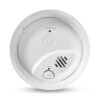




Description
Highlights of the First Alert SMI105-AC Smoke Alarm
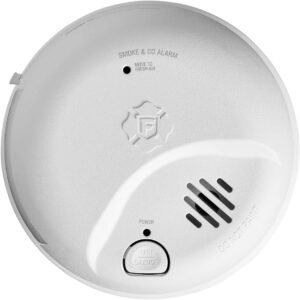
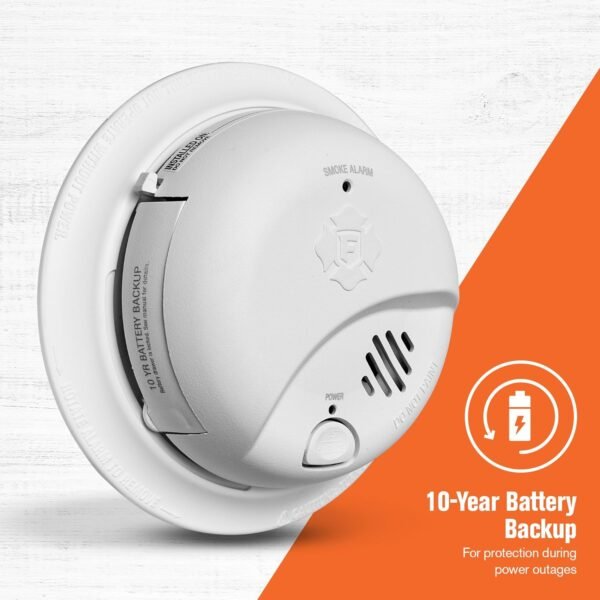
The First Alert SMI105-AC Interconnect Hardwire Smoke Alarm with 10-Year Battery Backup is positioned around three published claims. Precision Detection is the manufacturer name for the sensing arrangement said to reduce nuisance alarms from cooking fumes and shower steam, which is the complaint that drives most alarms off a kitchen ceiling. The 10-year sealed backup battery means the alarm is specified to keep signaling through a mains outage for the full service life of the unit, with no annual cell purchase. The interconnect terminal lets one triggered alarm sound every compatible unit on the same circuit, which is how whole floor coverage is normally wired in the smoke detector and fire alarm category.
- Sensing tuned to reduce nuisance alarms, per the manufacturer
- Sealed 10 year backup cell included
- Interconnects with compatible First Alert units on one wired loop
Limitations Worth Considering
One point in the imported specification does not settle cleanly and is worth raising before purchase. The feature summary credits Precision Detection with suppressing cooking nuisance alarms, while the limitations section of the same listing describes the sensor as ionization, the type generally noted as more prone to cooking triggers and slower on smoldering fires than photoelectric sensing. Those two statements pull in opposite directions, so the sensor type should be confirmed against the manufacturer specification sheet before buying, particularly for a kitchen or hallway placement.
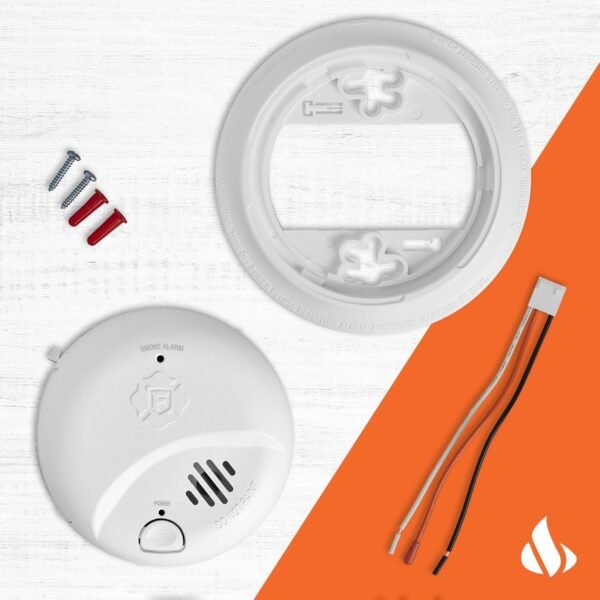
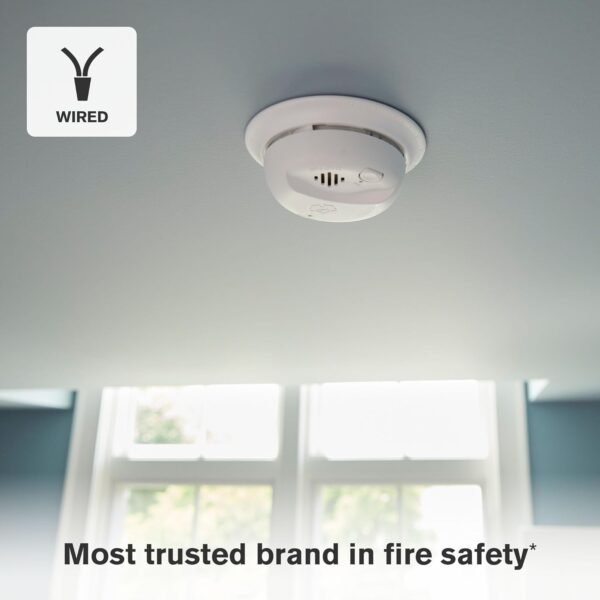
The other constraints are practical. Hardwiring is required, using the supplied adapter plug, so the job needs either working electrical knowledge or a licensed electrician and it must follow local code. A single unit pack also covers only one location, and an interconnect loop is only useful once several units are on it.
- Hardwired install; wiring competence or an electrician required
- Sensor type stated inconsistently in the listing text
- Single unit pack, so multi room coverage means multiple purchases
Indicators and Day to Day Operation
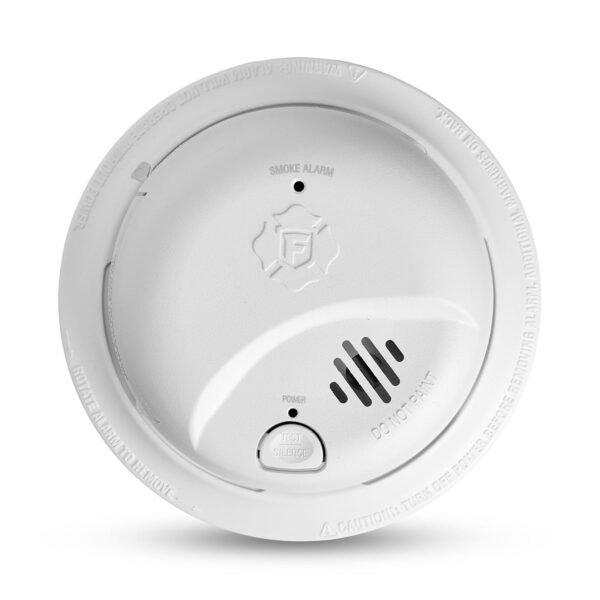
Day to day the unit is quiet and the interface is small. The visual alarm indicator shows which unit on an interconnected loop originated the signal, which matters when four alarms are sounding and only one has seen smoke. The test and reset button runs the self test and clears a triggered state. The end of life warning announces that the unit has reached the end of its rated term and needs replacing rather than repairing. The same origin indicator appears on the closely related First Alert SMI100-AC hardwired alarm, so buyers cross shopping the range will find the controls familiar.
Comprehensive Features and Settings
Published hardware is straightforward. The easy adapter plug mates the alarm to a standard hardwire harness, which shortens the connection step but does not remove the need for correct wiring at the box. The white housing measures 5.6 inches in diameter by 2 inches high, a conventional ceiling footprint. Power comes from the mains circuit with a 9V lithium backup cell supplied in the box and rated to last the 10 year service life, so there is no scheduled battery replacement in normal use. There is no radio, no app and no self test scheduling in this model.
Peer Products and Competitors
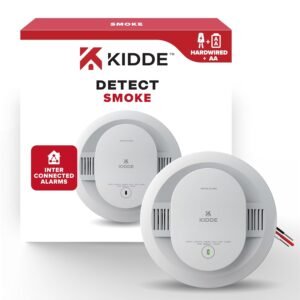
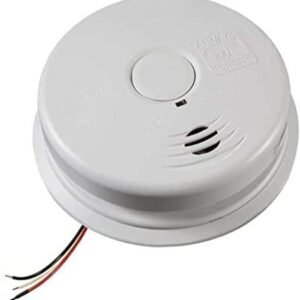
Against smart alarms with app notification and voice location cues, the SMI105-AC gives up connectivity and keeps the price down. Against plain hardwired alarms it adds the sealed decade cell and the origin indicator. Buyers weighing sensor type against nuisance behavior often end up comparing it with a photoelectric unit such as the Kidde P3010B photoelectric alarm, which publishes photoelectric sensing outright, or with a combination unit such as the First Alert SMICO100-AC with carbon monoxide sensing where one device covers two hazards.
- Interconnect and sealed backup cell are the headline specification points
- No smart features, so no remote notification of any kind
- Sensor type is the open question when comparing nuisance alarm behavior
Price Worthiness
On published specification per dollar this alarm sits in the value part of the hardwired market. The decade long backup cell removes a recurring cost, the interconnect terminal removes the need for a separate signaling scheme, and the adapter plug removes one fiddly step from the install. The saving comes from what is left out: no voice alerts, no radio, no location announcement. For a household replacing a set of aging hardwired alarms on a fixed budget, that trade lands reasonably, and a comparable single hazard option is the First Alert 9120B hardwired alarm with battery backup.
Installation and Maintenance Insights
Maintenance across the life of the unit is minimal by design. The backup battery term matches the 10 year unit life, so the maintenance schedule is periodic testing rather than annual cell swaps. The end of life warning is the mechanism that stops an expired alarm from sitting on a ceiling looking functional. Installation is the harder half: the mains connection has to be made correctly, the interconnect conductor has to be landed on the right terminal across every unit on the loop, and both steps are governed by local electrical and fire code rather than by preference. Where any of that is unclear, a licensed electrician is the right call.
Interconnect Behavior and Everyday Signals
What the interconnect feature actually does is worth stating plainly, because it is easy to overstate. A unit that senses smoke sounds its own horn and drives the interconnect line, and every compatible alarm wired to that line sounds as well. The alarm signals a sensed condition; it does not suppress a fire, summon a responder or substitute for the alarm layout a local code requires. The origin indicator exists so that the source can be identified afterwards. The low profile housing and standard white finish keep the unit visually unobtrusive on a ceiling, which is a design point rather than a safety one.
- Interconnected units sound together when any one of them triggers
- Nuisance alarm reduction is a manufacturer claim tied to the sensing arrangement
- Conventional white ceiling housing at 5.6 inches across
Taken as a whole, the SMI105-AC is a conventional hardwired alarm with two useful additions: a sealed backup cell rated for the life of the unit and an interconnect terminal with origin indication. The unresolved sensor description is the one item to check on the manufacturer sheet, since it decides how the alarm is likely to behave near a stove and how quickly it responds to a smoldering source.