

Description
Highlights of the First Alert SMI100-AC Smoke Alarm
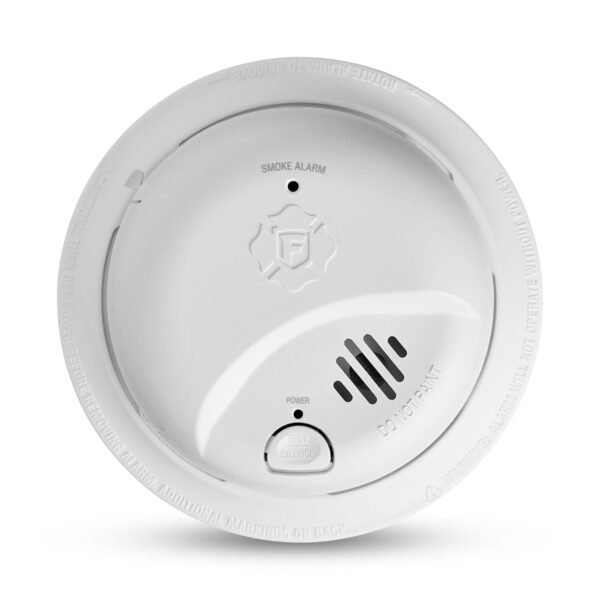
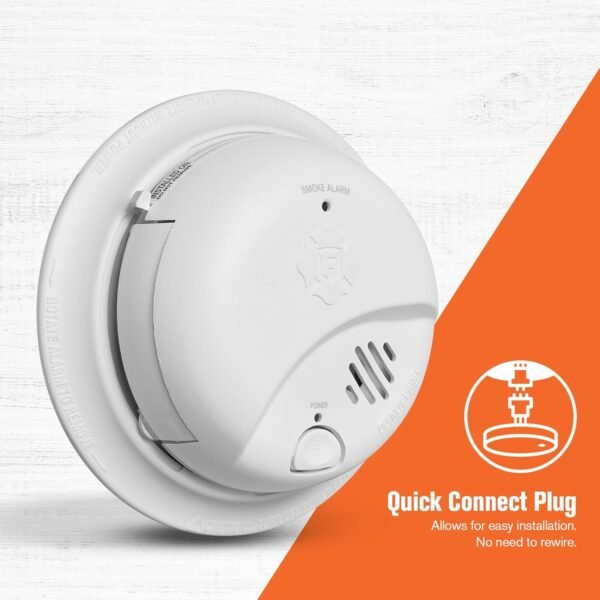
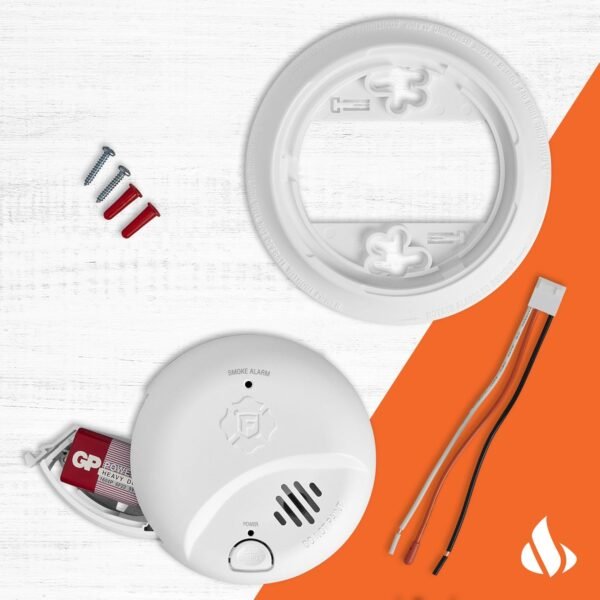
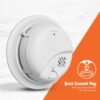
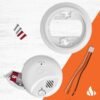
The First Alert SMI100-AC, Hardwire Interconnect Smoke Alarm with Battery Backup is built around Precision Detection advanced sensing technology, which First Alert lists as the feature that cuts nuisance alarms from cooking smoke. The listing also states that the alarm meets new industry standards for early warning. Fitting is helped by the Quick Connect Plug, which lets the alarm drop onto an existing First Alert harness without rewiring the ceiling box. The battery backup keeps the alarm powered when mains supply drops, and the alarm indicator shows which unit in an interconnected set started the alert, which is the difference between searching a house and walking to a room. The same SMI100-AC model number also appears under the BRK label, covered separately in the BRK SMI100-AC write-up.
Key points from the published specification:
- Reduces nuisance alarms from cooking smoke effectively
- Interconnect capability means linked alarms sound together
- Battery backup keeps the unit powered through blackouts
- Easy installation with no rewiring required
- Clear visual alarm indicator helps pinpoint the source
Areas for Improvement
Listing data for this model is inconsistent on sensor type. The same copy credits Precision Detection with resisting cooking nuisance alarms and then describes an ionization sensing element, which is the type most associated with those nuisance trips and with slower response to smouldering fires. Check the sensor marking on the unit before buying, since ionization and photoelectric elements behave differently on smouldering and flaming fires, and a household that assumes one and receives the other has made a decision without knowing it. Where the ionization reading is correct, pairing it with photoelectric units elsewhere in the property is the usual approach.
The battery backup uses a 9V alkaline cell that needs periodic replacement, rather than the sealed ten-year lithium backup now common in this price band. Buyers who would rather not have that task can look at the sealed-battery First Alert SMI105-AC, which is otherwise the same idea. The housing is plain, and it will not disappear into a modern ceiling the way the slim-profile alarms do.
The main limitations:
- Sensor type stated inconsistently across listings
- Battery requires regular replacement, no long-life option
- Basic design might not appeal to style-conscious users
- No smart home integration or app connectivity
Installation and Wiring Considerations
Fitting is simpler than most hardwired alarms because of the Quick Connect adapter plug in the box, which removes the need to rewire a compatible existing harness. That does not make it electrical-work-free: the circuit still has to be isolated at the breaker, and hardwired and interconnected alarms are code-governed work that often calls for a qualified electrician. Replacing like for like on an existing harness is the straightforward case; a new run, a new box or a new interconnect loop is not.
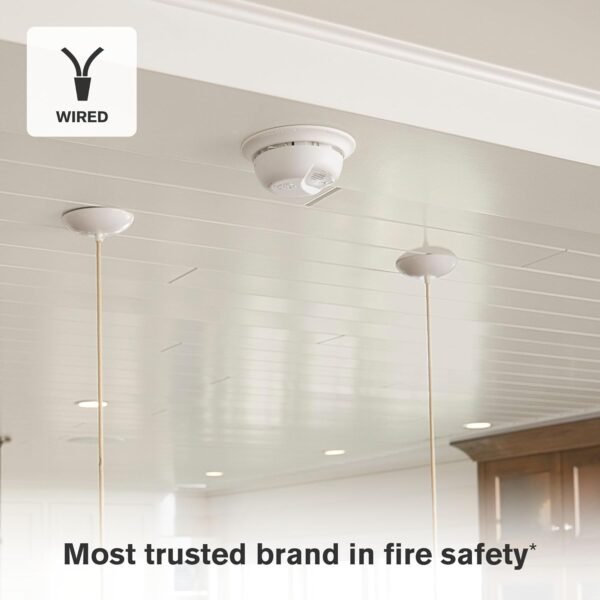
The interconnect feature is the reason to choose a hardwired alarm at all. One unit detecting smoke sounds every alarm on the loop, so an alert in a basement reaches a bedroom two floors up. Where a run of cable is impractical, a relay module such as the Kidde SM120X is the accessory that gets brought into these installations. The visual alarm indicator flashes to show a triggered or faulted unit, which keeps maintenance to a walk-round rather than a guessing game. The horn is loud and shrill by design.
Safety Features and Technology
The sensing element, on the ionization reading of the specification, responds fastest to fast-burning flame, with Precision Detection technology presented as the counterweight to false alarms. The battery backup covers the outage case, which matters because a hardwired-only alarm is a dark alarm the moment a storm takes the power out. The interconnect capability spreads a local detection across the whole set of alarms, which raises the chance that people in other rooms hear a warning early enough to act on it.
The alarm indicator light identifies which unit triggered, a real help in a property with alarms on several floors. What is absent is smart technology, meaning no Wi-Fi and no phone alerts, so nobody away from the property learns anything from this alarm.
Comparison with Alternative Offerings
Against the rest of the market, this alarm competes on simple installation and price. The Nest Protect brings photoelectric sensing, smart home integration, phone alerts and self-test routines, at several times the cost. The First Alert SMI100-AC is cheaper and quicker to fit, which suits a whole-house replacement where six or eight alarms are being changed at once and the budget is per unit, not per feature.
Some rivals need new wiring or professional installation as a matter of course, while this model’s plug-in harness with battery backup makes a like-for-like swap realistic for a competent DIYer. Households that want the same sensing without mains wiring can compare the battery-powered First Alert SMI100, and mixing in photoelectric units elsewhere remains the sensible approach.
Price Worthiness in Relation to Features
This alarm offers solid value for money on Precision Detection technology, battery backup, and interconnect capability. It delivers the functions a hardwired alarm is bought for without charging for connectivity that many households never use.
The saving against premium smart alarms is paid for in remote monitoring and sensor choice. For buyers who want straightforward fitting, early warning and dependable smoke detection across a linked set of alarms, the price-to-quality ratio is sound. The wider smoke detector and fire alarm category shows where the extra money goes at higher price points.
What Owner Ratings Report
Owner ratings for this model cluster on two points. The first is quiet operation near kitchens, with reviewers reporting fewer cooking trips than the alarms they replaced, which is the whole promise of the Precision Detection branding. The second is the interconnect behaviour, repeatedly described as the reason households upgraded in the first place, since alarms that sound together are what turn a basement detection into a bedroom warning.
The recurring complaint is the low-battery chirp. It demands attention promptly, and left alone it becomes frequent. That is normal for a 9V backup rather than a fault, but it is the reason sealed ten-year units have taken over this end of the market.
Safety and Reliability in Everyday Service
The value in this alarm is the combination of reliable early warning and low nuisance-alarm rates, because an alarm that trips over dinner is an alarm somebody eventually disables. Hardwired power with battery backup covers both the everyday case and the outage. The interconnect feature turns a set of separate units into one coordinated warning, which is what a larger property needs. None of that removes the weekly test, the manufacturer’s replacement schedule, or the placement rules set by local code.
Summary of Positive Features:
- Effective Precision Detection reduces false alarms
- Interconnect technology sounds linked alarms together
- Battery backup keeps the unit powered during power failures
- Quick, hassle-free installation with no rewiring needed
Summary of Negative Features:
- Sensor type described inconsistently across listings
- Requires regular battery replacements
- No smart connectivity options
- Basic, utilitarian design
This smoke alarm is a plain, serviceable choice for a hardwired, interconnected setup at a sensible price. It is not the most advanced unit in the category, but it covers the essentials and fits onto an existing First Alert harness with a minimum of work.