Description
Powerful and Precise Cutting Performance
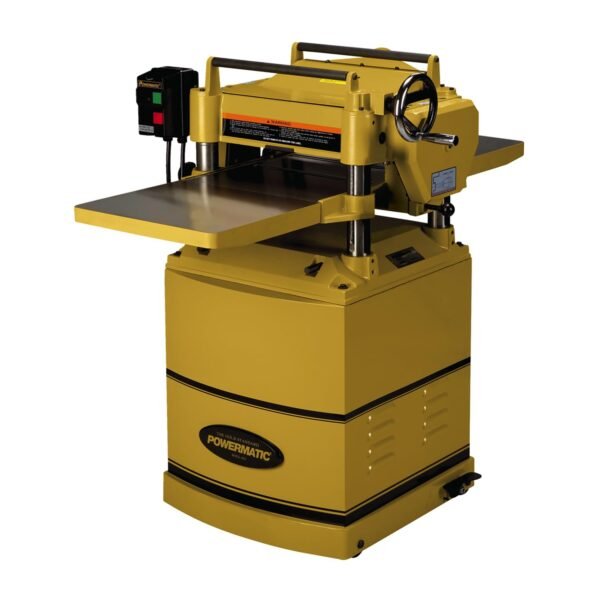
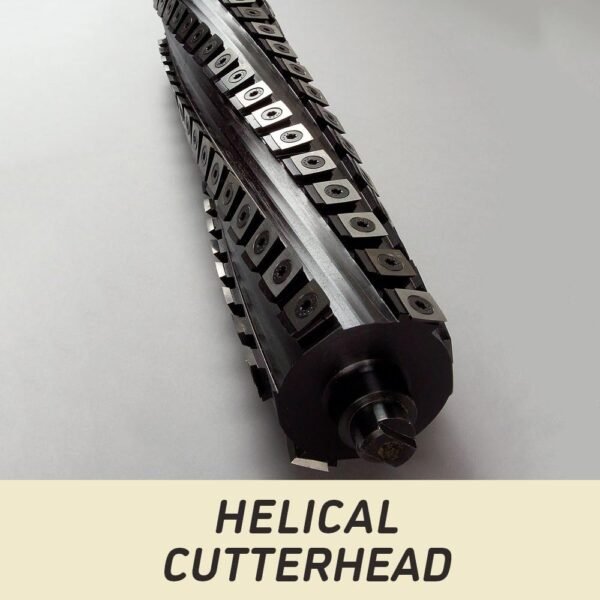
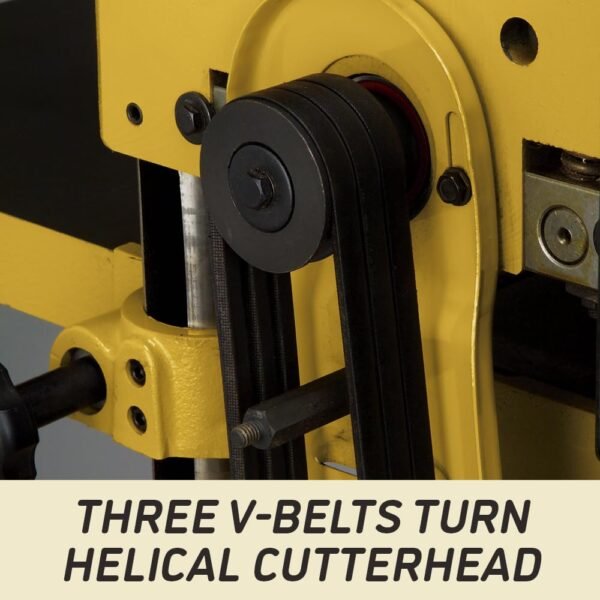
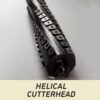
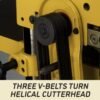
The Powermatic 15-Inch Planer, Helical Cutterhead, 3 HP, 230V 1Ph (Model 15HH) is specified around a 3-horsepower motor in a totally enclosed fan-cooled (TEFC) housing, a design intended to hold output steady without heat build-up in a dusty shop. Three V-belts carry that power to the cutterhead, which is the part of the drivetrain that matters when feeding dense hardwood. The helical cutterhead with 74 four-sided carbide knife inserts is the headline feature. A spiral insert layout and a stated 14-degree approach angle produce a shear cut, which is what accounts for the quieter operation and the fine surface Powermatic claims for the machine, reducing the sanding that follows.
Robust Build and Durability for Heavy Use
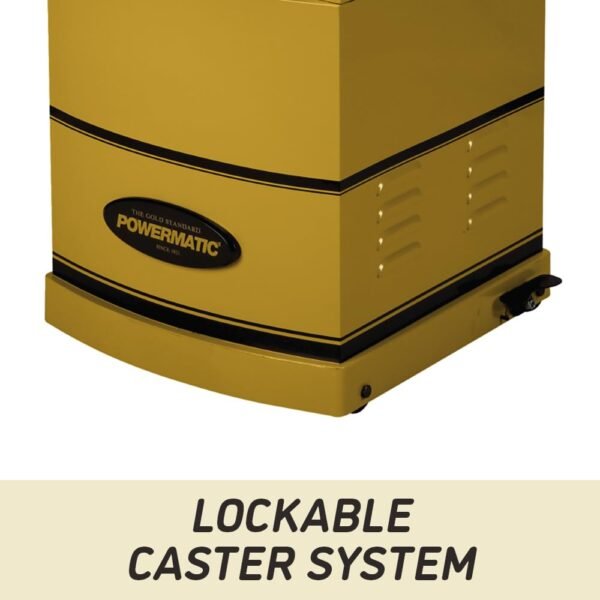
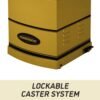
Construction is heavy throughout. Cast iron tables and extensions give a rigid, vibration-damping surface for large stock. The main table measures 15 inches wide by 20 inches long, and two extension tables bring total support to nearly 48 inches of length, which is the specification that determines how long a board can be run without outfeed help. At 502 pounds, the machine is not moved casually, though lockable casters make repositioning within a shop practical. The welded steel base cabinet is what carries that mass, and the whole assembly is specified for sustained professional duty rather than intermittent use.
User-Friendly Features and Adjustments
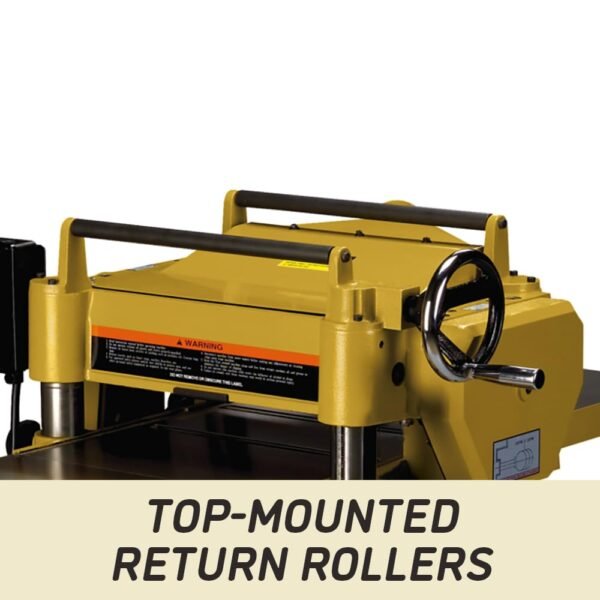
Cutting depth is set with a large cast-iron handwheel, sized for accurate incremental adjustment. The planer is rated for cuts up to 3/16 inch deep, while a built-in limiter plate restricts full-width cuts to 1/8 inch or less to protect the machine and the stock. That limiter is a sensible guard, particularly for less experienced operators who might otherwise ask too much of a single pass. Two feed rates are available, 20 feet per minute for rough stock and 16 feet per minute for finish passes, changed with a push/pull knob and automatic chain tensioner. Those two speeds cover the difference between dimensioning rough lumber and taking a final skim.
Dust Management and Cleanliness
Chip volume is the practical problem with any planer at this width, and the integrated all-metal dust hood is the answer here. It funnels debris through a 4-inch angled dust port, keeping chips off the workpiece and out of the shop. The port angle is placed so it clears both the stock path and the collector hose, which is what keeps it from becoming a nuisance during long runs. No collection setup captures everything, but this configuration is specified to keep cleanup time down substantially.
Positives: Highlights of the Powermatic Planer
- Smooth surface finish and quieter operation from the helical cutterhead
- Solid, heavy-duty construction with cast iron tables and a steel base for stability
- Versatile two-speed feed system for both rough and fine planing tasks
- Thoughtful safety features such as the depth limiter plate that protects machine and wood
- Convenient dust collection design that keeps the work area clear
One note on the source data: the highlights section credits a Byrd cutterhead while the main specification simply lists a helical head with 74 four-sided carbide inserts. The insert count and geometry are the figures worth relying on when comparing machines.
Negatives: Areas for Improvement
- The machine’s weight makes setup and relocation difficult, even on casters
- The price point sits firmly on the premium side, which rules it out for many hobbyists
- There is a learning curve around feed rates and the limiter plate restrictions
- Limited portability given its size; a poor match for small shops or frequent transport
- The 230V power requirement means it will not run on a standard home outlet without electrical work
Competitive Options in the Planer Market
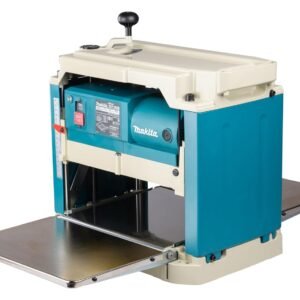
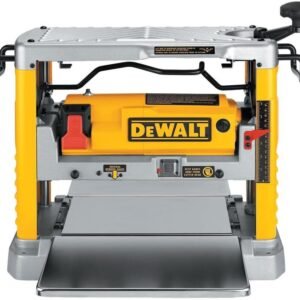
Against other well-known models, including the DeWalt DW735X and the Jet JWP-15B, the Powermatic’s helical cutterhead and carbide inserts are what separate it on finish quality and noise. DeWalt’s double-knife system is simpler to maintain but louder and demands more frequent knife changes; the same trade shows up on the DEWALT DW734 benchtop planer. The Jet is lighter and more affordable while giving up the heavy build and the dual feed rates, a trade that also shows up against the Makita KP312 corded handheld planer. The Powermatic leads on durability, precision, and dust control, which suits serious woodworkers and professionals, though its footprint and power requirements put it out of reach for casual users. Shops needing a portable machine instead should compare the Makita 2012NB portable planer and the rest of the planers we cover.
Value Assessment: Is It Worth the Investment?
Weighed against its feature set and build quality, the price reflects professional-grade capability rather than a premium for the badge. The combination of a 3 HP motor, cast iron components, and helical cutterhead technology is what supports long-term value, since the consumable cost drops when inserts can be rotated four times before replacement. For a shop that needs precision and heavy-duty output regularly, the machine earns back its cost through throughput and finished quality. For a casual user, or one limited by space and available power, it is the wrong tool. Powermatic lists a five-year warranty, which signals confidence in longevity and adds to the overall case.
Design and Ergonomics
The controls are laid out for straightforward operation despite the machine’s scale. The serrated steel infeed roller grips stock firmly to prevent slipping, while the smooth steel outfeed roller lets the board exit without marking the freshly planed face. Together they produce the consistent feed that limits tear-out and keeps cuts clean. The handwheel and control knobs are positioned for access without awkward reaching. Included tools and spare carbide inserts cover setup and early maintenance. The yellow finish and steel construction make the machine easy to identify in a busy shop.
Across hardwoods and softwoods, the specification set points to a machine built for varied stock. The quiet operation and smooth finish attributed to the helical head, together with solid construction, are the arguments for it on demanding work. Its limits are real, weight and power supply chief among them, but they matter less to anyone serious about woodworking. Where the work moves to the stock rather than the stock to the machine, a handheld option such as the DEWALT DCP580B cordless planer is the complement rather than the replacement, and the rest of our handheld planer coverage sets out that side of the choice.