
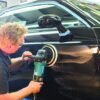
Description
Positive Features of the Makita 9237CX3 7″ Polisher
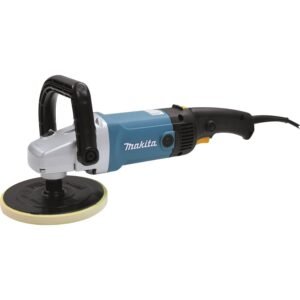
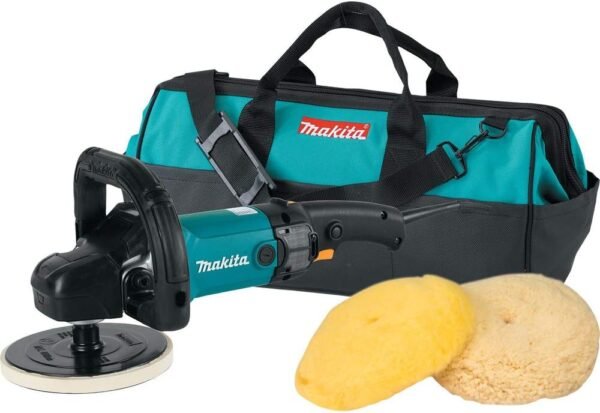
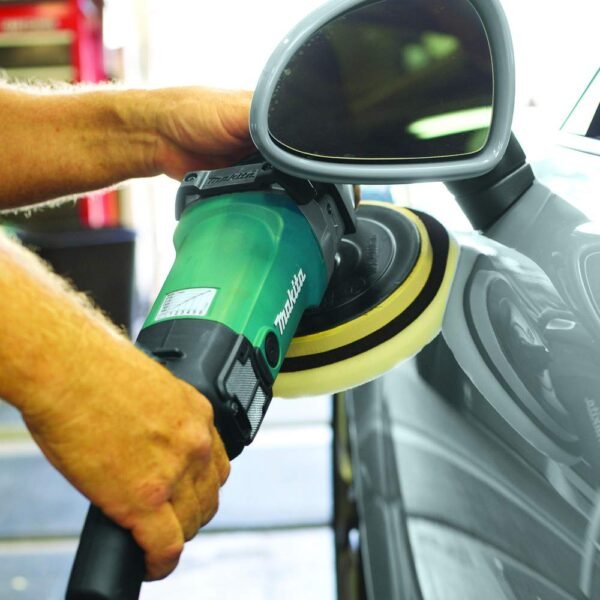
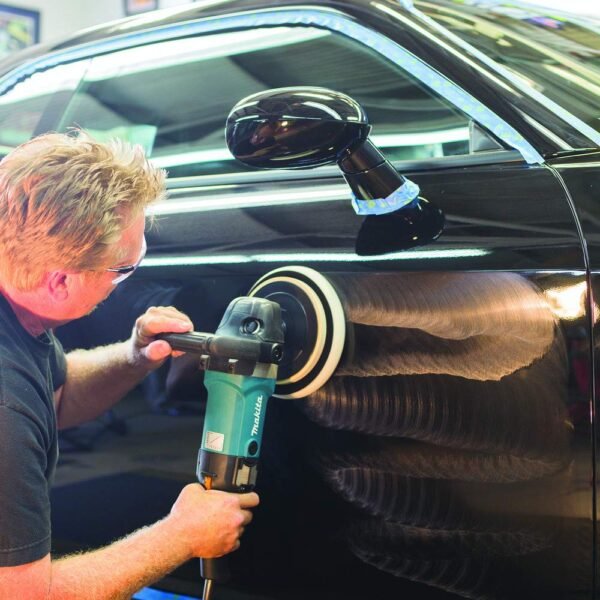
The Makita 9237CX3 7″ Polisher Polisher-Sander Kit is specified for a wide task range, covering automotive detailing, marine work, and stone polishing. The feature that makes that range workable is the variable speed dial and trigger, which allows speed to be matched to the surface rather than fixed in advance. That matters because a single fixed speed is what produces uneven finishes and damage on delicate surfaces. The constant speed control is the companion specification: it holds the set pace as pad pressure increases, which is where cheaper polishers lose speed and consistency.
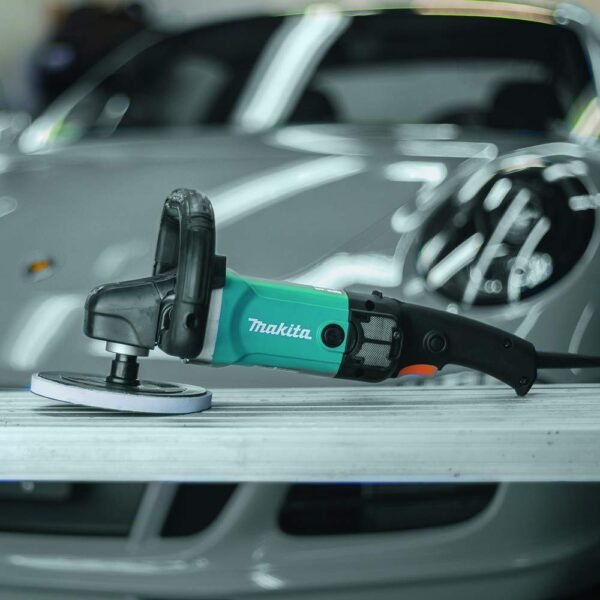
The soft start feature addresses a specific problem, since a polisher that jumps to full speed flings polish or wax off the pad before it reaches the panel. The rubberized loop handle supports comfort across long sessions and also shields work surfaces from accidental contact with the tool body. The wire mesh intake covers are a maintenance feature rather than a comfort one, keeping wool fibers and debris out of the motor, which is the most common cause of premature failure on polishers used with wool pads.
- Variable speed dial and trigger for precise control
- Constant speed control under load
- Soft start reduces polish fling
- Comfortable rubberized loop handle
- Wire mesh intake to protect the motor
Drawbacks to Keep in Mind
Several limitations sit against that specification. The tool is listed at about 7 pounds, a figure that reads modestly on paper but accumulates across a long polishing session. For anyone polishing for hours at a stretch, arm fatigue is the practical constraint rather than motor capability. The other is size and length: at 18.5 inches long, this is not a compact model, and that length is what makes tight spaces and awkward angles harder to reach.
The plastic construction on some parts is less substantial than all-metal competitors in the same price bracket, which is the relevant comparison for buyers working in harsh environments. The corded design is the final constraint, tying the tool to an outlet, which is inconvenient for outdoor work or sites without easy power access. Cordless options across the same size class sit in our polishers and buffers category.
- Heavier than some competitors at 7 pounds
- Length can be cumbersome in tight spaces
- Some plastic parts feel less durable
- Requires corded power, limiting portability
Design and Ergonomics
The design brief prioritizes user comfort and control. The rubberized loop handle is specified for grip as much as comfort, which is what keeps the tool secure when hands are damp or oily from compound. Secondary handle positions allow a two-handed grip, which improves balance and reduces how much vibration reaches the operator. Vibration is the factor that ends long sessions early, more often than raw weight.
The factory finish and build match the rest of Makita’s professional line. Controls are laid out for use without repositioning the hands, and the variable speed dial is reachable mid-pass. Buyer feedback repeatedly flags cord length as the weak point, particularly for larger workspaces or outdoor jobs where an extension lead becomes necessary.
Performance Under Different Conditions
The specified surface range covers automotive clear coats, marine gel coats, and stone slabs. The constant speed control is the specification that matters most across that spread, since it keeps the motor at a steady rate regardless of applied pressure. Consistent speed is what prevents swirl marks and uneven shine, both of which come from the tool slowing under load rather than from operator technique. The soft start prevents splatter at the moment of pad contact, which matters most on freshly waxed surfaces. Dedicated wet stone work is better served by the Makita PW5001C variable-speed wet stone polisher.
On power, the 7 inch pad size and 7.5 amps of current supply enough torque for demanding polishing without bogging down. This is not the fastest polisher in the category, and the specification is balanced toward finesse rather than outright speed. The wire mesh intake is what keeps the motor clear over repeated use, which addresses clogging and overheating before they start.
Value Proposition: Is It Worth It?
On features against build, the polisher presents a strong value proposition for buyers needing a reliable professional-grade tool at a sensible price. It is not the cheapest option, and the durability and performance specifications are what account for the difference. The variable speed settings, the soft start, and the constant speed control together deliver a level of control that is uncommon at this price point. That combination is what makes it workable for hobbyists and professionals alike.
Against cheaper models that lack speed control or lose power under load, this is a clear step up in capability. Portability is the one area where the corded design counts against it. For buyers who rank build quality and consistent output above cordless convenience, it remains a sound purchase, and the Makita 9227C 7-inch polisher and sander is the closest alternative in the same range.
Product Competitors: How It Stacks Up
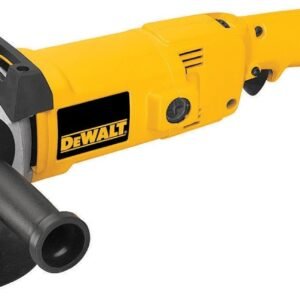
Among comparable polishers, the obvious names are the DEWALT DWP849X variable-speed buffer and the Bosch GPO 12 CE. The DEWALT offers similar power but runs heavier and without a soft start, which leaves the Makita’s smooth ramp-up as a real advantage on wax and compound. The Bosch is lighter and more compact but does not match the motor spec or the intake protection. For industrial and marine environments, the Makita’s wire mesh intake covers and general durability are the deciding specifications.
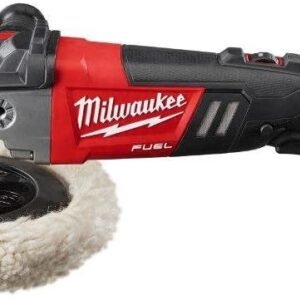
Several competitors do offer cordless models, which is a significant advantage for mobility, and the Milwaukee M18 FUEL 7-inch cordless polisher is the direct comparison there. On speed control precision, motor protection, and comfort, this Makita holds its position and frequently leads. For buyers who want a durable polisher with fine speed adjustment and solid construction, the kit warrants serious consideration.
Versatility and Included Features
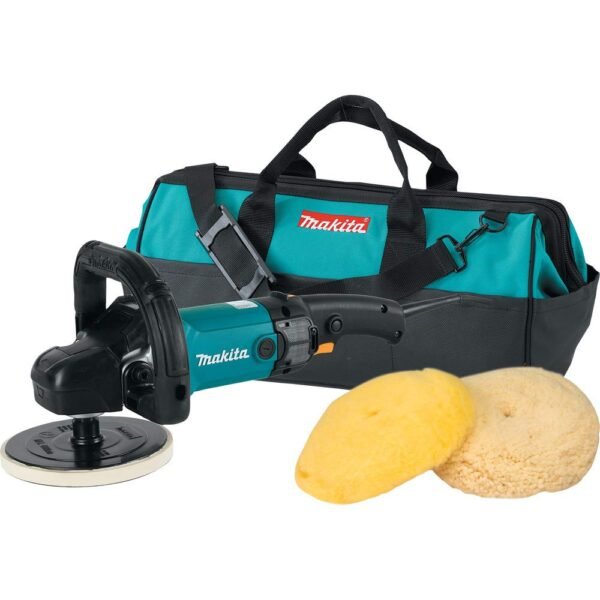
The Makita 9237CX3 is sold as a polisher-sander kit, so pad and accessory changes convert it between tasks rather than requiring a second tool. The variable speed dial is what makes that conversion meaningful, scaling down for fine polishing and up for more aggressive sanding. The dual handles allow the grip to change with the material and the working angle.
Soft start and constant speed control work together to keep the machine from bogging down and to keep the operator in control of the workpiece. That pairing is what allows a single tool to move between delicate automotive finishes and rougher stone surfaces without a change in technique. The wire mesh intake cover is the feature that keeps ongoing maintenance minimal, which is easy to overlook when comparing spec sheets.
Across buyer feedback from experienced and inexperienced users alike, the recurring theme is that the controls are forgiving. Novices reach a decent shine without damaging surfaces, which is a direct result of the speed control layout and the grip design rather than skill. The drawbacks, weight and cord length, are the trade against the performance and reliability the specification delivers.