



Description
Performance and Power of the 7-Inch Polisher
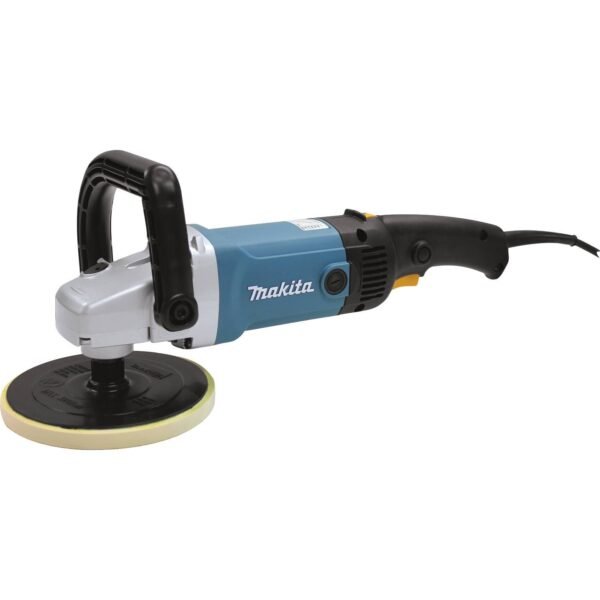
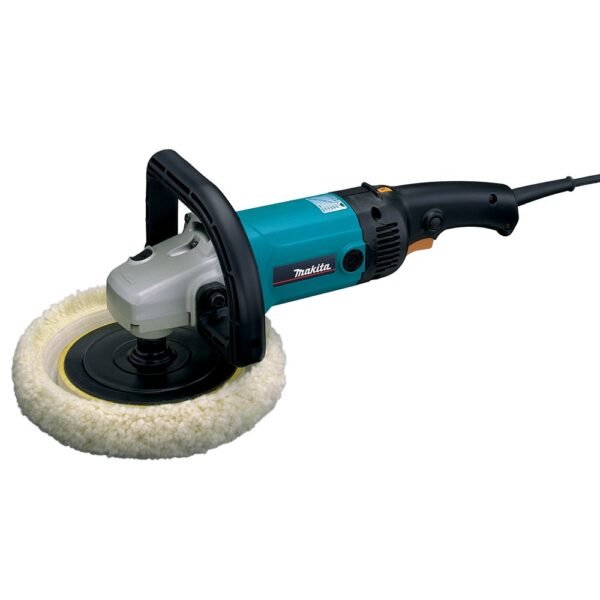
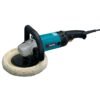
The Makita 9227C 7″ Polisher is built around a 10 AMP motor paired with variable speed control, a combination aimed at users who move between delicate polishing and heavier sanding on the same job. Listing data is inconsistent on top speed: one spec block gives 3,200 RPM while the variable speed range is quoted as 600 to 3,000 RPM. Confirm against the manual before relying on the higher figure. The published electronic speed control is designed to hold a set speed as pressure is applied, so the motor should not bog down under load, and the soft start spec keeps the tool from jerking or kicking back at power-up. Both point at a tool built for controlled work rather than raw speed.
Ergonomics and Comfort for Extended Use
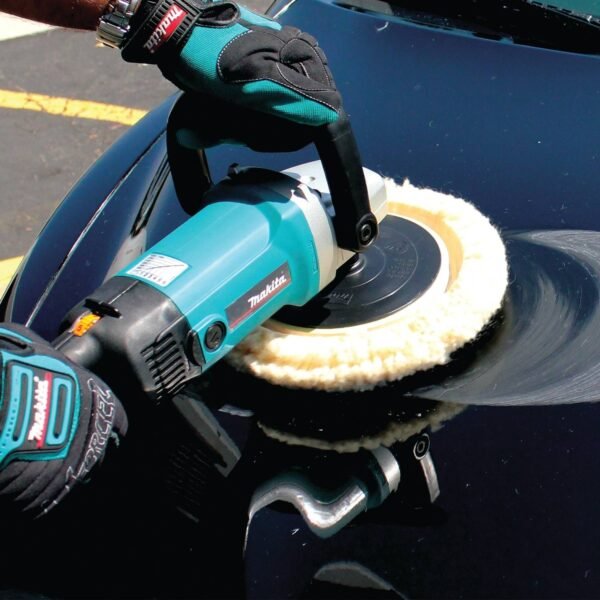
At a 6.6-pound weight, this is a two-handed tool by design. The loop handle and the stated ergonomic design are there to spread that load across both hands, and the lock-on button removes the need to hold the trigger through a long session. Buyer feedback on 7-inch polishers in this class consistently ties comfort to handle position rather than raw weight, and the loop layout is the standard answer to that. The three-prong plug is specified to reduce static buildup, a small detail but a deliberate one on a corded professional tool. Build quality is presented as rugged rather than light. Shoppers cross-shopping the corded field can see how this sits in our wider polishers and buffers category.
Versatility in Applications: Polishing and Sanding
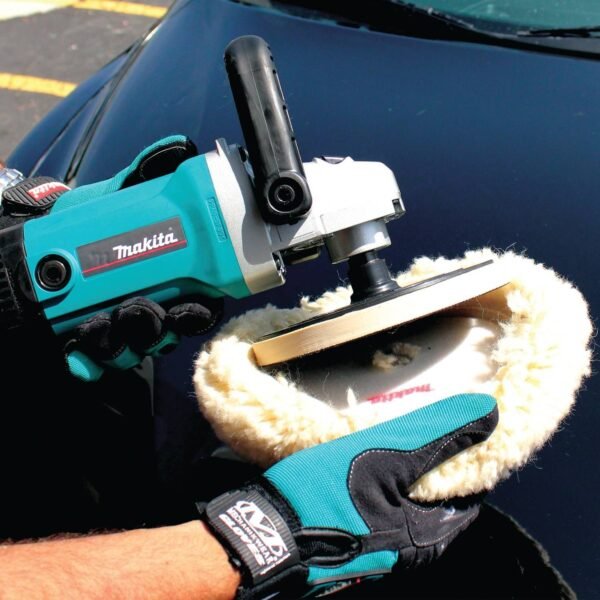
The headline flexibility here is the conversion between polishing and sanding. Swapping the hook-and-loop pad takes the tool from buffing a clear coat finish to sanding wood or stone, with no other changeover called for. That dual role separates it from single-purpose buffers, and it explains the low end of the speed dial: the range is published as 600 to 3,000 RPM, covering ultra-slow polishing at the bottom and faster sanding at the top. For wet stone work, the Makita PW5001C wet stone polisher is the purpose-built alternative in the same brand family.
Highlights: Where This Model Is Strong
- Powerful 10 AMP motor with variable speed control from 600 to 3,000 RPM
- Electronic speed control specified to keep speed constant under load, preventing slowdowns
- Comfortable ergonomic handle with lock-on button for continuous use
- Conversion from polisher to sander is quick and straightforward
- Soft start feature gives a smooth, controlled startup without kickback
Areas for Improvement: Known Limitations
- Buyer feedback repeatedly flags the power cord length, with an extension often needed for outdoor work
- The tool is heavy compared to lighter polishers, which may tire some users over extended periods
- No built-in dust collection system, which means sanding can get messy without additional equipment
- The price sits on the higher side for casual users who do not need this much power or this feature set
Competitive Options and How This Polisher Stands Out
Set against other popular models such as the Porter-Cable 7424XP and the corded DEWALT DWP849X variable-speed buffer, the Makita 9227C distinguishes itself on consistent speed control and motor power. The Porter-Cable is the lighter, cheaper option and does not publish the same load-holding electronics. The DEWALT is comparable on power, but the Makita soft start and lock-on button are the specification difference on long polishing sessions. On the other side of the ledger, the Makita is heavier than several rivals and lacks integrated dust collection that competitors sometimes include. Within the same brand, the Makita 9237CX3 7-inch polisher kit covers similar ground with a different accessory bundle. On balance this is a tool for buyers who rank power and control above portability.
Value Proposition: Is It Worth the Investment?
Taken as a package, the variable speed dial, electronic speed control, and dual functionality as a polisher and sander put this in professional and serious-hobbyist territory. The specified durability and motor rating carry the price, particularly for varied projects needing both precision and torque. For casual users the price and weight read differently, and lighter polishers cover occasional detailing well. Buyers weighing a right-angle body should look at the DEWALT DW849 right-angle polisher first.
Final Thoughts on Usability and Features
The Makita 9227C reads as a tool engineered for demanding work. From the large two-finger trigger switch to the pre-set maximum speed dial, the feature list is aimed squarely at user control rather than headline numbers, which makes the unresolved top-speed figure worth checking before purchase. Cord length and weight remain the two recurring complaints in buyer feedback. Against those, the versatility, power, and ergonomic design are what keep this model prominent in its category, and the spec sheet supports its position as a precision and durability pick for polishing and sanding work.