Description
Highlights of the Klein Tools ET120 Gas Leak Detector
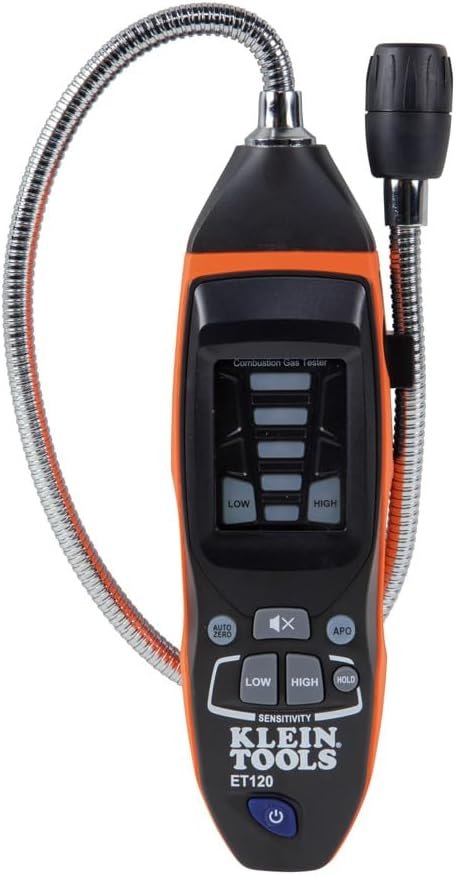
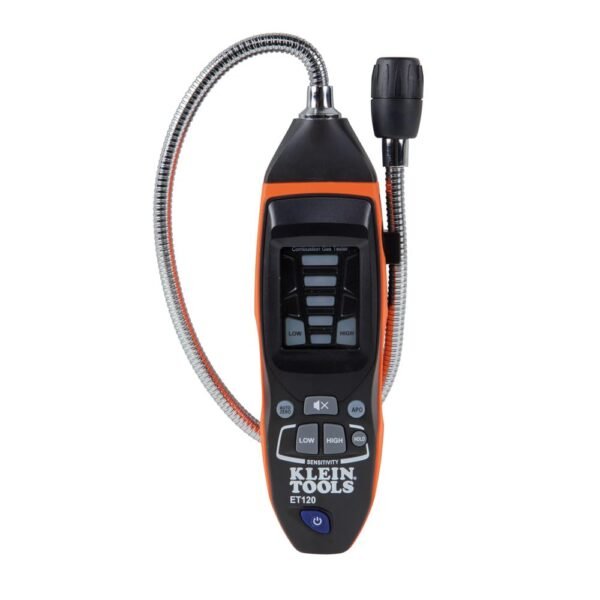
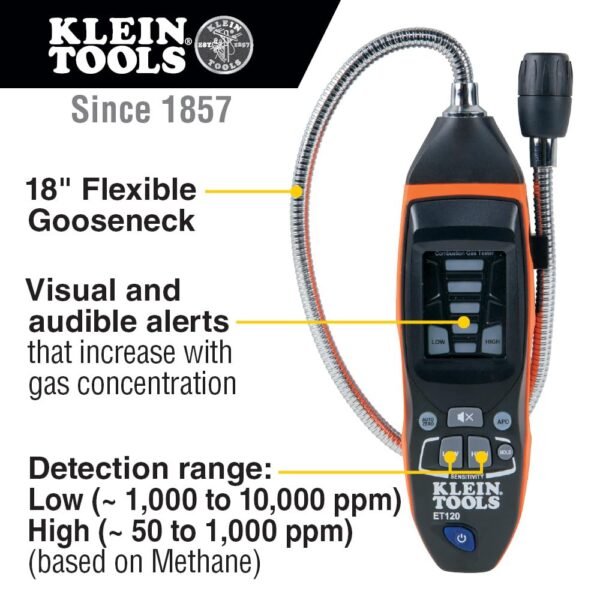
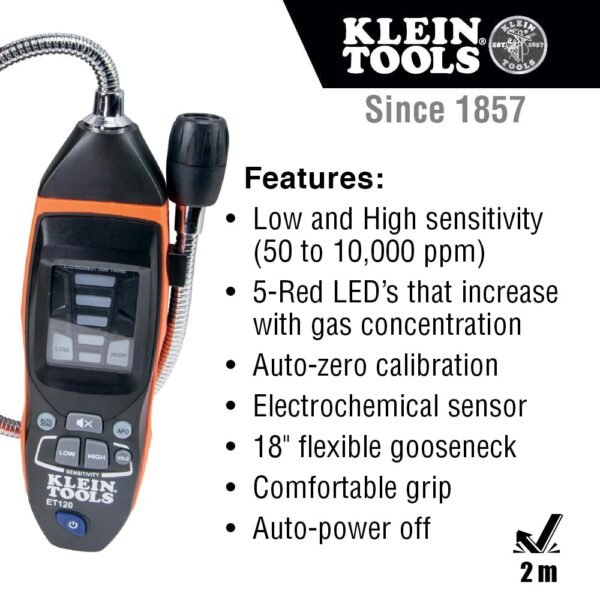
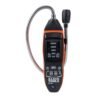
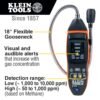
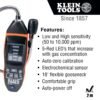
The Klein Tools ET120 Gas Leak Detector, Combustible Gas Leak Tester with 18-Inch Gooseneck is a handheld sniffer, a tool for tracing a suspected leak at a joint or appliance rather than a fixed alarm that watches a room. Klein gives a detection range of 50 to 10,000 ppm for combustible gases including methane and propane, which spans faint traces and larger releases. The adjustable sensitivity settings are the reason the range is usable in practice, since high sensitivity (50 to 1000 ppm) and low sensitivity (1000 to 10,000 ppm) let the operator narrow in without the alarm saturating on background gas. The audible alert is rated at 85dB, and five red LEDs escalate with concentration so the reading stays visible in a noisy plant room or a dim crawl space. None of that substitutes for a continuously powered alarm on the wall, which is a separate purchase such as the Kidde KN-COEG-3 combination gas and CO alarm.
Benefits of the Flexible Gooseneck and Design
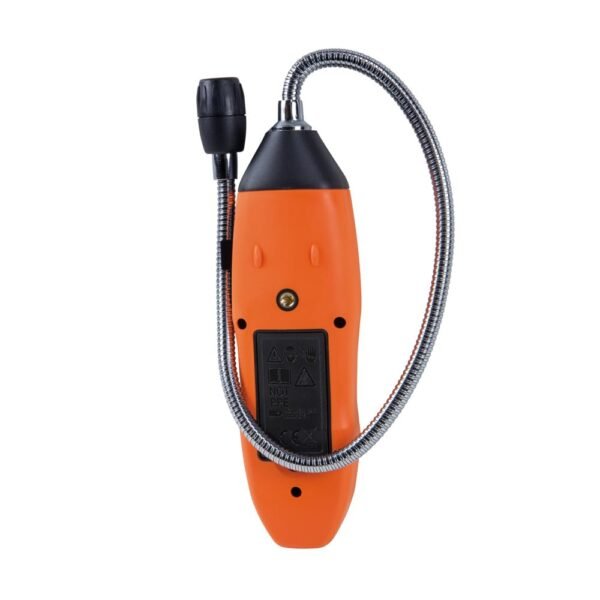
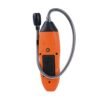
The most practical part of the specification is the 18-inch flexible gooseneck. It is what gets the sensor tip to a fitting behind a water heater or above a run of pipe without moving the appliance, which is the whole difficulty with a rigid probe. The gooseneck also clips onto the meter for storage, so it travels in a bag without being bent out of shape. The over-molded body is the standard Klein treatment for tools that live in a van, and the shape is meant to be held for long stretches during a leak trace. The auto power-off after 10 minutes of inactivity matters more than it sounds on a tool that runs on disposable cells, because a sniffer left switched on in a pouch is a flat sniffer at the next call.
Drawbacks to Keep in Mind
The specification has clear limits. Battery life is the first: four AAA cells power the device, and heavy daily use works through them faster than occasional checks. Cells are included in the box. Calibration is automatic at startup rather than a manual routine, which is simpler but does mean waiting for the auto-zero cycle before the first reading. The readout is the point where product descriptions disagree with each other. Some listings describe a digital display, while the same copy elsewhere says the tool gives an escalating LED warning rather than a numeric ppm figure or a trend graph. Confirm which output the unit actually provides before buying if you need numbers to record, since a technician documenting a reading and a homeowner locating a smell need different things. The 13 ounce weight is light for handheld use, though bulkier than the pen style testers some kits carry.
Price Worthiness and Value Proposition
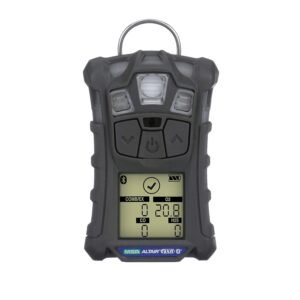
On specification the ET120 sits in the professional bracket rather than the budget one, and the gooseneck plus dual sensitivity is what the money buys. For HVAC technicians, plumbers and home inspectors doing this work weekly, the tool competes on access and durability instead of features. Buyers who want a multigas instrument with a full numeric display are looking at a different price class altogether, closer to the MSA ALTAIR 4XR multigas monitor, which is built for confined space work rather than a quick leak trace.
Alternative Offerings in the Market
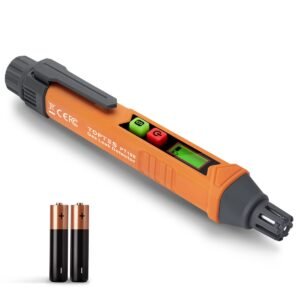
Compared with the UEi Test Instruments CD100A and the Amprobe GSD600, the ET120’s differentiator is the flexible gooseneck, which both of those lack. The dual sensitivity modes also give more control than a single fixed range. Competitors answer with fuller displays and, in some cases, longer runtime, which suits anyone who wants granular figures or long sessions between battery changes. Build quality is where the Klein reads as the more rugged option, at a slightly higher price. For another portable natural gas sniffer aimed at homeowners rather than trades, the TopTes PT199 is the usual comparison in this category.
Versatility for Various Users
The tool suits more than HVAC work. A homeowner can use it to check a grill connection or the fittings on a gas range, and the alarms and visual indicators are readable without training in gas detection. Technicians get the adjustable detection range and a body built for job sites. What a handheld sniffer does not do is monitor a house while nobody is holding it, so households with gas appliances still need fixed detection, and radon is a separate measurement again, covered by a dedicated monitor such as the Airthings Corentium Home. The included carrying pouch keeps the probe and the meter together between jobs.
Examining Sensitivity and Alert Features
The alarm design is the part worth reading closely. An 85dB audible alert is loud enough to carry over running plant or power tools, and the five red LEDs give a proportional visual cue as concentration climbs, which is how the operator works toward the source rather than simply learning that gas is present. The auto-zero calibration at startup sets the baseline against the air the tool is switched on in, so starting it in clean air matters: switch it on inside a suspect cupboard and the baseline absorbs the leak you are hunting. The calibration light flashes during that cycle. The absence of a detailed numeric readout means the output is closer to a proportional warning than a measurement, which is enough for tracing and not enough for documentation.
Areas of Concern for Future Users
A few points deserve weighing against the intended workload. Battery life under frequent use is the main one on long job days without spares. The absence of a detailed data display means anyone recording exact ppm values needs a second instrument. The size is a consideration for kits built around ultra compact tools, and the calibration cycle costs a few seconds on every start. Placement of fixed alarms, the number of them, and any work on gas lines remain matters for local code and a qualified professional, whatever a handheld tester shows. The rest of our gas detector and alarm reviews covers the fixed monitors that sit alongside a tool like this.
Key Benefits:
- Wide detection range from 50 to 10,000 ppm for versatile monitoring
- Adjustable sensitivity modes for tailored detection
- Loud audible and clear visual alarms that escalate with concentration
- Flexible 18-inch gooseneck for accessing tricky spots
- Over-molded body with auto power-off to save battery
Limitations:
- Battery life could be longer under heavy use
- Listings disagree on whether there is a numeric ppm readout
- Auto-zero cycle has to finish before the first reading
- Slightly bulky compared to ultra-compact alternatives