

Description
Highlights of the Kidde Ionization Smoke Detector
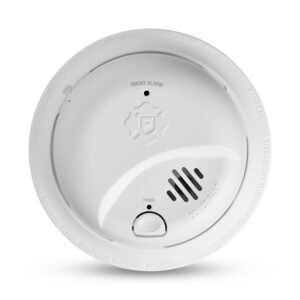
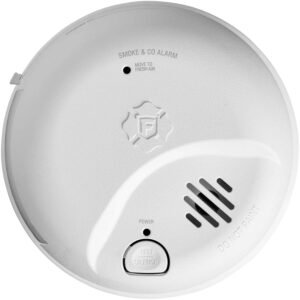
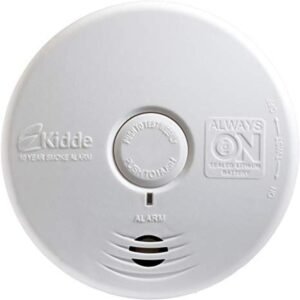
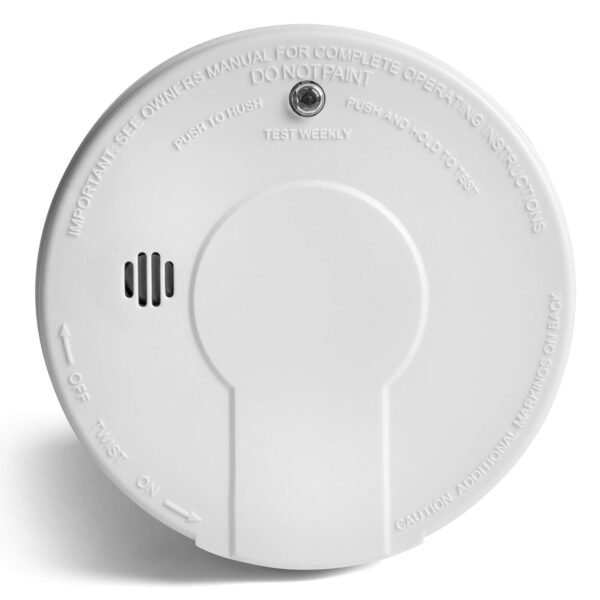
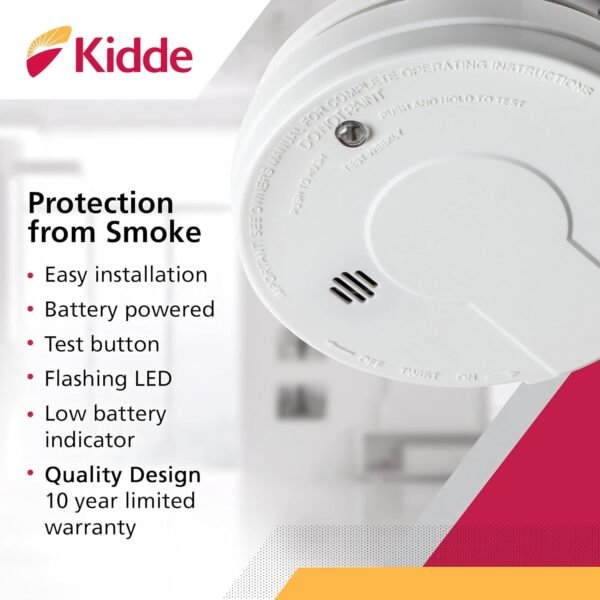
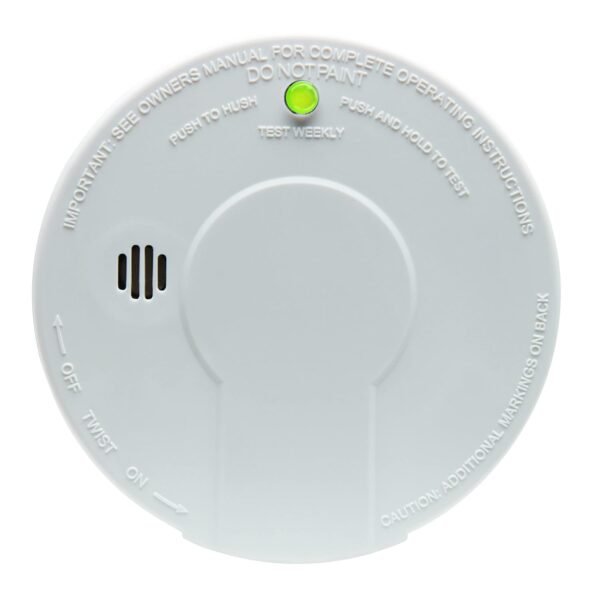
The Kidde Smoke Detector, 9-Volt Battery Operated, Ionization Smoke Alarm, Battery Included is a single hazard alarm built to a deliberately basic specification. Sensing is ionization, the type documented as responding faster to the small particles produced by fast flaming fires and more slowly to smoldering ones than photoelectric sensing. Alarm output is a published 85 decibels, the residential standard. Power is a 9-volt battery supplied in the box, so there is no wiring, no adapter and nothing to connect at the ceiling box, and the alarm keeps running when household power drops because it was never drawing from it. A solid green LED confirms power and a red LED flashes when the sensor has triggered. The test and hush button runs the self test and silences a nuisance alarm without pulling the cell.
Pros of Using This Smoke Alarm
- Ionization sensing aimed at fast flaming fires.
- Battery power, which is unaffected by a mains outage.
- No wiring, so no electrician and no ceiling box requirement.
- Green and red LED indicators for power state and trigger state.
- Test and hush button for self test and nuisance alarm silencing.
The tamper resistant fitting is a small but useful addition, since it makes casual removal harder in a household where a chirping alarm might otherwise be taken down and left off the ceiling. Fitting takes screws, a bracket and a battery, with no other setup step involved.
Areas for Improvement
The main limitation follows directly from the sensor. Ionization units are documented as more prone to nuisance alarms from cooking smoke and shower steam than photoelectric units, so placement near a kitchen or bathroom door is the situation this alarm handles least well. The hush button manages the symptom rather than the cause.
The low battery chirp is the standard periodic tone and is easy to miss in a noisy room or a distant hallway. With a replaceable 9V cell the chirp means a battery, not a new unit, so it is a recurring maintenance item rather than a one time event. There are also no voice alerts in this model, only the horn, so nothing identifies which room triggered.
- Sensitive to cooking fumes and steam relative to photoelectric units.
- Low battery chirp can go unnoticed in a busy or distant room.
- No voice alerts, so no spoken hazard or location cue.
- The listing marks the model as discontinued by the manufacturer, which is worth confirming before buying since it affects long term availability and support.
Installation and Setup Experience
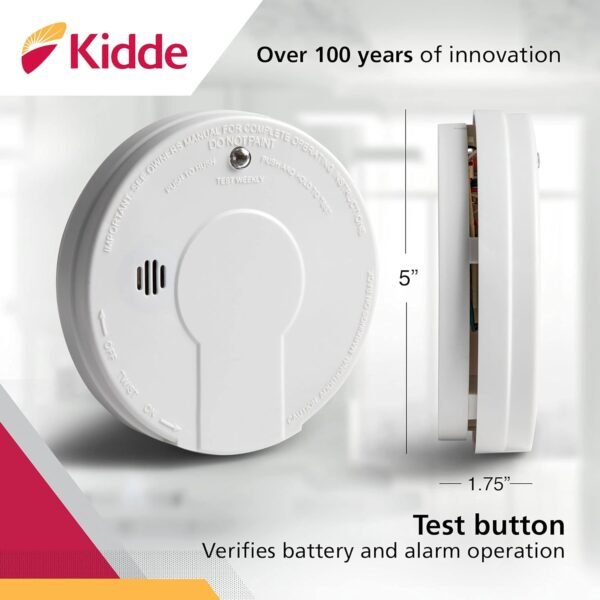
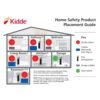
Fitting is a bracket, two screws and a battery, with no circuit involved. That makes the unit a practical choice for a rental or an older property with no hardwired alarm loop, where cutting in a mains connected alarm would mean an electrician and a code inspection. The 5 inch diameter head is a conventional footprint that suits a hallway or a ceiling outside a bedroom door, which is the placement most residential guidance points to.
What the specification does not include is interconnect capability or any radio. A triggered unit sounds its own horn only. In a multi story house that means an alarm in a basement may not be audible in an upstairs bedroom, which is the exact scenario interconnected alarms such as the hardwired Kidde 20SA10 with interconnect exist to address. Local building code, not preference, sets whether interconnection is required in a given dwelling.
How It Compares to Popular Competitors
Against connected alarms with app notification, self test scheduling and voice location cues, this unit offers none of it and costs a fraction as much. Against other basic battery alarms it competes on sensor type and on the price of the replacement cell, which is a standard 9V rather than anything proprietary.
The more useful comparison is sensor type rather than brand. A photoelectric alarm such as the Kidde P3010B photoelectric alarm reverses the response profile, reacting sooner to a smoldering source and generally producing fewer cooking triggers. Fire safety guidance commonly recommends covering both sensing types across a dwelling rather than choosing one, which is a point the product documentation itself makes.
The battery only design is a genuine advantage over hardwired alarms on installation cost and on outage behavior, and a genuine disadvantage on interconnect capability, since there is no loop to join.
Price Performance and Value Assessment
Judged on published specification per dollar, this alarm sits at the entry point of the smoke detector and fire alarm category. It covers detection, a horn at the standard output, a self test and a hush function, and it includes the first cell in the box. The 10 year limited warranty runs longer than most buyers expect at this price, although a replaceable cell means recurring battery purchases across that period, unlike a sealed 10 year unit.
Compliance is listed against UL 217, with NFPA 72 and NFPA 101 cited as well. For a household adding coverage to a spare room, a garage landing or a rental where no fixed alarm exists, that combination is a sensible spend. A comparable battery powered alternative from another maker is the battery powered First Alert SMI100.
Nuisance Alarms and Placement
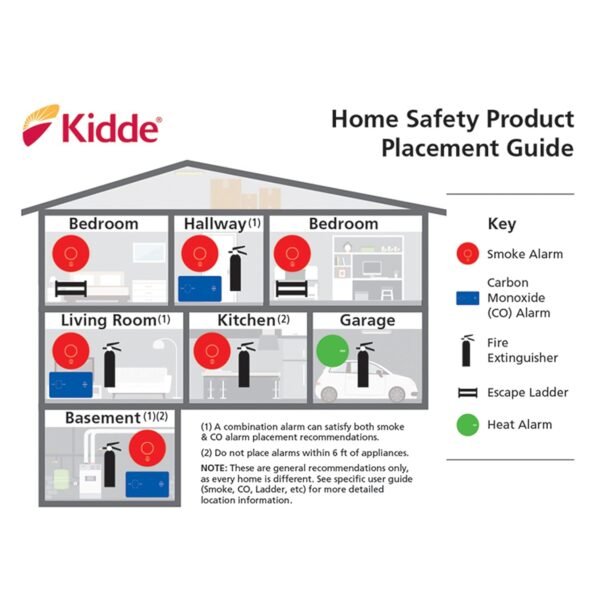
The practical questions with an ionization alarm are where it goes and how often it triggers on nothing. Cooking smoke, toast and bathroom steam are the common causes, and the published fix is placement rather than adjustment: keep the alarm away from the direct path of kitchen and bathroom doorways while staying within the coverage that code requires. The hush function silences a nuisance trigger temporarily without removing the cell, which is the behavior that keeps an alarm mounted instead of disabled.
What the device signals is detected particles crossing its threshold in the space where it is mounted. It does not identify the source, does not call anyone and does not replace the alarm layout local code sets out for a dwelling.
Additional Features Worth Noting
The green LED is a continuous power confirmation, which is how the unit is checked at a glance from floor level. The red LED flashes on trigger, adding a visual cue alongside the horn. The tamper resistant fitting resists casual removal, which matters most in households where nuisance alarms would otherwise lead to the unit coming down.
There is no display, no ppm readout and no logging of any kind. Every piece of information the unit provides is either a light or a sound, which is the trade a low price at this end of the market involves.
Alternative Offerings in the Market
Photoelectric alarms are the direct alternative for anyone whose main concern is a smoldering source, and combination sensing units cover both profiles from one head at a higher price. Sealed 10 year cell units such as the Kidde 20SD10 with a 10 year cell remove the annual battery purchase, which changes the running cost even where the purchase price is higher.
Connected alarms add remote notification and scheduled self test for buyers who want them and are prepared to maintain the setup. This Kidde model targets the opposite brief: no account, no radio, no wiring and one control on the face. Which brief fits depends on the room, the wiring already in place and what local code requires of the dwelling.