Description
Positive Features of the Kidde Smoke Detector
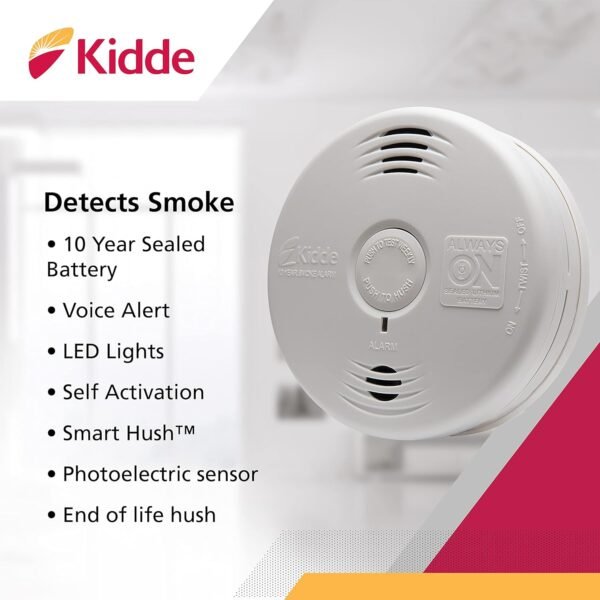
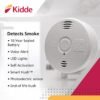
The defining specification of the Kidde Smoke Detector, 10-Year Battery, Photoelectric Sensor Smoke Alarm, model P3010B is its photoelectric sensor. Photoelectric sensing responds to the larger, more visible particles typical of smoldering fires, the slow smoky kind that develops behind a sofa cushion or inside a wall cavity before it produces flame. Ionization sensing, the other common type, is documented as quicker on fast flaming fires and slower on smoldering ones, which is why sensor type is the first thing to check when choosing between two otherwise identical alarms in the smoke detector and fire alarm category.
The second defining figure is the 10-year sealed lithium battery. It is not user replaceable, and it is rated to run the unit for its full service life, which removes the annual cell change entirely and removes the failure mode where a chirping alarm gets its battery pulled and never replaced. Because the cell is sealed, the alarm activates automatically when it is seated on its mounting bracket, with no switch to set.
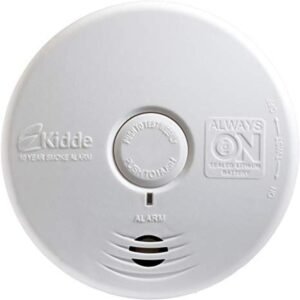
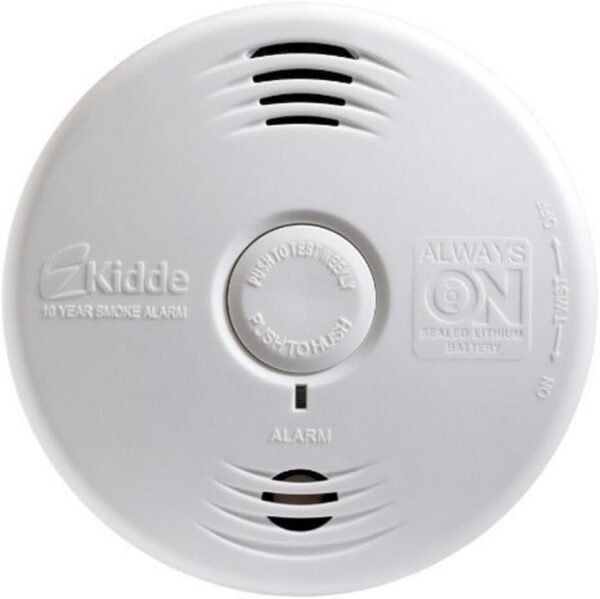
The test and hush button is the third practical item. It runs the self test and temporarily silences a triggered alarm, which is the control that keeps a kitchen adjacent alarm on the ceiling instead of in a drawer after a batch of burnt toast.
- Photoelectric sensing suited to early smoldering fire particles
- Sealed 10 year lithium cell, no scheduled battery replacement
- Test and hush button for self test and nuisance alarm silencing
Limitations to Keep in Mind
The published 85 decibel alarm output is the residential standard and is intentionally uncomfortable at close range. During a nuisance alarm that is the point of friction, and the hush function is what resolves it rather than any volume adjustment, since none is provided.
The end of life and low power chirp is persistent by design. With a sealed cell the chirp means the whole unit has reached the end of its term and needs replacing, not that a battery needs buying, which is a distinction worth understanding before the noise starts.
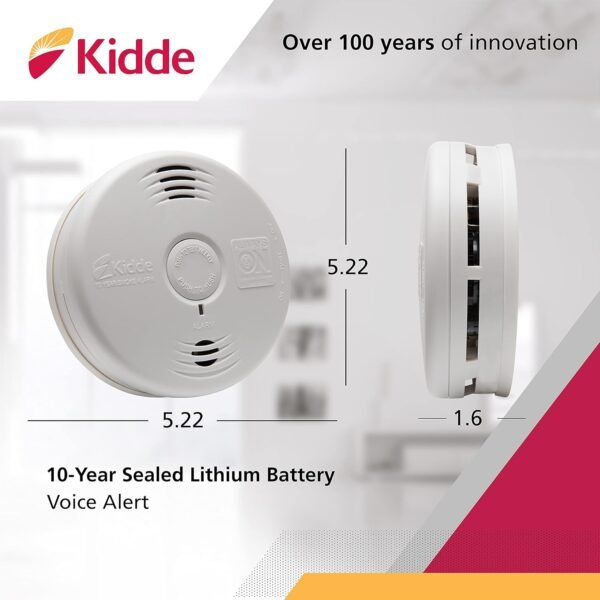
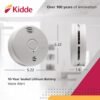
Physically the unit is a 5.22 inch diameter head, slightly wider than the slimmest alarms on the market, which can matter on a tight ceiling or in a corner mount. The published operating humidity range is 10% to 95%. That covers ordinary interior conditions but sits outside the range of an unconditioned bathroom or an uninsulated crawl space during a humid season.
- Alarm output is loud at close range with no volume setting
- Persistent chirp signals end of unit life, not a battery swap
- Wider head than slimline alarms, which limits some mounting spots
- Published humidity range of 10% to 95% rules out some locations
Installation and Controls
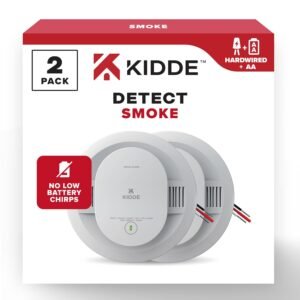
Installation is a bracket and a twist. The unit activates on mounting, so there is no battery compartment to open and no switch to remember, and the lithium cell ships installed. That makes it a straightforward retrofit in a rental or an older home with no hardwired alarm circuit, in contrast to a mains connected alarm where an electrician and local code enter the picture.
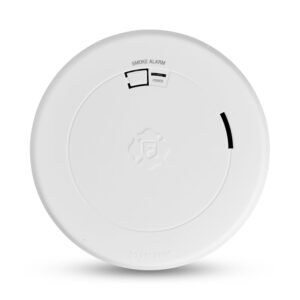
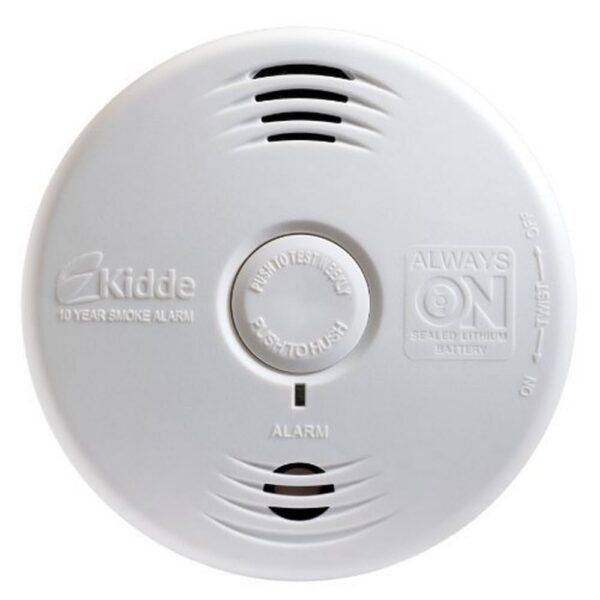
The test and hush button is a single large control on the face, reachable with a broom handle from floor level on a standard ceiling. The tamper resistant design makes casual removal harder, which is a deliberate choice in households where an alarm might otherwise be taken down and forgotten. The white housing is conventional and unobtrusive on a painted ceiling.
Comparing to Other Smoke Detectors
Against connected alarms with app notification and voice location cues, this model gives up all connectivity and undercuts them substantially on price. Against basic ionization alarms it costs more and buys the photoelectric sensing profile plus the sealed decade cell.
Within the Kidde range the closest comparison is the Kidde P3010L living area alarm, which shares the sealed cell and photoelectric platform in a variant aimed at a different room. For households that want voice announcement and a hush feature on the same sealed cell platform, the Kidde i9010 with 10 year battery is the sibling to compare against.
On maintenance the sealed cell is the clearest advantage over alarms that take a replaceable 9V. Ten years of no purchases and no ladder trips is a real difference in running cost, offset by the fact that the entire unit is disposable at the end of that term.
Price Performance: Is It Worth It?
On specification per dollar this alarm sits well. The photoelectric sensor, sealed decade cell and hush button cover what most households actually need from a single hazard alarm, and the price stays close to basic units that offer less on both counts. A comparable sealed cell option from another maker is the First Alert SM210 slim 10 year alarm, which trades on a lower profile housing.
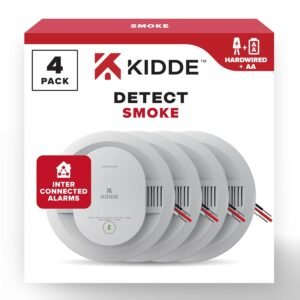
What the price does not buy is smart connectivity, carbon monoxide sensing or interconnect capability. Any household that needs CO coverage in the same location has to add a second device or move to a combination unit, and that changes the budget calculation more than any of the features listed here.
Design and Durability in Daily Use
The housing is a plain white disc with a clean face and no exposed vents to collect grease. At 0.6 pounds it is light enough for any ceiling anchor and puts no meaningful load on a standard bracket. Construction is unremarkable in the way safety hardware usually is, and the published 10 year limited manufacturer warranty matches the service life, so the warranty covers the whole intended term of the device rather than a short opening window.
Safety Standards and Certification
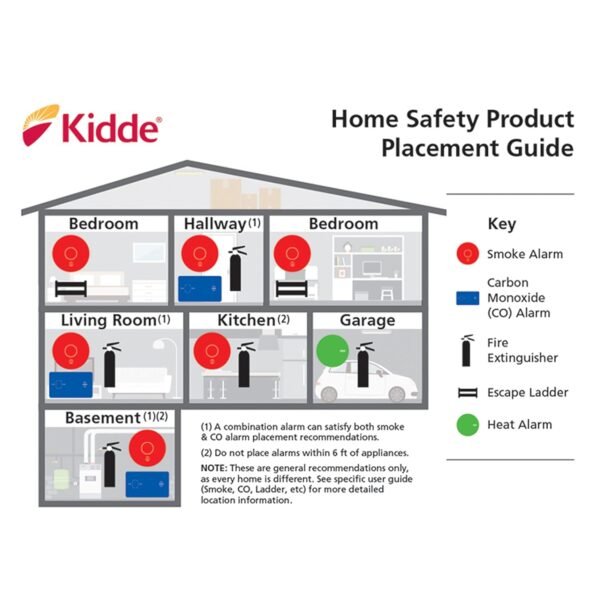
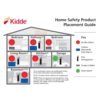
The listed compliance set is UL 217 for single and multiple station smoke alarms, along with NFPA 72 and NFPA 101, and the listing states Federal Housing Authority approval. Those listings mean the device has been evaluated against recognized standards for its class. They do not answer the question of how many alarms a given dwelling needs or where they belong, which is set by local building code and, in a rental or a new build, by an inspector. A device listing and a compliant layout are separate matters, and only the second one determines whether a home meets its requirements.
Other Options on the Market
Combination alarms cover more hazards from one head. The Kidde P3010CU combination smoke and carbon monoxide alarm keeps the sealed 10 year cell and adds electrochemical CO sensing, which removes a second device from the ceiling at a higher unit price. Connected alarms add app notification and remote status at a further step up in cost and setup.
For a buyer who wants a single hazard alarm with photoelectric sensing, no wiring, no batteries to buy and no account to create, the P3010B targets that brief directly. The decision comes down to which sensing profile matters more for the room and whether CO coverage is also needed at the same spot.
The specification reads as a deliberately narrow one: photoelectric sensing, a sealed decade cell, a hush button, an 85 decibel horn and a recognized listing set. What the alarm does is signal detected smoke in the space where it is mounted. Where it should be mounted, how many are required and how they should be arranged remain questions for local code and, where an interconnected or hardwired system is involved, for a qualified installer.