




Description
Highlights of the Kidde Hardwired Smoke Detector
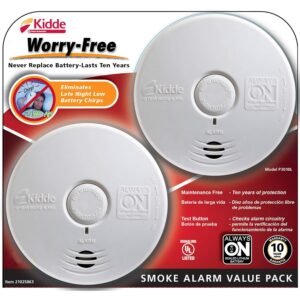
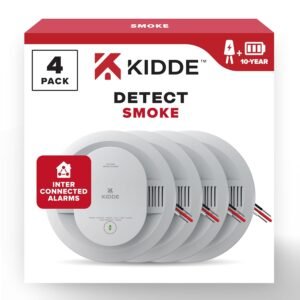
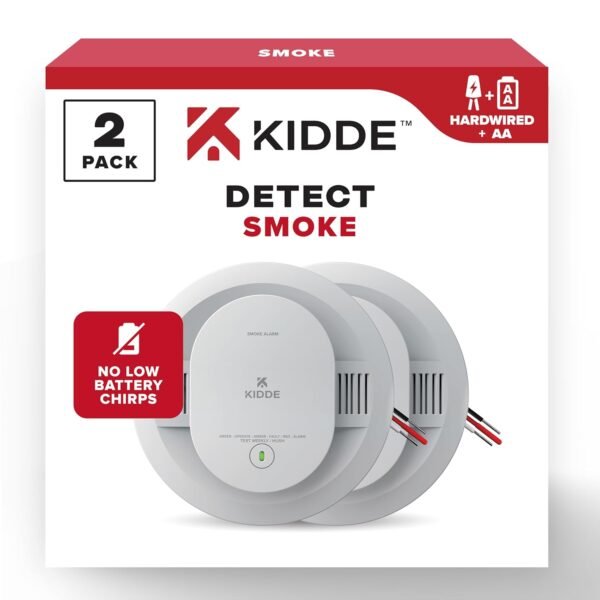
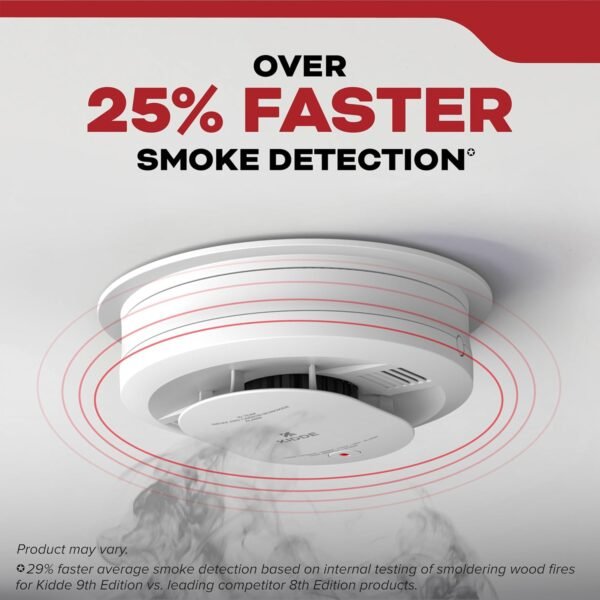
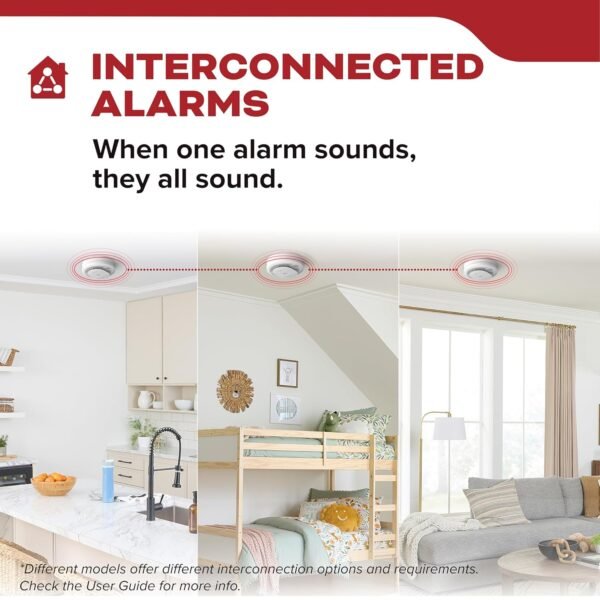
The Kidde Hardwired Smoke Detector, AA Battery Backup, Interconnectable, LED Warning Light Indicators, 2 Pack is built around Kidde’s enhanced sensing technology. The listing gives a photoelectric sensor, the type that responds earlier to smoldering fires and is less prone to the cooking triggered nuisance alarms that lead owners to disable a unit. The 85-decibel alarm is the standard residential output, and the red LED flashing in time with the beeps adds a visual channel to the audible one. The interconnect feature is the reason the alarm ships in pairs: when one unit detects smoke, every alarm on the same loop sounds, which is what gives people upstairs the same warning as people in the room where the smoke started. Buyers weighing a sealed cell version of the same idea often compare it against the Kidde P3010L with its 10 year battery.
- Photoelectric smoke detection minimizes false alarms
- Interconnect sounds every linked alarm from a single detection
- Clear LED indicators enhance alarm visibility
Limitations to Keep in Mind
There are real downsides to account for. The installation is hardwired, which is straightforward for anyone used to 120V ceiling work and a poor first project for anyone who is not. The twist-and-click mounting bracket handles the fixing, but the wiring itself has to follow local electrical code, and a qualified electrician is the right call where the existing circuit is old or unlabeled. The backup batteries are specified for replacement every six months, which is more frequent than the sealed designs now common in the category. The red LED is bright at night, something to weigh against sleeping areas. Lastly, while Kidde lists the alarm as meeting UL 217 9th Edition, it has no carbon monoxide detection, a function several competitors fold into a similar price, including Kidde’s own KN-COSM-IBA combination alarm.
- Installation requires electrical knowledge or professional help
- Frequent backup battery replacements needed
- Bright LED light might disturb light sleepers
- No carbon monoxide detection included
Design and Build Quality
The 5-inch circular design is the standard footprint for the category and sits without protruding far from a hallway, kitchen or bedroom ceiling. The white plastic finish matches most ceilings, and at 0.8 pounds the unit is light while still feeling solid on the bracket. The three LED status indicators, green for normal operation, amber for errors and red for smoke detection, give status at a glance once the states are learned. The self-testing feature checks internal components periodically, but Kidde still directs owners to press the test button weekly, since the self-test does not confirm the horn the way a manual push test does.
Interconnectivity and Safety Features
The interconnect capability is the strongest argument for a hardwired alarm over a battery one. Linking units means a detection anywhere raises every alarm on the loop, which matters most in larger or multi level homes where a single sounder can go unheard behind a closed door. How many alarms a home needs and where they go is set by local code, not by the pack size. The test and hush button covers the nuisance alarm problem, silencing the unit temporarily when steam or burnt toast sets it off rather than leaving people to pull the battery. The battery backup keeps the alarm working during a power cut, which is worth having in areas prone to storm outages.
Value Assessment
Looking at the price to quality ratio, this is a mid market alarm rather than a budget one. The pairing of hardwired power with battery backup alongside interconnect and false alarm reduction puts it a clear step above basic battery only units. The offsetting cost is installation, which for many households means an electrician’s time on top of the purchase price. Anyone comparing on that basis usually looks at the hardwired Kidde i12040 at the same time, since the wiring work is identical whichever unit goes on the bracket.
Product Rivals
Against Nest Protect or First Alert Onelink, this alarm competes on hardwired infrastructure and a conventional alarm tone rather than features. Nest Protect adds smart home integration and spoken alerts, neither of which this model offers. Kidde counters with the listed UL 217 9th Edition compliance and simple interconnection across multiple units. First Alert’s combination models add carbon monoxide detection, missing here, while the First Alert 9120B hardwired alarm is the closest direct rival on wiring and backup. The absence of app connectivity is a genuine gap for anyone who wants alerts away from home, and no factor at all for anyone who does not.
Everyday Practicality
Routine use is simple: one button press tests the alarm, and the hush function silences a nuisance alarm without disabling the unit. The AA batteries are included, so the backup is live at install rather than after a trip to the store. Published environmental limits list operation up to 95% relative humidity, which covers homes with humid kitchens and bathrooms, and an operating temperature limit of 100 degrees Fahrenheit, which rules out unconditioned outdoor locations and makes this an indoor residential alarm. The rest of our smoke detector and fire alarm reviews covers the heat detectors used where a smoke alarm is the wrong device.
Benefits of Enhanced Safety
The alarm output, interconnect and LED notification system are the features doing the work here. Linked alarms alerting a whole household within seconds of one unit detecting smoke is the core benefit of interconnection. The photoelectric sensor responds to smoldering fires, the slow burning type that can develop for a long time before flames appear, which is exactly why sensor choice matters rather than being a technicality. Kidde’s stated compliance with current standards is a manufacturer claim, not a measurement made here. The self-testing feature and battery backup reduce the number of ways an alarm quietly stops working, without removing the weekly button test from the owner’s list.
- Early detection of smoldering fires with photoelectric sensor
- Interconnected alarms increase household safety
- LED indicators provide clear status updates
- Self-testing and battery backup enhance reliability