





Description
Positive Features of the Kidde Carbon Monoxide Detector
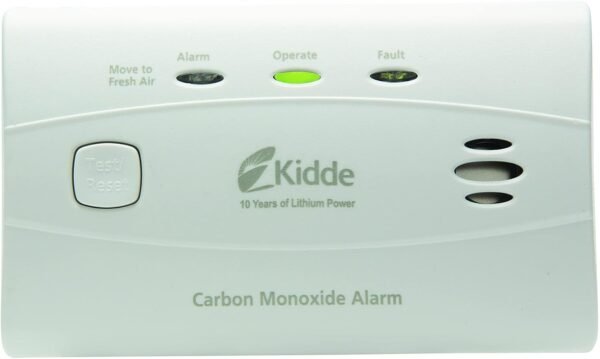
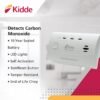
The Kidde Carbon Monoxide Detector with 10-Year Battery, model C3010 is a standalone CO alarm built around the sensing type the category has settled on. Kidde specifies an electrochemical sensor, which reacts to carbon monoxide itself rather than to particles, so cooking fumes and bathroom steam are not the trigger they are for a smoke alarm.
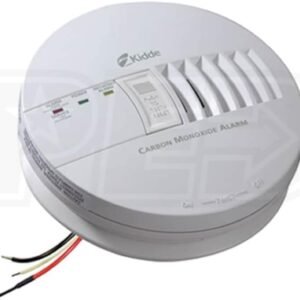
The 10-year lithium battery is the defining spec. It is included and sealed into the housing, so there is no yearly battery change and no window in which the alarm sits dead because a cell was borrowed for something else. It also means the unit is unaffected by a mains outage, since it never depended on the mains in the first place. The portable design follows from that: the alarm can be wall mounted or stood on a shelf, and at about 7.4 ounces it moves between rooms easily. Where a household wants CO detection wired into the house instead, the hardwired Kidde KN-COB-IC is the same brand’s answer.
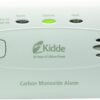
The 85-decibel alarm is the standard residential output and is meant to carry over normal household noise. Alongside it, three LED indicators report status: green for normal operation, flashing red when carbon monoxide is detected, and amber to signal that the unit has reached the end of its life and needs replacing. That amber signal is the one to learn, because a CO alarm past its service life is not a working alarm. The test-hush button covers both routine testing and temporarily silencing a low battery chirp without pulling the unit off the wall, which is the difference between a chirp at 3am being silenced and the alarm being taken down and forgotten.
Highlights:
- Electrochemical sensor reacts to carbon monoxide rather than particles
- 10-year sealed lithium battery removes yearly battery changes
- 85-decibel alarm output
- Three LED indicators cover normal, alarm and end of life states
- Test-hush button for testing and temporary silencing
Drawbacks to Keep in Mind
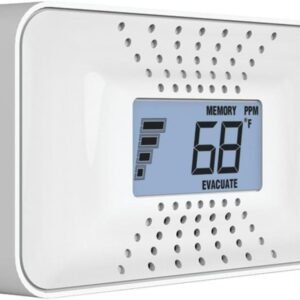
The specification leaves out several things buyers now expect. There is no digital display, so the alarm reports states rather than a CO concentration in parts per million. Models with a readout show a number between alarm thresholds, which is useful information after running a generator or a fireplace. First Alert’s CO710 with its digital display is the closest comparison on that point.
There is also no smart connectivity. The unit works entirely on its own, with no app, no home security integration and no notification when nobody is home, which is a real gap for a hazard that builds while a house is empty.
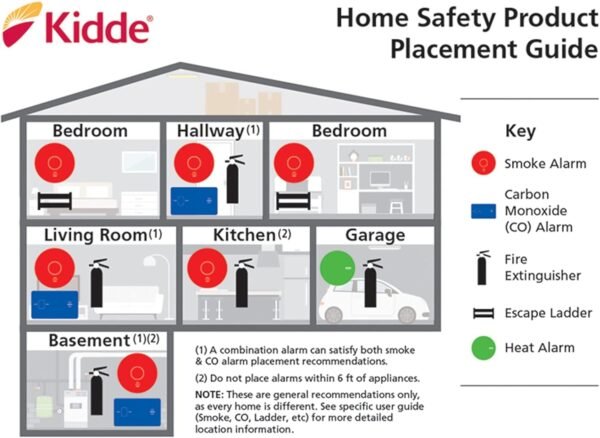
The installation instructions are brief, and mounting position is not a matter of preference: where CO alarms go and how many a home needs are set by local code and Kidde’s own instructions. The alarm volume is fixed with no adjustment, which is deliberate on a life safety device but does mean it cannot be toned down in a small room.
Areas for Improvement:
- No digital display for exact CO levels
- Lacks smart home integration or remote alerts
- Installation instructions could be more user-friendly
- Alarm volume not adjustable
Installation and Usability
Setup involves no wiring. The unit is mounted on a wall or placed on a flat surface, and the sealed battery means it is live from the moment it is activated. The light weight makes relocation simple, though placement should follow the manufacturer’s instructions and local code rather than convenience, particularly around fuel burning appliances and sleeping areas. Plug-in alternatives such as the First Alert CO605 with battery backup take a different approach, tying the alarm to an outlet and using a cell only as backup.
The test-hush button is the whole maintenance routine on a sealed unit: press to confirm the horn and circuitry respond. The LEDs report status without needing a manual, and the alarm is silent in normal operation, which keeps a working detector from becoming an irritation that gets removed.
Safety Features and Certifications
Carbon monoxide is colorless and odorless, which is why a detector is the only practical warning. The electrochemical sensor is the sensing type used across residential CO alarms, and the 85-decibel alarm is the output level the category is built to. No alarm can promise a sleeping household will wake, so how many units a home needs and where they belong stay questions for local code and Kidde’s instructions.
The listing states the product is UL certified, and it comes with a 10-year limited manufacturer’s warranty matched to the battery and sensor life. Both of those are manufacturer claims rather than anything measured here. The practical point is the end of life date: the sensor, not the battery, sets the replacement interval, and the amber LED is what tells you it has arrived.
Comparing with Other Options on the Market
Against Nest Protect or First Alert’s CO range, the differences are structural. The Kidde leads on battery longevity, with a sealed 10-year cell where competitors use replaceable batteries or plug-in power that fails in an outage.
What it gives up is interaction. Nest Protect’s connected features cover remote alerts and integration with other devices, none of which the C3010 attempts. Basic plug-in units such as the First Alert CO400 sit below it on both battery life and features, and several First Alert models add the digital readout the Kidde lacks.
For a buyer who wants a fit and forget alarm with a decade of runtime, the C3010 answers directly. For a buyer who wants monitoring while away or a running CO figure, the rest of our carbon monoxide detector reviews covers models that trade battery life for those features.
Price Worthiness and Value Assessment
On running cost the math is straightforward: a sealed 10-year cell removes a decade of replacement batteries, which is most of the lifetime cost of a cheaper alarm. Installation costs nothing, and the maintenance routine is a button press.
What the price does not buy is app integration or a display. For households wanting a dependable CO alarm with minimal upkeep, that is a reasonable trade. For anyone monitoring a garage, a workshop or a rental from a distance, the missing connectivity is the deciding factor rather than a detail.
Household Use in Practice
Owner ratings in this category consistently pick out two things: the alarm is startling, which is the intended behavior, and the sealed battery removes the maintenance most people forget. The LED indicators are readable without technical knowledge, which matters when the person checking the alarm is not the person who installed it.
The absence of a screen is the trade off that surfaces most often in normal use. After running a fireplace or a gas appliance, a display model shows a number, while the C3010 shows only that no alarm condition exists. Whether that gap matters depends on how much fuel burning equipment a home runs.
What the specification does deliver is a decade of unattended operation from a device that requires no wiring, no outlet and no battery changes. That is a narrow proposition, executed simply, and it stands or falls on the buyer wanting exactly that.
In summary, the C3010 combines electrochemical CO sensing, a sealed 10-year cell and simple LED status reporting in a compact unit. It skips the display and the connectivity found on pricier alarms, and treats detection as the whole job. Placement, quantity and any related fuel appliance work remain questions for local code and the manufacturer’s instructions.