




Description
Highlights of the First Alert Carbon Monoxide Detector CO605
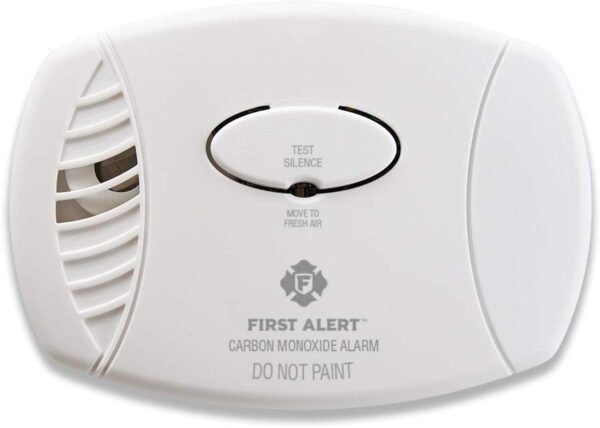
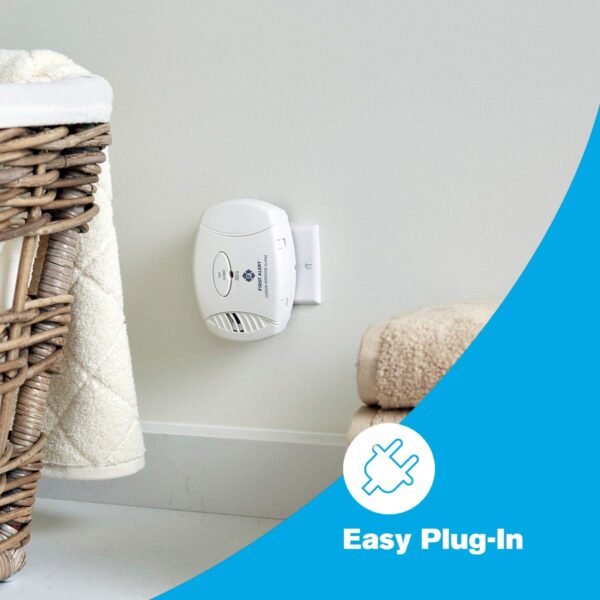
The First Alert Carbon Monoxide Detector, Plug-In Alarm with Battery Backup, CO605 is built on an electrochemical sensor, the sensing method First Alert describes as its most accurate for carbon monoxide and the type most widely specified for residential CO alarms. The unit plugs straight into a standard outlet, so installation involves no drilling, no bracket and no wiring. The battery backup covers the gap that a plug-in alarm would otherwise leave, keeping the alarm monitoring through a power cut, which is exactly when generators and alternative heating raise carbon monoxide risk in the first place.
The single button handles both test and mute. Nuisance activations happen in any busy household, and being able to silence one without unplugging the alarm is what keeps the device in service rather than in a drawer. The 85-decibel alarm is loud enough to carry through a room without being the loudest device in the category. Buyers weighing the same sensor in a unit that needs no outlet at all can compare the battery-powered First Alert CO400.
- Plug-in installation with no tools or wiring required
- Electrochemical sensor, the standard sensing type for residential CO
- Battery backup keeps the alarm active during a power failure
Drawbacks to Consider
The specification has gaps worth knowing about. Backup power comes from a single 9V alkaline battery, included but not sealed, so it becomes a recurring replacement task if the backup is to be there when the power is not. A sealed backup cell, or a more detailed low-battery indication than the quiet mute function that temporarily silences the chirp, would both be improvements on this arrangement.
The plastic construction is light and functional rather than substantial. The unit is compact, at roughly 5 inches tall and 3.4 inches wide, but a plug-in body of that size still projects from the wall and can foul furniture, curtains or the second socket on a double outlet. That constrains where it can go, and where a CO alarm goes is governed by local code and the manufacturer’s instructions rather than by whichever socket happens to be free.
- Backup battery requires scheduled replacement
- Plastic housing feels less substantial than premium detectors
- Body can obstruct an adjacent outlet
User Experience and Practical Features
Operation is deliberately minimal, with no menus or settings to configure, which suits households where several people may need to interact with the device. The test/silence button serves both functions, confirming the alarm sounds and allowing a nuisance activation to be muted. There is little to misunderstand, and on a safety device that is a feature rather than a shortcoming.
First Alert states that the CO605 is UL listed and carries a 7-year limited warranty. The manufacturer’s instructions call for a detector on each floor and inside bedrooms; those instructions, together with local building and fire code, decide how many units a dwelling needs and where they go. The end-of-life signal is the other specification that matters over time, chirping when the unit has reached the end of its service life, since a CO sensor ages whether or not it has ever alarmed.
Competitors in the Carbon Monoxide Detector Market
Against other plug-in alarms and connected models such as Nest Protect, this unit competes on simplicity. Kidde’s sealed ten year CO alarm takes the opposite approach to power, removing battery maintenance entirely rather than plugging into a socket. Connected alarms add voice alerts and phone notification at a higher price and with an app setup step, along with an account and firmware to maintain.
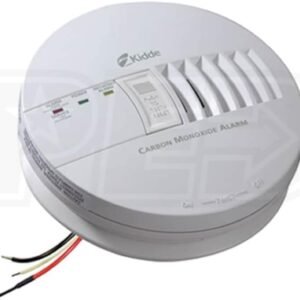
The CO605’s battery backup is the meaningful advantage over plug-in alarms that stop working the moment the power does. What it gives up is the tethering to outlet locations, which a hardwired Kidde CO alarm avoids by taking permanent power from a circuit, at the cost of an installation that has to follow local electrical code.
Value Proposition: Is It Worth the Investment?
On price against specification, this carbon monoxide detector sits in reasonable territory. It combines a UL listing, electrochemical sensing and installation that takes seconds, at a cost well below connected alarms. The included battery backup and the 7-year warranty both count toward what the money buys, and neither is standard at the bottom of the category.
For buyers who want a dependable CO alarm without an app or a setup process, the specification covers it. The quiet mute function for low battery chirps and nuisance alarms is a small provision that makes a measurable difference to whether an alarm stays plugged in. Competitors offer more features; this model’s argument is that it covers the detection function and little else.
Design and Build Quality Insights
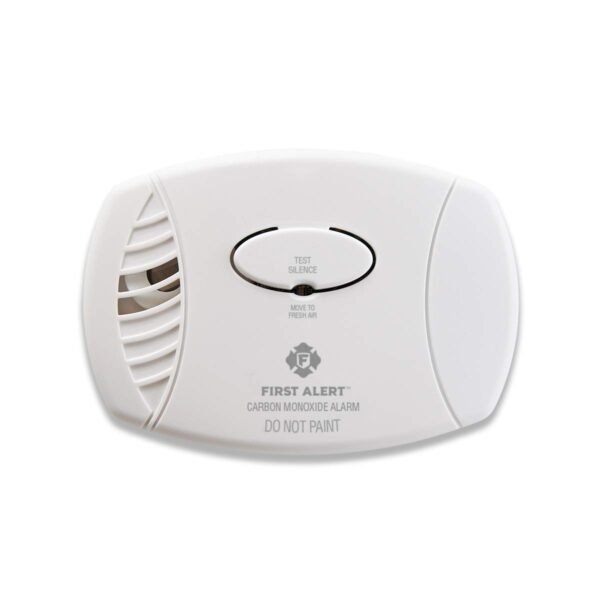
The all-white plastic housing is unobtrusive on most walls. Its dimensions make it one of the more compact plug-in alarms in the category, though as noted the body still projects far enough to matter at a crowded outlet. The corded electric power source removes the main-battery maintenance task, at the cost of tying placement to socket locations.
Build quality is on the light side for the category, which raises a question over long-term wear where a unit is bumped or unplugged frequently. It is consistent with other models at this price, and the 7-year warranty is the manufacturer’s own statement of how long it expects the device to last.
Safety Features That Matter
The 85-decibel alarm is the primary output. Carbon monoxide gives no smell, colour or taste at the concentrations that matter, so the audible alarm is the only warning a household gets. The alarm pattern is distinct from a smoke alarm pattern, which reduces confusion about which hazard is being signalled and therefore which response the manufacturer’s instructions call for.
The end-of-life chirp is the other feature that carries real weight, since an expired detector looks identical to a working one. The unit monitors continuously and alarms when carbon monoxide reaches and holds a hazardous concentration. A CO alarm signals a problem, it does not fix one: a fuel-burning appliance, blocked flue or engine running too close to the building still needs a qualified technician.
Installation and Setup Experience
Setup is a single step: the alarm plugs into a wall outlet with no mounting hardware involved. The plug-in design suits rentals and any property where drilling is unwelcome. Pressing the test button after plugging in confirms the unit sounds, and the manufacturer’s instructions call for that test on a weekly schedule thereafter.
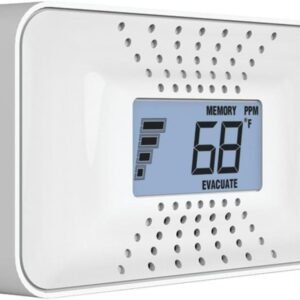
First Alert’s instructions specify a detector on every level of a home and inside bedrooms. Local code sets the actual requirement, which can be stricter, and it is the code and the instructions rather than any recommendation here that determine an adequate arrangement. In tighter spaces, the body size can require some trial and error to find an outlet where the alarm does not block the second socket. Buyers who want CO concentration shown as a number rather than signalled at the alarm threshold need a display-equipped model such as the First Alert CO710 with digital readout.
Summary of Good Points:
- Electrochemical sensing, the standard technology for residential CO alarms
- Plug-in installation with battery backup for power outages
- Single-button operation for testing and silencing
Summary of Limitations:
- Backup battery needs scheduled replacement, and quiet mute only silences the low battery chirp temporarily
- Plastic casing is light and the body can crowd an outlet
- No digital CO readout, connected features or wireless alerts
This review is compiled from published First Alert specifications, listing data and owner rating patterns for the CO605. Nobody at this site handled the unit. On the published numbers it is a dependable, low-complexity carbon monoxide alarm covering the core function, with the recurring battery change and the missing display as the main compromises. Buyers comparing several units at once can work through the rest of our carbon monoxide detector reviews before deciding how many units their home requires.