




Description
Highlights of the Kidde Hardwired Smoke Detector
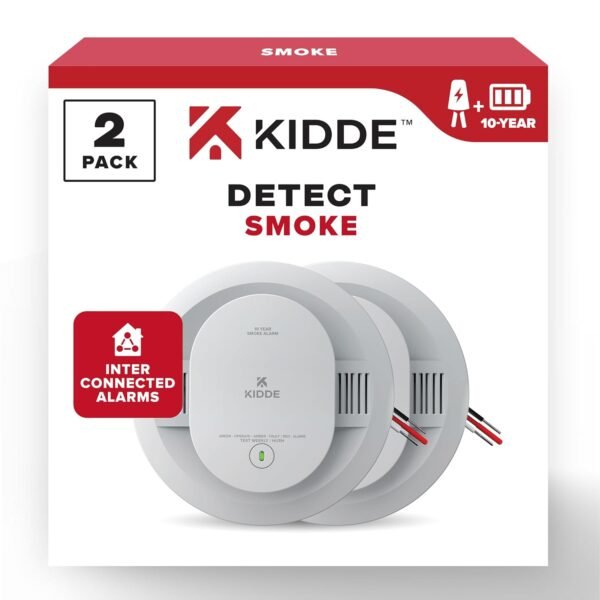
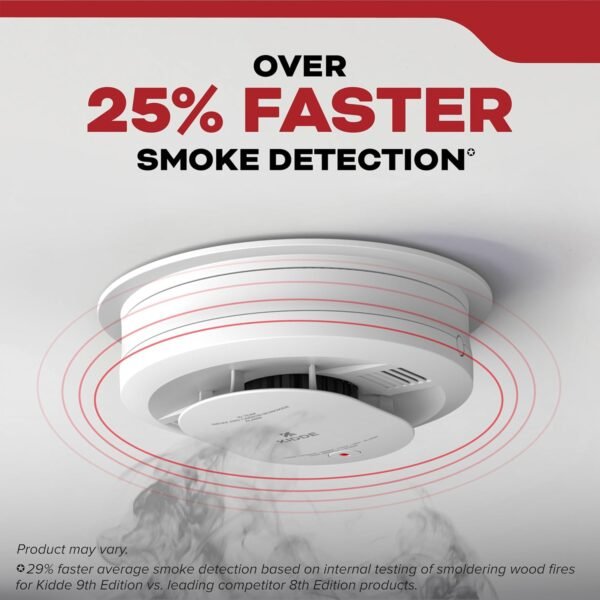
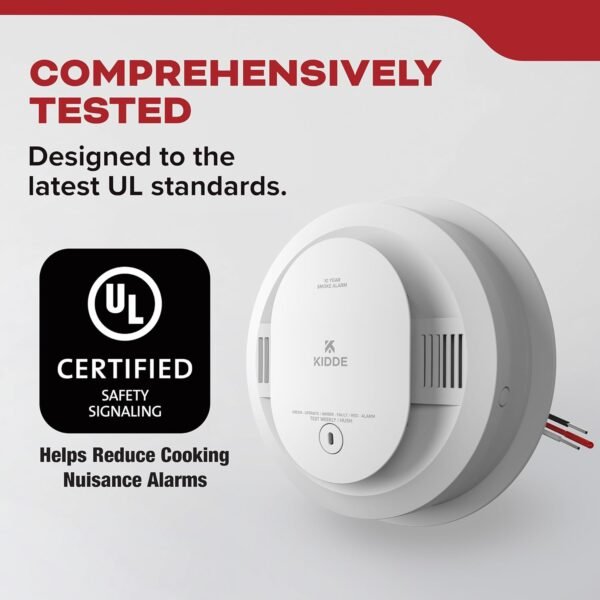
The Kidde Hardwired Smoke Detector, 10-Year Battery Backup, Interconnectable, LED Warning Light Indicators, 2 Pack (model 20SA10) is a mains-powered alarm built around a photoelectric chamber. The 5-inch circular housing is the standard size for living rooms, hallways and bedrooms. The photoelectric sensor technology is the specification that matters most near a kitchen, since photoelectric sensing reacts less to cooking aerosols than ionization sensing does. The 85-decibel alarm signals with three long beeps and a flashing red LED, the temporal pattern used for smoke.
The twist-and-click mounting bracket handles the mechanical fitting, and the self-test checks the alarm’s own internal components on a cycle. Interconnect is the feature that changes how a building behaves, because a detection at one unit sounds every alarm wired to the same loop. Buyers who want the same sensing without touching ceiling wiring usually compare it with Kidde’s battery only P3010B.
- Standard 5-inch housing suits most living spaces
- Photoelectric sensing reduces nuisance alarms
- Interconnected alarms sound together on one loop
- Self-test runs alongside the required manual test
Drawbacks Worth Noting
A few limits come with this specification. The hardwired setup ties into house wiring, so the work should follow local electrical code and, for most households, means a qualified electrician rather than a weekend job. The 10-year battery backup removes battery changes but not testing, and Kidde specifies a manual button test every week for the full life of the alarm. That is a small routine, and it is the routine that catches an alarm that has quietly failed.
The environmental rating also has an edge to it. The alarm is rated to 95% relative humidity and 100 degrees Fahrenheit, which covers conditioned living space but not an uninsulated garage or an attic in summer. The LED code is helpful once learned, though the amber fault indicator is the one owners misread most often, since it signals an operating error rather than a low battery.
- Hardwired installation must follow local electrical code
- Weekly manual testing is still required
- Rated range excludes hot or unconditioned spaces
- LED error codes take some learning
Design and Build Quality
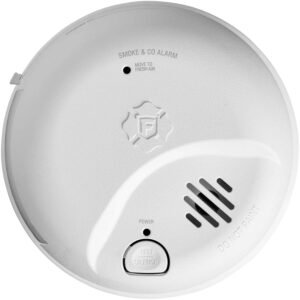
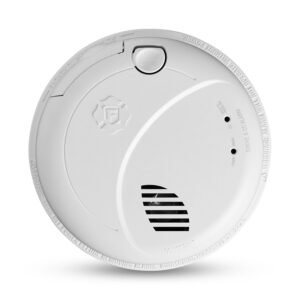
The white plastic housing is plain and sits flat against most ceilings. The circular shape with a 5-inch diameter is the common form factor for this class, and at just under a pound the unit puts little load on the mounting point while still feeling solid in the hand.
The LED warning light indicators carry a three colour code, green for normal operation, amber for an operating error, and red flashing when smoke is detected. A colour code that names the state is easier to act on than a chirp pattern, which matters in households with children or older adults. The test and hush button silences a nuisance alarm temporarily without taking the detector out of service, which is the difference between quieting an alarm and disabling one.
Performance and Reliability in Daily Use
The 85-decibel alarm is the standard output level for residential smoke alarms in this class, measured at 10 feet. The interconnect is what carries that alert beyond the room containing the smoke, sounding every unit on the loop rather than leaving the warning where the fire started.
The 10-year lithium backup covers a decade of mains outages with no battery purchases. Kidde lists the alarm against UL 217 9th Edition and states it meets FCC requirements, and the marking on the unit itself is what to check if a specific edition matters in your jurisdiction. The self-test is a monitoring function rather than a substitute for the manual test, and neither replaces the placement and quantity rules set by local code.
Interconnectivity and User Experience
Interconnect is the single feature that most changes what a set of alarms can do, since a smoke event on one floor becomes an audible alert on every floor. With two units wired to one loop, a detection at either sounds both. Adding units to the same loop scales that behaviour, subject to the interconnect limit given in the instructions. Owners extending a loop across a larger footprint often add the hardwired i12040 to reach the remaining positions.
The LED warning lights report status continuously, with the amber fault state the one most worth learning in advance. The user guide and mounting hardware are supplied, and the fitting is manageable for anyone comfortable with mains wiring. Anyone who is not should hire a qualified electrician, since the hardwired design with battery backup only delivers uninterrupted operation when the wiring is done correctly.
Value for Money
Weighed against its specification, this hardwired alarm with a 10-year backup earns its price. The initial outlay is higher than a basic battery-operated unit, and the decade of avoided battery purchases plus the interconnect coverage are what the difference buys. Cross-shoppers often line it up against First Alert’s SMI105-AC, which covers the same hardwired role with a ten year backup of its own.
The low maintenance that comes from a sealed backup cell and the reduced nuisance alarms from photoelectric sensing both count toward long-term value, since an alarm that stays powered and stays on the ceiling is the one that works. For a household prioritising coverage and low upkeep over smart features, the specification is well matched. The wider set of options is covered across our smoke detector and fire alarm reviews.
Installation and Maintenance Insights
Installation is a two part job. The twist-and-click mounting bracket makes the physical half quick, while the mains connection is the half that has to be right. The supplied instructions are clear, and the wiring still needs the competence and code compliance that any fixed electrical work requires.
Maintenance comes down to the weekly test button check, which is the only routine the manufacturer asks for. The LED indicators surface faults between tests. Because the lithium cell is not replaceable, the whole unit is a ten year item, which removes forgotten battery changes and makes the end-of-life signal the date that matters.
That combination cuts long-term effort while front-loading the installation. Households comparing a wired loop against a set of independent sealed battery alarms should also look at the battery only 20SD10, which offers similar sensing without any wiring work.