Description
Advantages of the First Alert 10 Year Slim Battery-Powered Photoelectric Smoke Detector
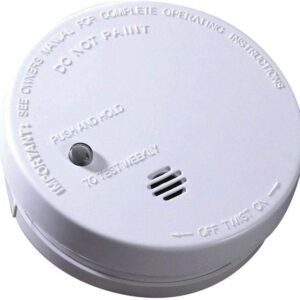
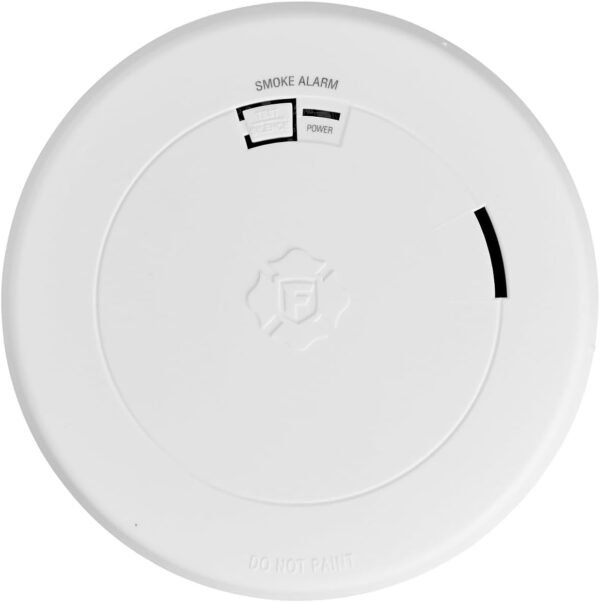
The First Alert 10 Year Slim Battery-Powered Photoelectric Smoke Detector is built around a single headline specification, a 10-year battery life, which removes the yearly battery swap that ordinary alarms demand. The slim housing sits close to the ceiling or wall, so the unit stays visually quiet in a room rather than reading as a bulky fixture. The photoelectric sensor is the other defining spec, since photoelectric sensing responds more readily to smoldering fires than the ionization sensing used in compact alarms such as the Kidde i9040.
Key points drawn from the published specifications:
- Long-lasting battery removes the need for frequent replacements.
- Compact and slim profile fits in most rooms without being obtrusive.
- Photoelectric technology is the sensing type associated with slow, smoldering fires.
- Audible alarm is listed at 85 decibels.
- The test/reset button is a single control, operable without the manual.
Drawbacks to Keep in Mind
No alarm suits every situation, and this one carries a few trade-offs worth naming. Although the battery life is advertised as 10 years, the cell is sealed in, so the whole unit is replaced at end of life rather than the battery. That is convenient for a decade and wasteful at the end of it. Owner ratings also mention that the alarm tone, while loud, sits at a high pitch that can grate in quieter homes or for people sensitive to sharp sounds.
Recurring drawbacks reported for this model include:
- Non-replaceable battery means the entire unit is replaced after 10 years.
- The alarm tone may be irritating for some due to its sharp pitch.
- It lacks any smart home integration features that many newer models offer.
- The absence of a silencing feature for nuisance alarms can be frustrating during cooking or steam.
Design and Build Quality
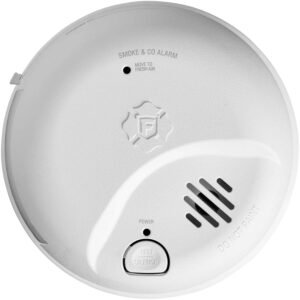
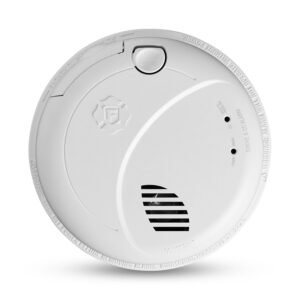
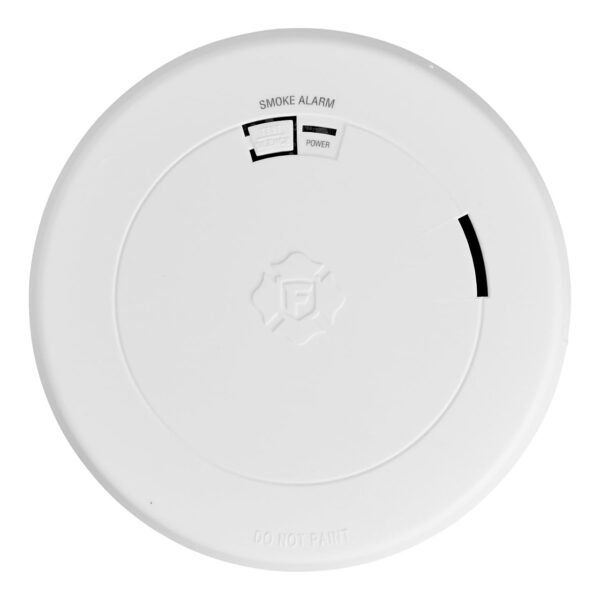
The design is minimalist and functional. Published dimensions are inconsistent here, with the listing giving roughly 1 inch for both depth and width, a figure that can only describe the profile rather than the face of the alarm, so check the dimension drawing before planning a tight installation. The listed weight of around 0.48 pounds keeps mounting simple, with no extra bracing or specialist tools called for. The unit ships in a plain clamshell pack, so there is little waste at unboxing. The test/reset button sits on the face, which is what allows a check without dismounting the alarm.
The white, unassuming color blends with most ceiling paints and textures, a small but sensible choice. The moulded housing is rated for ordinary household conditions rather than damp or unconditioned spaces.
Performance and Sensor Technology
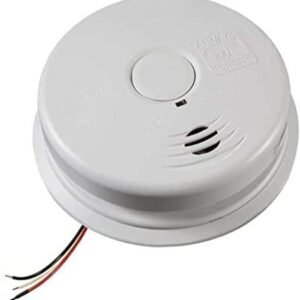
The photoelectric sensor is the reason this alarm is pitched at smoldering fires, which develop slowly and produce larger smoke particles than fast flaming fires. The listing gives an alarm output peaking around 85 decibels. Photoelectric sensing is also the sensing type least troubled by cooking fumes and steam, which is the same reasoning behind a sealed ten year photoelectric alarm like the Kidde P3010L.
Lower nuisance sensitivity does not make placement a free choice. The unit still belongs away from kitchens and bathrooms, and how many alarms a home needs, along with where each one goes, is set by local code and the manufacturer’s instructions rather than by a product listing.
Installation and Usability
Installation is a bracket and two screws. The slim profile keeps the alarm flat against the surface, and the sealed battery means the housing is never opened, which limits dust and moisture reaching the chamber. The test/reset button verifies the alarm sounds, and manufacturers ask for that test weekly, a habit that applies to every unit in our smoke detector and fire alarm reviews.
Placed in a hallway, an alarm covers the circulation space rather than the rooms off it, so a single unit is not a whole-house answer. No loose batteries ship with the product, which follows from the sealed cell design.
Value Proposition
The price sits above basic smoke detectors, but the 10-year battery life and photoelectric technology are what the premium buys. No annual battery changes and no low-battery chirps at three in the morning is a real reduction in upkeep across a decade. The limited 10-year warranty runs alongside the rated life of the unit.
Against budget alarms, longevity and sensor type are the two points of difference. For households that want a fit-and-leave smoke alarm, the higher upfront cost spreads across ten years of no maintenance.
Product Contenders and Market Rivals
Alternatives such as the Nest Protect or Kidde smoke detectors sit at different points on the same map. The Nest Protect adds smart features including mobile alerts and voice alarms, which this First Alert does not offer. Those features come with a higher price and, on several smart models, a shorter battery interval or a wired connection.
Many Kidde models use ionization sensors, which cost less but respond more slowly to smoldering fires. Buyers who want both sensing types in one housing tend to look at First Alert’s dual sensor SM310 instead. The slim profile of the SM210 also sets it apart from bulkier competitors that stand proud of the ceiling.
Overall, this detector concentrates on simplicity, long battery life, and photoelectric smoke detection, and buyers who want smart connectivity will need to look elsewhere.
Positive Features That Stand Out
- Ten year sealed battery reduces maintenance across the life of the alarm.
- Sleek and discreet design suits ceilings where a bulky alarm would stand out.
- Photoelectric smoke sensor is the type aimed at smoldering fires.
- Loud audible alarm listed at 85 decibels.
- Single test/reset button for routine checks.
Areas for Improvement
- The non-replaceable battery means the whole unit becomes waste at end of life.
- High-pitched alarm tone may disturb sensitive ears.
- Lack of smart home integration limits remote monitoring.
- No temporary silence option during nuisance alarms.
On the published specifications, the First Alert 10 Year Slim Battery-Powered Photoelectric Smoke Detector is a low-upkeep alarm rather than a feature-rich one. Its sealed ten year cell and photoelectric sensor suit anyone who wants straightforward smoke detection and nothing to service, and buyers who want app alerts or a hush function will find it bare. Households comparing it against a mains-free alternative often shortlist First Alert’s battery powered SMI100 alongside it.