



Description
Plus Points of the Kidde Smoke & Carbon Monoxide Alarm
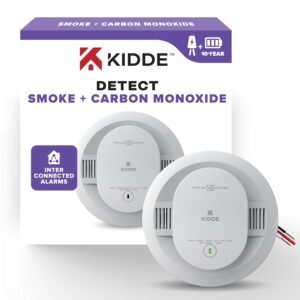
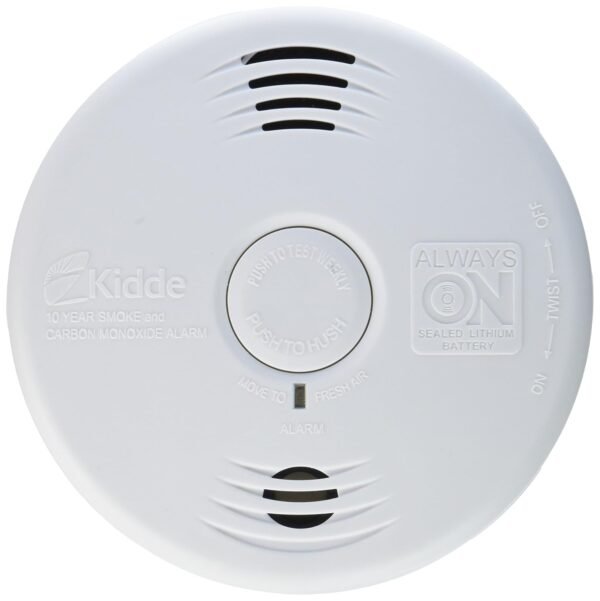
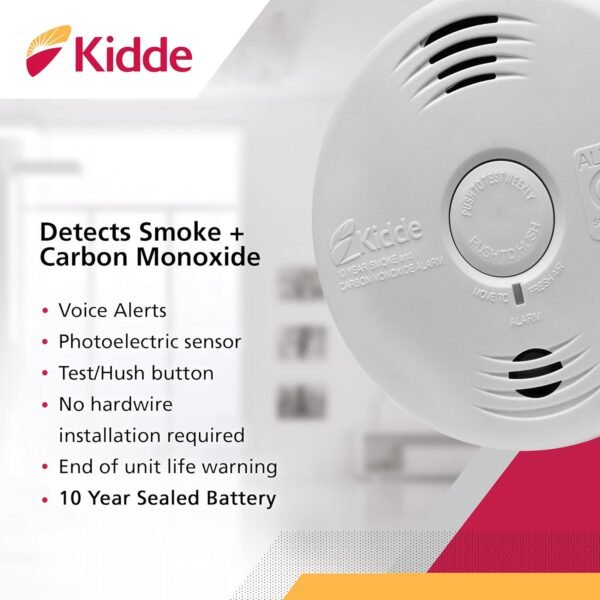
The Kidde 21026065 Smoke & Carbon Monoxide Alarm with Voice Warning leads with the feature in its name. The voice alarm system announces “Fire” or “Warning, Carbon Monoxide” instead of leaving a household to interpret a beep pattern, and naming the hazard changes what people do next: smoke means get out, carbon monoxide means get to fresh air and ventilate. The pairing of photoelectric and electrochemical sensors is what allows the unit to tell those two events apart, and Kidde specifies that the sensors adjust sensitivity together to cut nuisance trips from cooking.
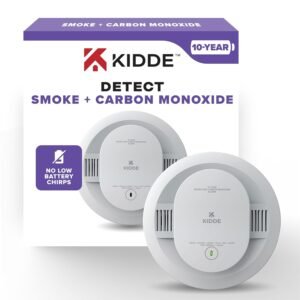
The second argument is the sealed 10-year lithium battery. Nothing to replace, nothing to remove, and no window where the alarm sits dead because a cell was borrowed for something else. Mounting is a single action, since automatic activation arms the unit as it locks onto the bracket, with no switch or pull-tab to forget. Alarms of this type make up a large share of the combination smoke and carbon monoxide detector reviews on this site, and the sealed-cell design is now the default rather than the exception.
The photoelectric sensor is the right choice for the smoke half of a combination unit. It responds sooner than an ionization element to smouldering material, which is how many house fires begin, and it is less prone to tripping on cooking aerosols. The alarm also chirps at end of life, which is a replacement instruction rather than a fault code and should not be muted and forgotten. A Kidde alternative with the same voice announcements in a battery-only housing is the KN-COSM-BA combination alarm.
- Voice alarm system names the hazard instead of relying on a beep pattern
- Sealed 10-year battery removes the annual replacement task
- Photoelectric sensor responds early to smouldering fires
Drawbacks Worth Considering
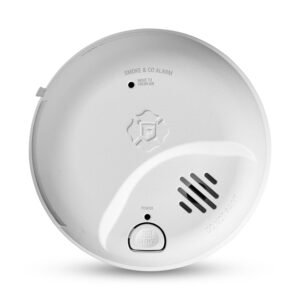
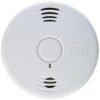
The housing is bulky next to the slim-profile alarms now on the market. That is irrelevant on a hallway ceiling and obvious on a feature wall. The voice alert is also loud, which is the intent in an emergency and startling the first time a test button is pressed with someone standing underneath.
Listing data for this model contradicts itself on power. Parts of the copy describe a sealed 10-year lithium battery that arms on mounting, while another section specifies operation on 120 volts AC with the sealed battery as backup. Those describe two different products, a battery-only alarm and a hardwired one, so confirm the power configuration on the model number before ordering, because a hardwired unit needs a ceiling box, a live circuit, and wiring work that follows local electrical code. The same copy is also unclear about whether batteries are included, which is a related symptom of the same mixed-up listing.
The price sits above basic smoke alarms, and the voice warnings and dual sensing are what the extra pays for. Buyers who want neither can spend less. Whatever the power arrangement turns out to be, the sealed cell cannot be swapped, so the whole unit is replaced at end of life. Published specifications also give an upper temperature rating of 100°F, which rules out unconditioned attics and hot garages.
- Bulky design may not suit every ceiling
- Voice alert volume can be startling
- Entire unit replacement required after battery life ends
Installation and Ease of Use
Setup is among the simpler jobs in this category, assuming the battery-only version. Automatic activation when the alarm meets the mounting bracket means no switches and no pull tabs: it seats, it powers up. That removes the most common installation error, a unit mounted but never armed, which matters in a household where whoever fits the alarm is not the person who reads the manual.
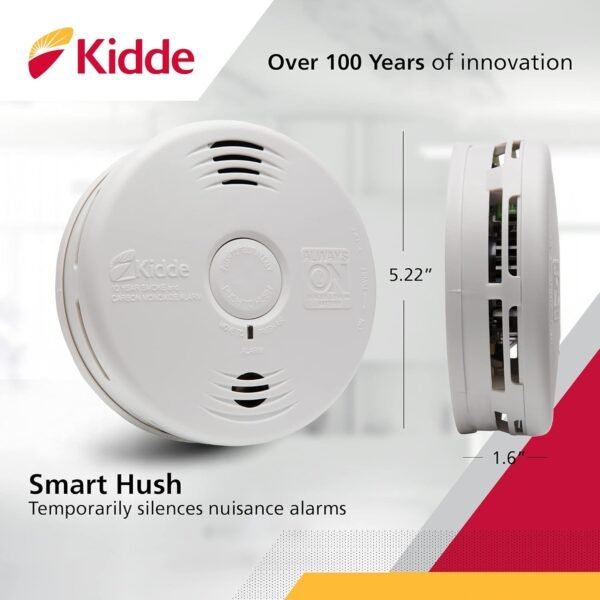
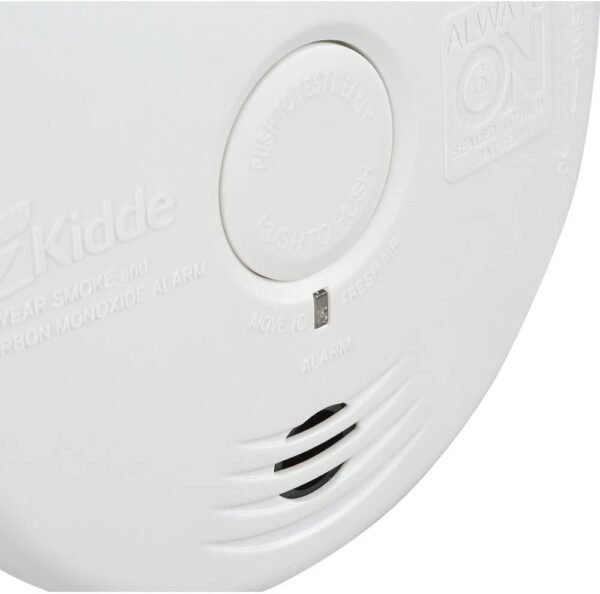
The audible alerts are clear and the spoken announcements sit on top of them rather than replacing the horn. A single test button checks both the smoke and the carbon monoxide sensing paths, and that test is a weekly job, not a one-off at installation. The Smart Hush feature silences a nuisance alarm temporarily without switching off protection, which is the behaviour that stops a cooking trip from ending with the alarm in a drawer.
The unit is light at just over 5 ounces, so ceiling or wall mounting needs no special fixings. Placement and quantity are set by local code and by Kidde’s own instructions, not by where the housing looks least conspicuous.
Performance and Detection Capabilities
Detection is handled by two separate elements. The photoelectric sensor picks up visible particles from smouldering fires, while the electrochemical sensor reads carbon monoxide concentration. Kidde specifies that the two work together to reduce nuisance alarms, which is the practical benefit of combining them in one housing rather than the marketing line it sounds like.
The voice warnings state which hazard has been detected, and that distinction drives a different response for each. Sensitivity is factory-set, so there is no tuning available and no way to desensitise a unit that sits too close to a kitchen. The fix for that is distance, not adjustment.
Because the specification is inconsistent about the power source, buyers should read the box rather than the listing on this point. Where the alarm is the hardwired variant, the sealed cell acts as backup during an outage; where it is the battery version, the sealed cell is the only supply and mains failure is irrelevant to it. The wireless-interconnect Kidde P4010DCSCO-W is the model to look at where several alarms need to sound together without running cable.
Value Assessment: Is It Worth It?
On price to quality ratio, this alarm is reasonable for a household that wants smoke and carbon monoxide sensing from one ceiling position with no maintenance calendar attached. The 10-year sealed battery is the strongest part of the case, because it removes both the replacement cost and the far more common failure of a cell that was pulled out and never put back.
It is not the cheapest option, and the voice warnings, dual sensing, and one-step mounting are what the premium buys. Against a basic alarm that needs an annual battery check, this is the lower-effort choice for a busy household, provided the missing carbon monoxide coverage elsewhere in the property is dealt with separately.
Alternative Products and How This One Stacks Up
Set against combination alarms such as the Nest Protect or First Alert Onelink, this Kidde competes on battery life and spoken warnings rather than connectivity. Nest Protect brings phone alerts and a slimmer housing at a higher price. First Alert’s Onelink offers smart home integration, again for more money, and the sealed battery First Alert SMCO210 is the closer like-for-like on features and price.
Within the sealed-battery group, the X-Sense SC07 combination alarm covers similar ground at a lower price with a display instead of voice. This Kidde’s advantage is the announcement itself, which is worth more in a household with children or older adults than a second beep pattern to learn.
What Owner Ratings Highlight
Rating distributions for this model cluster around two themes. The first is the voice warning, which owners describe as less disorienting at night than a bare horn, since it says what has happened before anyone is awake enough to work it out. The second is the Smart Hush function, repeatedly named in reviews of kitchen-adjacent installations as the reason the alarm stayed on the ceiling.
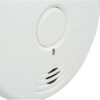
The recurring complaint is cleaning. The vent pattern collects dust, and the shape makes it awkward to clear with a vacuum brush, which matters because a dusty sensing chamber is a nuisance-alarm source in its own right. Kidde’s manual sets the cleaning interval and it is worth following.
Safety Features and Reliability
The combination of photoelectric smoke sensing and electrochemical carbon monoxide detection covers two hazards that behave nothing alike, one visible and fast, one invisible and gradual. Reducing false trips is a safety feature rather than a comfort one, because an alarm that cries wolf is an alarm people learn to ignore.
The end-of-life chirp is the signal that the sensing elements have reached their rated service life, and the unit should be replaced when it sounds rather than reset. The sealed cell also cannot be removed by a child or a frustrated adult, which closes off the most common way a household ends up unprotected.
Taken together, this Kidde smoke and carbon monoxide alarm offers a long service life, clear hazard announcements, and two matched sensing elements, provided the power configuration is confirmed before purchase and the unit is fitted and tested to the manufacturer’s instructions and local code.