
Description
Highlights of the Kidde Hardwired Smoke Detector i12010S
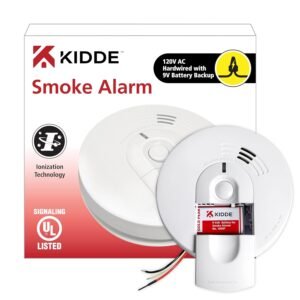
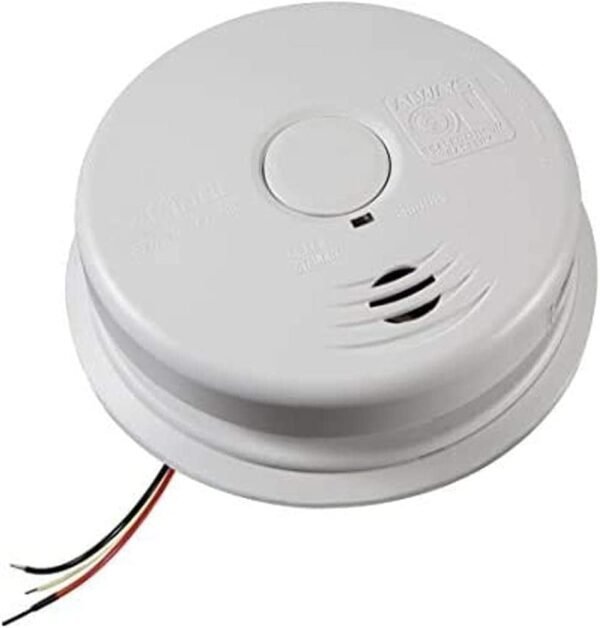
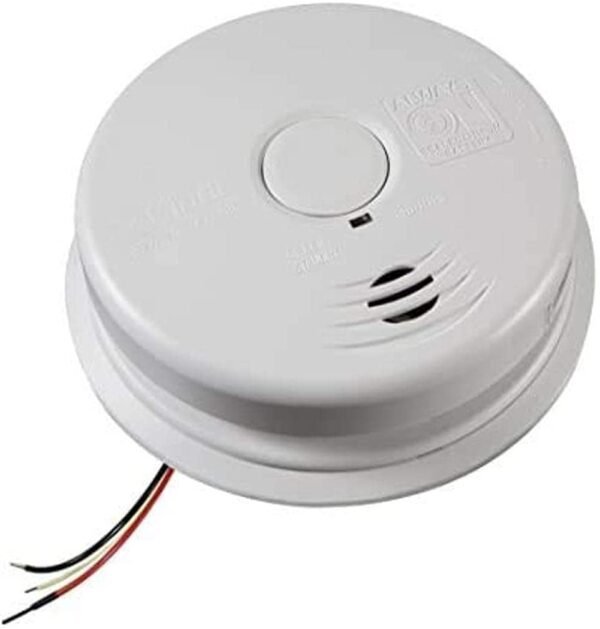
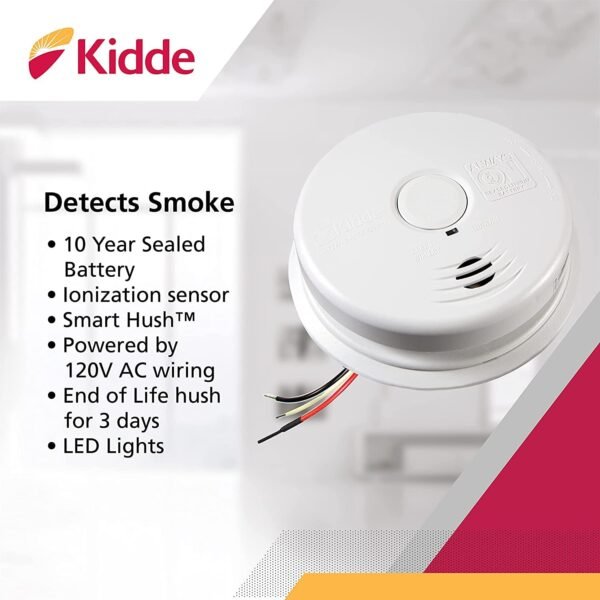
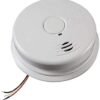
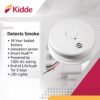
The Kidde Hardwired Smoke Detector, 10-Year Battery Backup, model i12010S is a mains powered alarm with a sealed backup cell, a combination that explains its long run as a builder and retrofit staple. Kidde specifies ionization sensor technology, which responds to the small combustion particles produced by flaming fires and is the faster of the two common sensing methods on that fire type. The alarm is rated at 85 decibels. A red LED indicator lights during smoke detection, giving a visual cue alongside the horn.
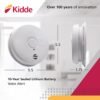
Power comes from a 120-volt hardwired connection backed by a sealed-in lithium battery rated for the full 10-year service life of the unit. That removes the annual battery change and the chirping that follows a missed one, which on a ceiling alarm is the difference between a maintained device and a disabled one. The test-hush button silences nuisance alarms from cooking smoke or steam without taking the alarm off its base.
Disadvantages to Keep in Mind
No alarm is without compromises, and this one has several. Installation is electrical work rather than a plug in job, so it should follow local electrical code and often means calling a qualified electrician, particularly in a house with no existing alarm wiring. The interconnect feature supports up to 24 devices, and configuring a loop that also carries strobes or relay modules gets complicated quickly.
Product data for this model also contradicts itself on a point that matters. The unit is named and specified as a smoke alarm with an ionization sensor, yet the same listing elsewhere describes an electrochemical sensor and carbon monoxide detection. Those are different devices. A smoke alarm does not monitor carbon monoxide, and no household should assume CO coverage from this unit without confirming the sensor markings on the alarm itself. If both hazards need covering on one wiring run, the Kidde 30CUA10 hardwired combination alarm is the product built for that job. Separately, the ionization sensor is slower on smouldering fires, and the white finish stands out on darker ceilings.
Value Proposition: Is It Worth the Investment?
Between the 10-year sealed battery backup, the hardwired power source, and the ionization sensor, this alarm answers the specification most whole house retrofits are shopping for. Against cheap battery only models that need annual changes and fail once a cell drains, the service life is where the extra money goes. Interconnect capability with other Kidde devices is the other half of that argument.
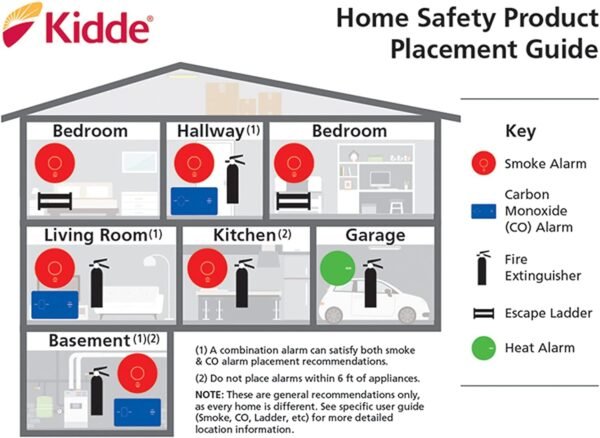
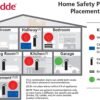
The price is supported by the UL listing, the manufacturer’s 10-year limited warranty, and the feature set. Multi level homes and larger floor plans get the most from interconnect, since one alarm sensing smoke sounds every unit on the loop. How many alarms a home needs, and where they belong, is set by local building and fire code rather than by the product listing. On a tight budget the up front cost looks steep, though nothing needs buying again for a decade.
Advantages of the Kidde Smoke Alarm
- Ionization sensor technology for quick response to flaming fires
- 10-year sealed lithium battery backup keeps the alarm operating through mains outages
- 85-decibel alarm as the published output rating
- Test-hush button to silence nuisance alarms without removing the device
- Interconnect capability with up to 24 devices, including strobe lights and relay modules
The combination of wired power and sealed battery backup closes both of the ways an alarm usually goes quiet: a power cut and a flat cell. The interconnection feature is the reason larger homes choose wired alarms in the first place, and the Kidde i4618 covers the same wired family for anyone matching units across a house.
Pitfalls to Weigh Before Buying
- Installation requires electrical expertise, which may necessitate professional help
- Ionization sensor less effective for smouldering fires, which can delay detection in some scenarios
- End-of-life chirp is easy to misread as an ordinary low battery warning
- Aesthetic limitations due to the white finish on darker ceilings
- Complexity in configuring interconnected alarms, especially with additional modules
None of these rule the alarm out, and all of them are worth knowing before it becomes a permanent fixture wired into a ceiling.
Product Comparisons: How It Stands Against Competitors
Against Nest Protect or First Alert Onelink, a few differences stand out. The Kidde pairs a hardwired supply with a 10-year sealed backup, a combination not every wired alarm offers, since many still use a replaceable 9V cell. Nest Protect’s smartphone integration and voice alerts cost considerably more and depend on Wi-Fi.
First Alert’s photoelectric alarms answer slow, smouldering fires sooner than the ionization sensing used here, and the hardwired SMI105-AC with its own 10-year backup is the closest direct rival on paper. The 24 device interconnect limit is higher than many competitors publish. On the other side, the absence of smart features such as app notifications will matter to some buyers. The Kidde 20SAR sits nearby in the same wired range for households comparing false alarm behaviour.
Features Explored: What Makes This Detector Tick
The ionization sensor works by detecting microscopic particles of combustion, which is why it identifies fast flaming fires earlier than photoelectric sensing. That is the trade this alarm makes, and it is the reason many households run both sensing types in different rooms. Kidde rates the unit for operation up to 95% relative humidity, which covers kitchens and bathrooms, though steam remains the most common trigger for nuisance alarms wherever an alarm is mounted near one.
The test-hush button responds on a single press and silences the horn temporarily rather than disabling detection. The red LED blinks periodically in normal operation and holds steady when smoke is present, so the state is readable from the floor. The unit measures 1.75″ deep by 5.5″ wide and tall, standard for a ceiling alarm.
Safety and Certification: Confidence in Protection
Kidde lists this alarm against UL 217, the NFPA 72 fire alarm code, and FHA requirements for residential smoke alarms. Those are the standards named on the product listing rather than anything assessed here. The 10-year manufacturer’s limited warranty matches the sealed battery’s rated life, so the two end at the same point.
The sealed backup means the alarm keeps working through an outage without anyone remembering a battery, and the end-of-life chirp announces when the whole unit needs replacing. Weekly testing is still the manufacturer’s instruction, and nothing in this specification replaces the placement and quantity rules set by local code. The rest of our smoke detector and fire alarm reviews show how consistent those listings are across the category.
User Experience and Practicality
The alarm is loud at close range, which is the intent, and owner ratings note it is startling during a test. The test-hush feature is the practical answer to burnt toast and shower steam, saving the ladder trip that usually ends with an alarm being left disconnected. Interconnect setup is the part owner ratings flag as fiddly, and it is worth reading the manual before wiring rather than after.
The hardwired design fixes the alarm in place, so positions need planning against code requirements before installation. The 7.2 ounce weight means no additional ceiling support is needed. The included user manual is detailed, which matters most during the interconnect stage.
Taken as what it is, a wired ionization smoke alarm with a sealed decade of backup power, the unit delivers a clear specification with user friendly maintenance, provided the carbon monoxide claim in its listing data is treated with the scepticism it deserves.