


Description
Positive Features That Impress
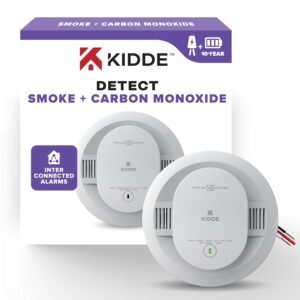
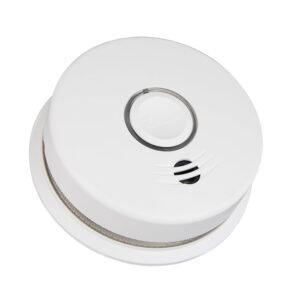
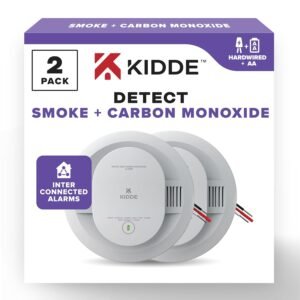
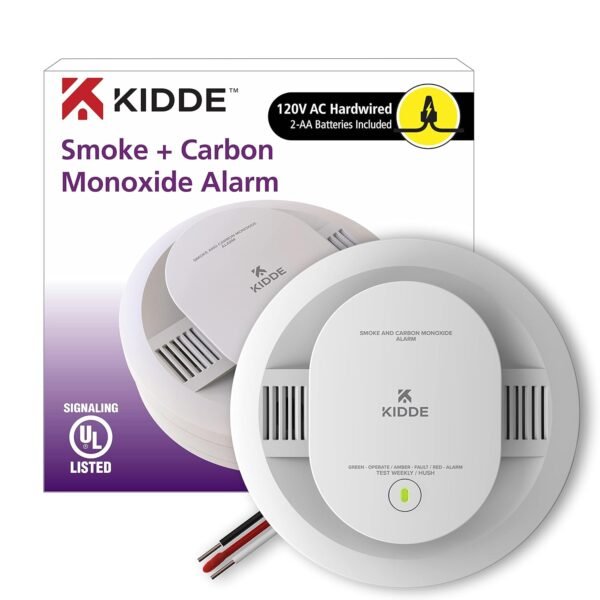
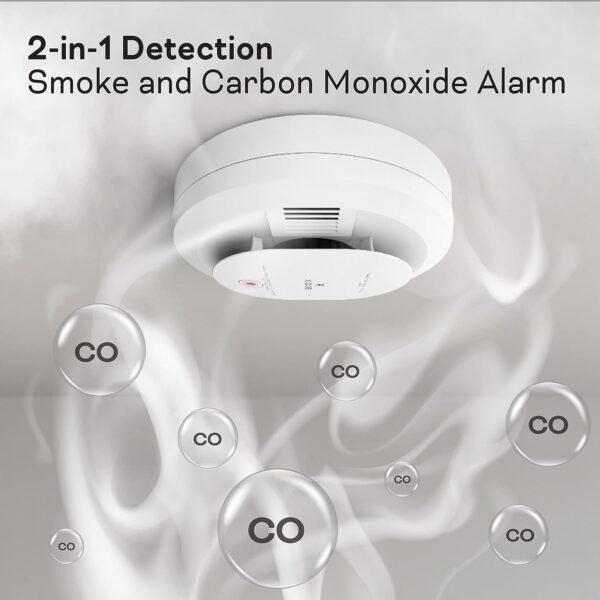
The Kidde Hardwired Smoke & Carbon Monoxide Detector, AA Battery Backup, Interconnectable, LED Warning Light Indicators 1 Pack is specified around two separate sensing elements. The dual-sensor technology pairs a photoelectric sensor for smoke with an electrochemical sensor for carbon monoxide, which is the arrangement most combination alarms use because the two hazards cannot be read by one sensing method. The 85-decibel alarm is the published output rating. The LED warning indicators use green, amber, and red to separate normal operation, a fault, and an active alarm, so status can be read without pressing anything.
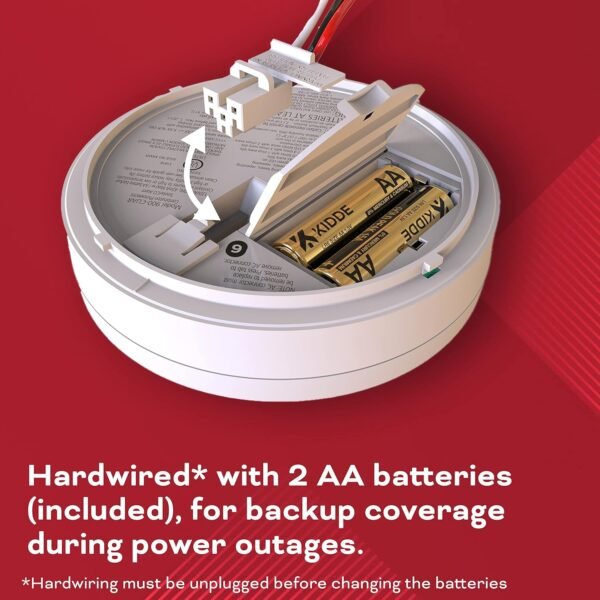
The hardwired design with AA battery backup keeps the alarm operating when mains power drops, which is the weakness a wired only unit carries. Kidde gives the Smart-Hush button roughly eight minutes of silence for nuisance alarms, long enough to clear shower steam or cooking smoke without pulling power. The mounting bracket offers four orientation options, so the unit can be aligned on ceilings where the box sits at an awkward angle. Together, two sensor types, a loud alarm, and battery backup make up the specification buyers in this category shop for.
- Separate photoelectric and electrochemical sensors for smoke and CO
- Loud 85-decibel alarm with clear LED indicators
- Battery backup keeps the unit operating during outages
- Smart-Hush button quiets false alarms temporarily
Flaws Worth Considering
Not everything about this alarm suits every home. The size and shape are typical for the type but still bulky on a ceiling in a small room. The unit’s sensitivity to steam and cooking smoke means nuisance alarms remain likely in open plan kitchens and near bathrooms, and the Smart-Hush feature manages that rather than eliminating it.
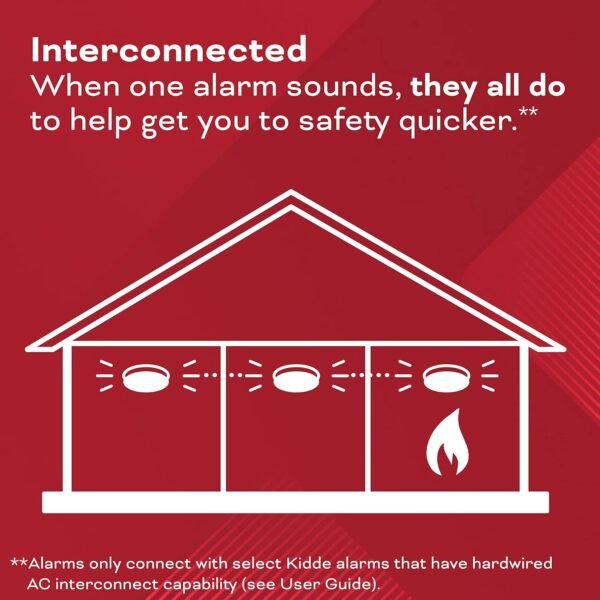
The bigger constraint is limited interconnectivity. It links only with selected Kidde alarms carrying hardwired AC interconnect, so a mixed brand loop is out and expansion means staying inside one product line, typically alongside a unit such as the Kidde 30CUAR combination alarm. Kidde lists self-testing components, but the manual still calls for manual weekly testing, and that instruction stands regardless of what the unit checks internally. The 10-year limited warranty covers the alarm and not the batteries, so the AA cells remain a maintenance item.
- Bulky design can be intrusive in smaller spaces
- Prone to false alarms in kitchens or steamy environments
- Interconnectivity limited to specific Kidde models
- Requires manual weekly testing despite self-checking feature
Installation and Ease of Use
Installation is a standard hardwired job. The mounting bracket’s four orientation options mean the alarm can be squared up on the ceiling whatever angle the existing box sits at, which removes the usual reason a replacement looks crooked. Wiring into an existing alarm circuit should follow local electrical code, and a house with no alarm wiring will need an electrician to add it.
Operation comes down to one control. The single Smart-Hush button silences a nuisance alert without disabling detection, so there is nothing to reset afterwards. The LED lights give immediate visual confirmation of the unit’s state: green for normal, amber for a fault, and red for danger, which is more use to most households than counting chirp patterns. The alarm is loud at close range, which is the intent for a sleeping household.
Sensor Performance and Alert System
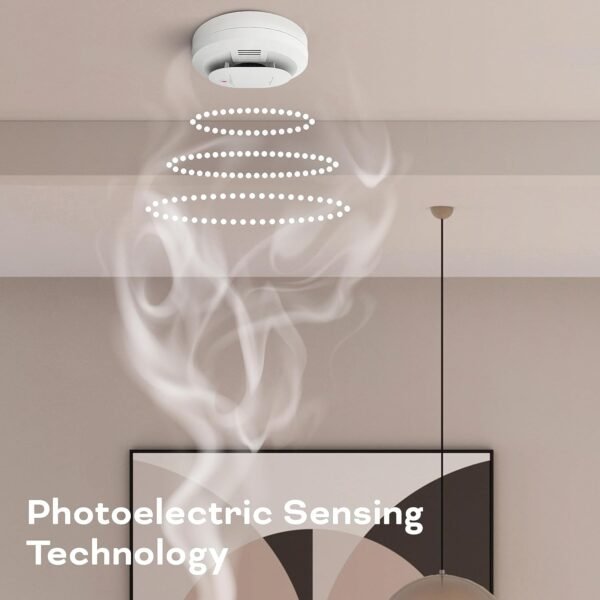
The pairing of a photoelectric sensor for slow, smouldering fires with an electrochemical sensor for carbon monoxide is what lets one device cover two unrelated hazards. Photoelectric sensing responds earlier to the large particles a smouldering fire produces, while electrochemical sensing is the standard method for CO, a gas with no colour or smell to warn anyone.
The LED warning system works as a status check that needs no sound. Green confirms the unit is powered and operating, amber flags an operating fault such as a wiring or sensor problem, and red is reserved for a real smoke or CO event. Households that also want a numeric CO reading in a bedroom or near a furnace often add a dedicated CO alarm such as the Kidde C3010 to that loop.
Product Comparisons with Leading Alternatives
Against other hardwired combination alarms, including First Alert’s SMICO105-AC, the differences are mostly in sensing choice and interconnect policy. This Kidde’s photoelectric sensor responds sooner to smouldering fires, where competitors built on ionization sensing answer flaming fires faster and generate more cooking related trips. The battery backup is common across the class, but paired with hardwired power it removes the failure mode battery only alarms carry.
The weaker points are cross brand interconnectivity and app integration, neither of which is offered. The price sits close to rivals, so the decision usually comes down to whether a household wants smart features at all. For plain, wired detection without a phone in the loop, this alarm covers the brief. The same trade shows up across our combination smoke and carbon monoxide detector reviews.
Value Proposition for Safety-Conscious Buyers
On price to quality ratio, the mix of hardwired power, battery backup, two sensor types, and a 10-year limited warranty is competitive. It is not the cheapest alarm on the shelf, and the service life and build are what the extra buys. Included batteries and a straightforward bracket keep the setup cost down for anyone replacing a like for like unit.
The model has no smart features and no universal interconnect, and it covers the essentials instead. For buyers who want plain, wired smoke and carbon monoxide detection, the specification per pound is strong. Households that would rather avoid wiring altogether can compare it with the voice alert 900-CUAR-V variant, which shares the same platform.
Safety Features and Certifications
Kidde lists compliance with UL 2034 and UL217 for this unit, alongside NFPA72, the State of California Fire Marshal, FHA, and HUD requirements. Those are the listings published for the model, not results from any testing carried out here. The alarm is rated to operate across a humidity range of 10% to 95% and up to 100 degrees Fahrenheit, which covers most interior locations.
The continuous self-testing components check the unit’s own health between manual tests, and they do not replace the weekly test the manual specifies. Where alarms go and how many a home needs are set by local building and fire code, so treat this specification as one input to that decision rather than an answer to it.
Downsides That Might Impact User Experience
Some aspects will grate depending on the household. The weekly manual test is a small job that is easy to forget, and it stays necessary. The limited interconnectivity means growing a linked system requires buying compatible units from one brand, which locks in future purchases.
The susceptibility to false alarms from cooking smoke or steam is the complaint that dominates owner ratings for ceiling mounted alarms near kitchens. Smart-Hush reduces the friction, though repeated nuisance alerts still lead to alarm fatigue, and an ignored alarm is the outcome worth designing around when choosing placement.
Finally, the bulkier housing is noticeable in minimal interiors, and the status LEDs are visible in a dark bedroom at night.
- Requires weekly manual testing for proper function
- Limited to interconnect with select brand models only
- Sensitive to steam and cooking smoke, causing false alarms
- Slightly bulky design may not suit all interiors
These points matter when weighing this detector against alternatives, so that expectations match the published specification rather than the marketing.