Description
Published Specs for the UCO Candlelier Candle Lantern
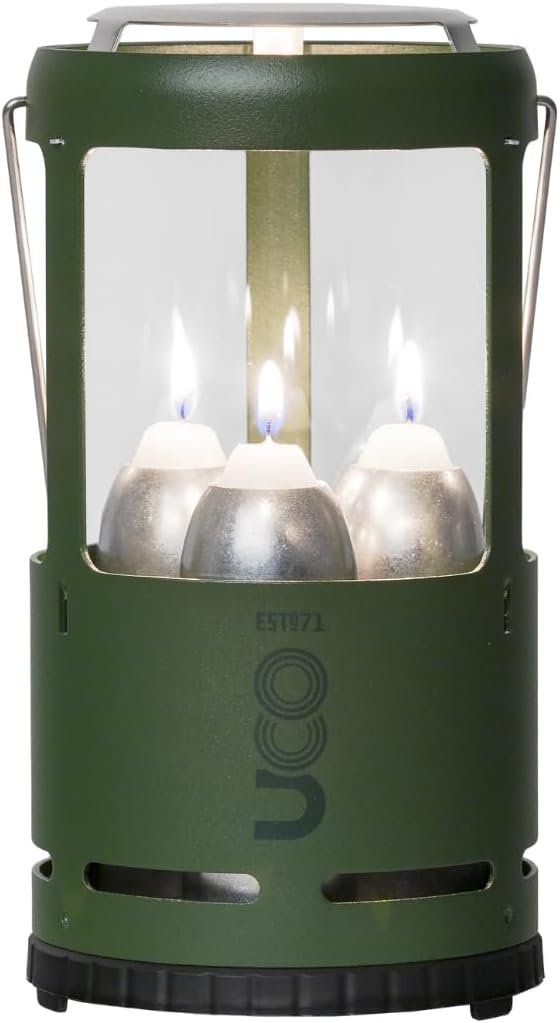
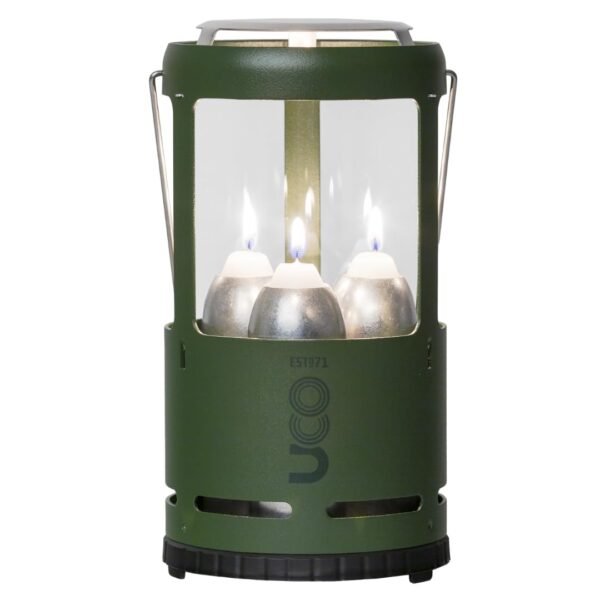
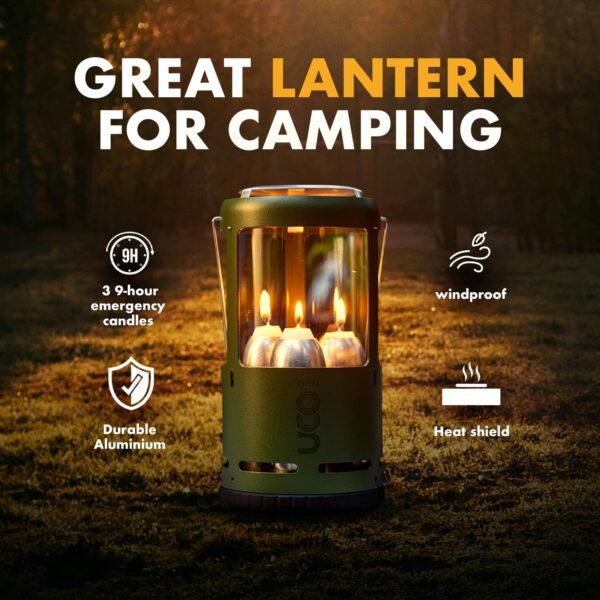
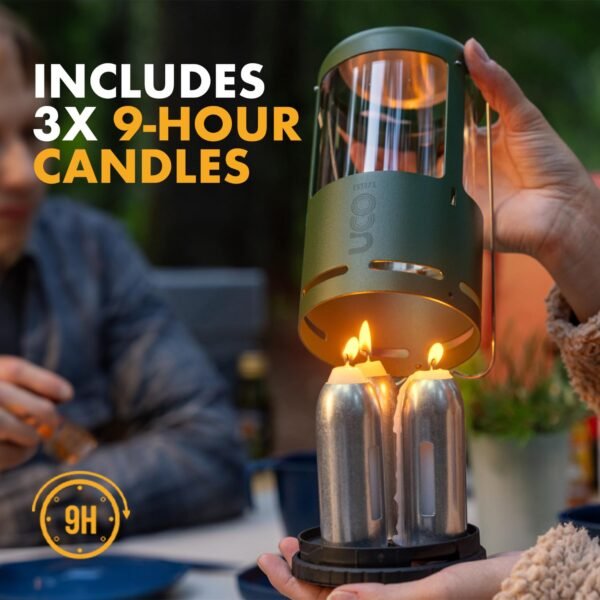
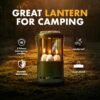
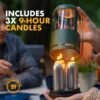
The UCO Candlelier Candle Lantern is built around three candles rather than one, and the arithmetic is what sets it apart in its category. It holds three 15-hour long-burning candles for a stated 45 hours of light from a full load, and the burner can be run with one, two or all three lit, so output and consumption are adjusted by lighting fewer candles rather than by turning a dial. The body is powder-coated aluminum, light for its size and resistant to corrosion, and the twist-lock base with a glass chimney is the part that makes a candle usable outdoors at all: the chimney shields the flame from wind and reduces condensation on the glass. The heat shield above the chimney doubles as a warming surface for a mug. It is the only flame lantern on the site, and the electric alternatives it competes with are collected under fuel lanterns and the electric listings alongside them.
- Up to 45 hours of light from three 15-hour candles
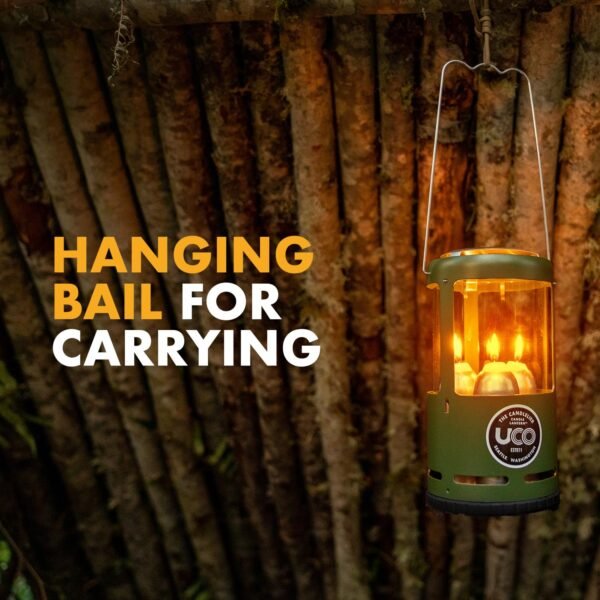
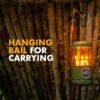
- Powder-coated aluminum body with a carrying handle
- Twist-lock base and glass chimney to shield the flame
- Heat shield usable as a warming surface for a mug
Limitations of the Design
The glass chimney is the fragile element, and it is the reason this lantern needs packing with more care than a plastic electric light. The spring-loaded candle tubes that feed the candles upward as they burn are fiddly to load, particularly with cold hands or in poor light, which is worth knowing before the first night out rather than during it. The heat shield warms rather than cooks: it will take the chill off a drink and no more, and treating it as a stove is a misreading of the specification. There is also no storage for spare candles in the lantern itself, so a multi-day trip means carrying them separately.
- Glass chimney requires careful packing and handling
- Spring-loaded candle tubes are awkward to load in the cold
- Heat shield warms only; it is not a cooking surface
- No integrated storage for spare candles
Build and Dimensions
Listed dimensions are 10 inches long, 3 inches wide and 6 inches high in a forest green finish, with a carrying handle that also serves as the hanging point. The powder coating on aluminum gives a water-resistant surface for damp conditions, though the lantern remains an open-flame device rather than a weatherproof one. The ability to burn one, two or three candles is the closest thing it has to a brightness control, and running a single candle is the setting that stretches a supply of candles across several evenings.
Flame Safety
An open flame is not a substitute for an electric light, and this one asks for the same handling as any candle. Clearance from tent fabric and other combustibles, ventilation, a stable surface and supervision around children and pets are set by the instructions supplied with the lantern, and the chimney and heat shield get hot in use. A burning candle also consumes oxygen and produces combustion products, which is the reason enclosed spaces need airflow. None of this is a defect in the design; it is simply the trade that comes with a light source that needs no batteries. Anyone who wants light in a tent without a flame is better served by an electric model such as the compact Black Diamond Zip on AAA cells.
Versatility and Practical Use
The dual function as a light and a modest heat source is the reason the Candlelier keeps its following. In cold weather the heat shield takes a mug from cold to drinkable, and three burning candles put out a noticeable amount of warmth in a small enclosed space. The wind protection from the chimney is what separates it from a bare candle, and the twist-lock base keeps the assembly together while it is carried. As a stored emergency light it has one clear advantage over anything electric: candles do not self-discharge, so a lantern left in a cupboard for five years works exactly as well as it did on the day it was packed away, which is the one argument even a long-running battery lantern such as the Coleman Classic on D cells cannot fully answer.
How It Compares
Against electric lanterns the differences are stark in both directions. LED models offer immediate on and off, no fire risk, higher output and no consumables beyond cells or a charge, and the rechargeable Fenix CL27R or the Nitecore LR70 with its 3000 lumen flashlight mode show how far ahead they are on brightness. What they do not offer is warmth, an indefinite storage life or independence from charging. Against other candle lanterns, the three-candle burner is the differentiator, giving longer unattended burn and more heat than single-candle designs.
Price Against Specification
The price sits above single-candle lanterns and above basic LED models, and the initial supply of three candles is included, so the lantern arrives ready to use. Running cost is candles rather than batteries, which is predictable and cheap, and the aluminum body should outlast several sets of electric lanterns given reasonable care of the glass. For campers, and for anyone assembling an outage kit that has to sit untouched for years, the specification supports the price.
Specification Strengths
- 45 hours of light per full load of three candles
- Aluminum construction with a practical carrying handle
- Heat shield that warms a mug as well as lighting the space
- Chimney that keeps the flame lit in wind and reduces condensation
Areas for Improvement
- The glass chimney is the weak point in transit
- Loading the spring-loaded tubes is awkward in cold or dark conditions
- The heat shield is limited to warming rather than cooking
- No compartment for spare candles
Judged on published specification, the Candlelier is a well-made flame lantern with a long burn, a little usable heat and no dependence on batteries or charging. It is also an open flame, and the handling that implies is the deciding factor in whether it belongs in a given tent, cabin or emergency kit.