
Description
Published Output and Modes of the Fenix CL27R
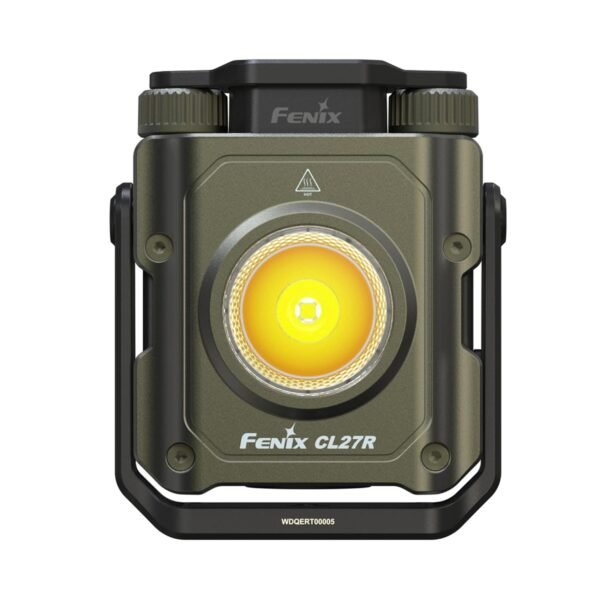
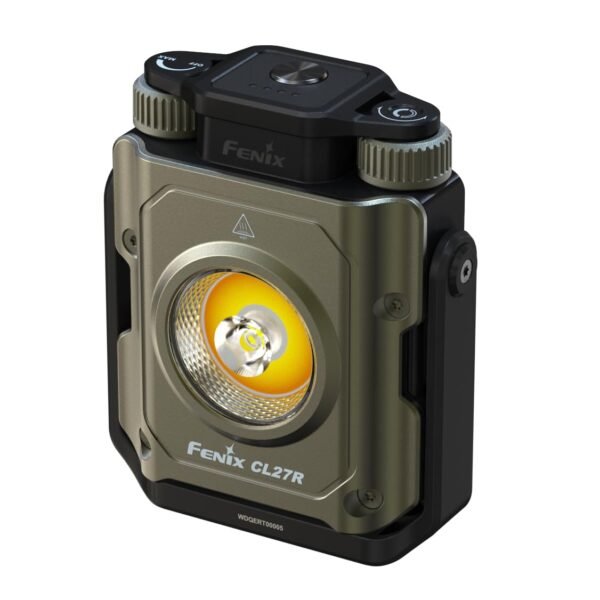
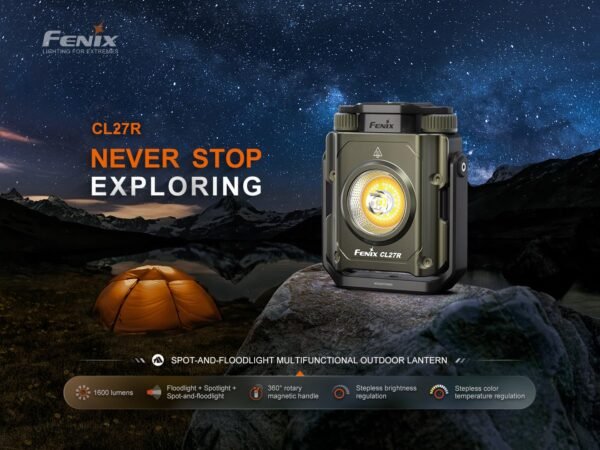
The Fenix CL27R leads on numbers that are unusual for a camp lantern: a stated 1600 lumen maximum with a listed throw of 196 yards, which is flashlight territory rather than lantern territory and explains why it is sold for industrial maintenance and outage use as well as camping. Around that sit eight white light modes and two red light modes, the white levels covering everything from a full-output work light to a low setting for sitting beside, and the red output preserving night vision for stargazing or a late arrival at a dark camp. Control is by rotary toggle and electronic switch rather than a single button cycling through a list, so a level is selected directly instead of scrolled to. Few lanterns in the electric lantern range offer that many discrete levels.
- Up to 1600 lumens with a stated 196 yard throw
- Eight white modes and two red modes for varied use
- Rotary control rather than a single cycling button
Durability Rating and What It Actually Covers
The listing calls the lantern waterproof while giving an IP66 rating, and the two are not the same claim. IP66 covers dust ingress and powerful water jets from any direction, which means heavy rain and hose spray, but it is not an immersion rating and does not cover being dropped in a lake. Confirm the rating against the Fenix specification before planning around it. The aluminum body and a stated 1 meter impact resistance are the mechanical side of the same story: this is a lantern built to be knocked off a table, not to be swum with. At a listed height of just over 4 inches and a weight of just over 10 ounces, the density is noticeable when it is picked up, which is what an aluminum body at this output implies.
Power and Charging
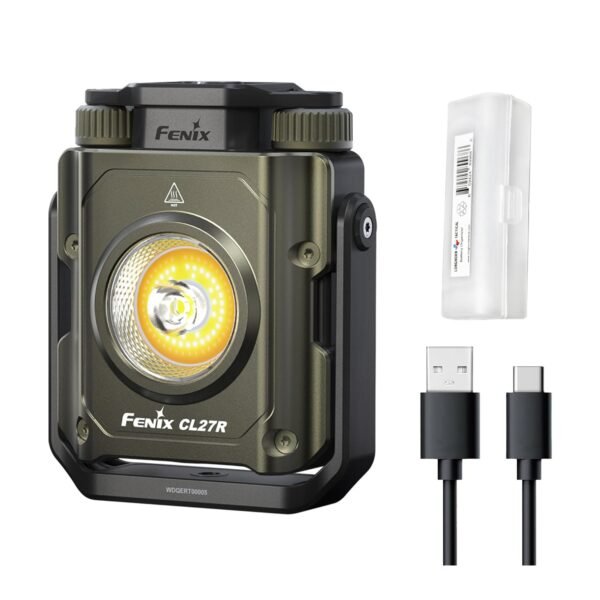
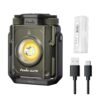
A rechargeable lithium-ion battery ships preinstalled, charged through USB-C with the cable included, which is the current standard and means one cable for the lantern, the phone and most other gear in the bag. The stated 285 hour runtime applies to the lowest output level, as run time figures always do; the 1600 lumen setting will drain the cell in a small fraction of that, and the useful figures for most trips sit somewhere in the middle of the mode range. The power indicator is the practical feature here, since a rechargeable lantern with no state-of-charge display is a guessing game on the second night out.
Mounting Options
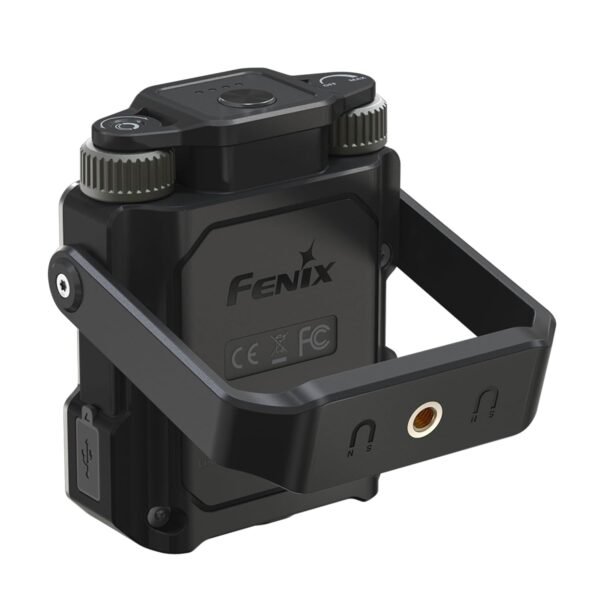
Four mounting methods are listed: hand carry, free-standing, magnetic base and tripod thread. The magnetic base is the one that separates it from most camp lanterns, because it sticks to a vehicle body, a workbench, a machine housing or any other steel surface and turns the lantern into a hands-free work light. The tripod thread covers the rest, including uneven ground where nothing is going to sit flat. What is missing is a hanging hook, which is the traditional way to get a lantern up under a tent roof, and its absence is a genuine gap for tent users.
Limitations Worth Knowing
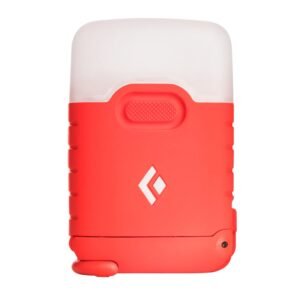
The rotary control is precise but takes learning, and gloved hands in the dark are the hardest case for any rotary interface. The absence of a hanging hook is the second point, only partly answered by the magnet and the tripod thread. The green finish is a matter of taste rather than function. And the weight that comes with an aluminum body and a large cell puts this outside the ultralight category entirely, as a comparison with the palm-sized Black Diamond Zip on AAA cells makes clear.
- Rotary control is fiddly with gloves or in the dark
- No built-in hanging hook for tent use
- Heavier than plastic lanterns of lower output
Price Against Specification
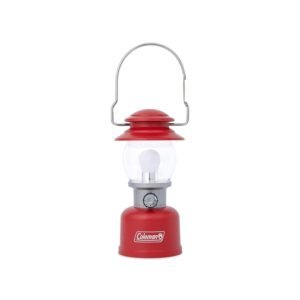
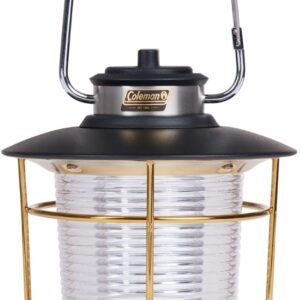
The price reflects the output, the rechargeable cell, the metal body and the mounting hardware, and it sits well above basic camp lanterns. The case for it is that one device covers camp lighting, work lighting and outage lighting at levels that a 200 lumen lantern cannot reach, and that a rechargeable cell removes the running cost of disposable batteries. Buyers who only need light at a picnic table are paying for capability they will not use, and something like the 200 lumen Coleman 1900 Collection lantern on AA cells covers that job for a fraction of the outlay.
How It Compares
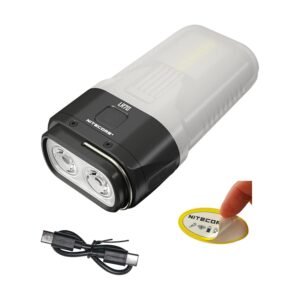
Against typical camp lanterns rated below 500 lumens, the CL27R is in a different output class, and the red modes and magnetic base are features most of that field does not offer at all. Against the Nitecore LR70, which pairs a 3000 lumen flashlight mode with a 400 lumen lantern mode and a power bank function, the Fenix trades peak brightness for a wider set of white levels and the magnetic mount. Against a dedicated handheld like the Fenix PD36R, the lantern gives up beam distance and pocketability in exchange for area light that does not need to be aimed. What competitors more often win on is a hanging solution and lower weight.
Where It Fits
The specification points at people who need a light that works as hard on a job site as at a campsite: outage kits, night fishing, vehicle work and maintenance in poorly lit spaces. The red modes matter to anyone who values night vision, the magnet matters to anyone working around metal, and the USB-C charging matters to anyone already carrying that cable. Read as a spec sheet, this is a high-output rechargeable area light with a weather rating that covers rain rather than immersion, and a mounting set unusual for the category.