Description
Highlights of the SureFire G2X Pro Tactical Flashlight
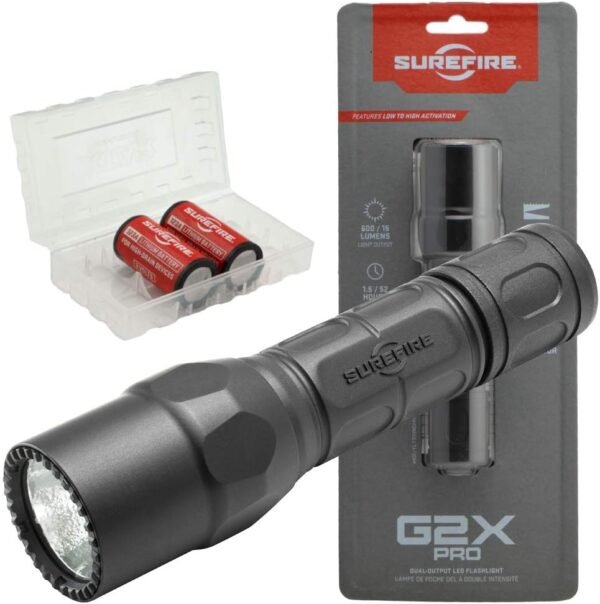
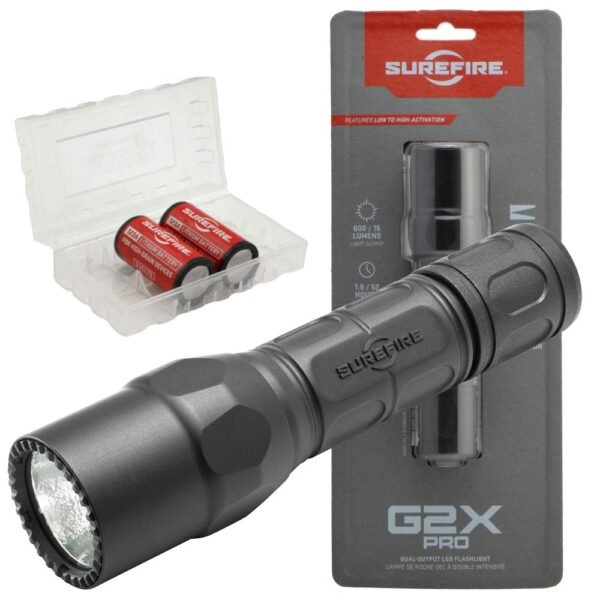
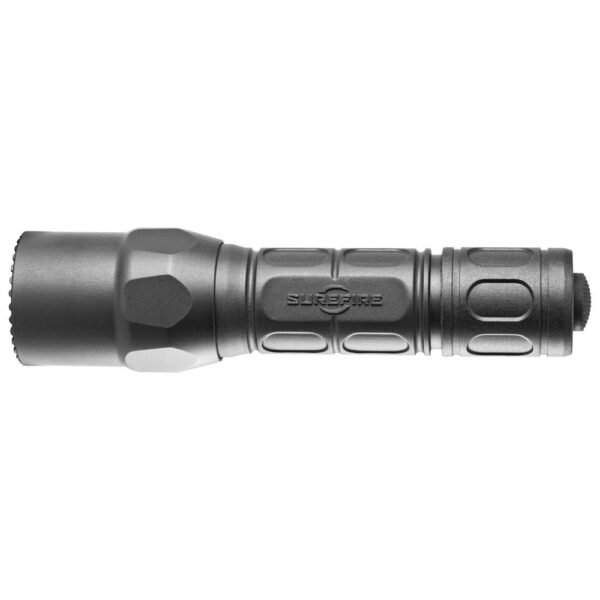
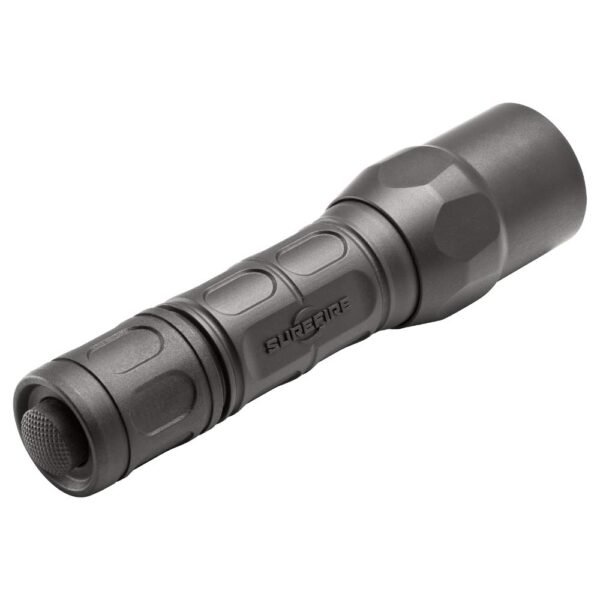
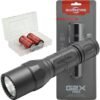
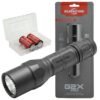
The SureFire G2X Pro 600 Lumen Tactical EDC Flashlight is built around a simple premise: two output levels, a mechanical tail switch and a body that tolerates abuse. The 600 lumen maximum is mid-pack by current standards, but it is paired with a 15 lumen low that stretches runtime dramatically, and that spread is the point of the design. The press and click tailcap switch gives momentary activation on a partial press and constant output on a full click, with no electronic mode memory to navigate. The body is Nitrolon polymer with an aluminum bezel, a combination that trades the feel of a machined aluminum tube for lower weight and better cold-weather handling. The kit ships with two spare CR123A cells and a Lightjunction battery case.
- Two-level output covering both close work and distance
- Mechanical tailcap switching with no mode cycling
- Nitrolon polymer body with an aluminum bezel
- Spare cells and a battery case included in the box
Drawbacks to Keep in Mind
The CR123A format is the most common objection. The cells cost more than AA or AAA and are not stocked everywhere, which is a real running cost for anyone using the light daily. Runtime at 600 lumens is about 1.5 hours, short if the high setting is the working setting rather than the occasional one. The tailcap requires a deliberate press, which prevents accidental activation in a pocket but is slower than a side switch for rapid toggling. The beam is fixed, with no zoom or focus adjustment, and there is no strobe or SOS mode. Pricing sits above budget lights of similar output. Buyers who want a rechargeable platform instead of primary cells generally look at the Fenix PD36R with onboard USB-C charging.
- CR123A cells are costly and less widely stocked
- About 1.5 hours of runtime on the high setting
- Tailcap needs a firm, deliberate press
- No adjustable beam, strobe or SOS
Ergonomics and Build Specification
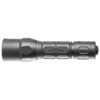
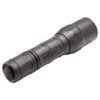
The Nitrolon polymer body is corrosion resistant and does not dent or conduct cold the way an aluminum tube does, which is why the material shows up on duty lights aimed at first responders. One figure in the imported specification does not reconcile: the listing describes the light as lightweight while also quoting just under 8 ounces with batteries, which would be heavy for a polymer-bodied light of this size and is well above SureFire’s own published figure for the model. Verify the loaded weight on the manufacturer sheet before ordering. The 1 inch body diameter and 5.2 inch length are conventional for a two-cell handheld and keep it pocketable.
Output Behaviour and Environmental Rating
The 600 lumen high is described as a clean white output through a precision reflector that produces a defined center beam with usable surround light. The 15 lumen low is the setting for close work such as reading labels or moving around indoors without destroying night vision. On sealing, the listing claims water resistance but publishes no IP figure, so it should be read as splash and rain tolerance rather than a rated immersion depth. Lights that do publish a sealed rating, such as those in the tactical flashlight category, state it explicitly as IPX7 or IP68.
Comparable Tactical Flashlights and Market Rivals
Against the Fenix PD35 and the Streamlight ProTac 2L-X, the G2X Pro competes on body material and switch simplicity rather than raw output, since several rivals publish 1000 lumens or more. Where the specification is genuinely strong is the low mode runtime of up to 52 hours, which few two-cell lights match. The bundled spare cells and case are a real inclusion rather than a marketing line. The absence of strobe and SOS places it behind lights aimed specifically at duty use, and buyers who want a small titanium-bodied everyday carry option usually look at the SureFire Titan Plus keychain light instead.
Value for Money Considerations
The value argument rests on build specification and longevity rather than on features per dollar. The polymer body, the aluminum bezel and the LED emitter are the components that determine service life, and the included cells offset part of the entry cost. The counterweight is the ongoing CR123A expense and the short high-output runtime, which matter more the more the light is used. Shoppers working to a tighter budget will find higher lumen figures for less money elsewhere, though usually with an electronic switch and a thinner body, as with the NEXTORCH TA20 rechargeable compact light.
Everyday Carry Fit
The tailcap switch resists accidental activation, which is the main practical argument for a stiff switch on a pocket-carried light. The dimensions suit a coat pocket or a pack, and the two output levels cover most non-specialist lighting needs without an interface to learn. The interface is simple enough that occasional users do not need instruction, an advantage over multi-mode lights with programmable sequences. For a pocket light with more output modes in a smaller envelope, the JETBeam E26 with dual light modes is the closer comparison.
Specification Summary
- Two output levels, 600 lumens and 15 lumens, selected at the tailcap
- Nitrolon polymer body with an aluminum bezel, corrosion resistant
- Up to 52 hours of runtime on the low setting
- Two spare CR123A cells and a battery case included
Areas for Improvement
- CR123A cells are expensive and less widely available
- High output runtime of roughly 1.5 hours
- Firm tailcap press slows rapid switching
- No adjustable beam and no strobe or SOS modes
On the published specification this is a durable, deliberately simple light for everyday carry, outdoor use and emergency kits. Buyers who need sustained high output, multiple modes or a rechargeable pack will be better served elsewhere in the category.