Description
Design and Ergonomics of the Makita 18V LXT Straight Finish Nailer
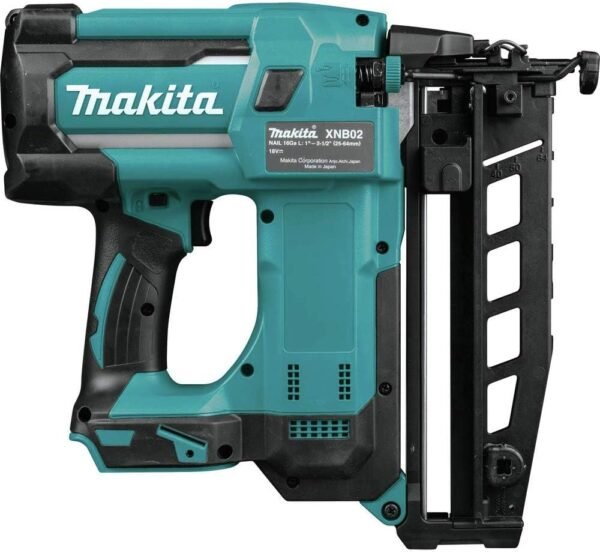
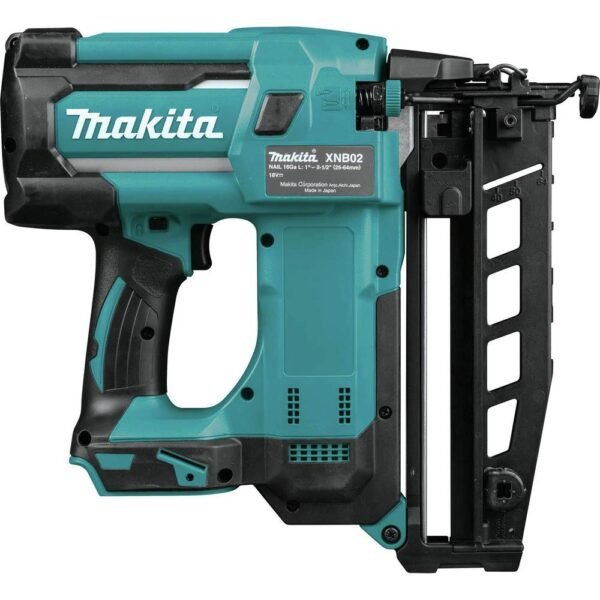
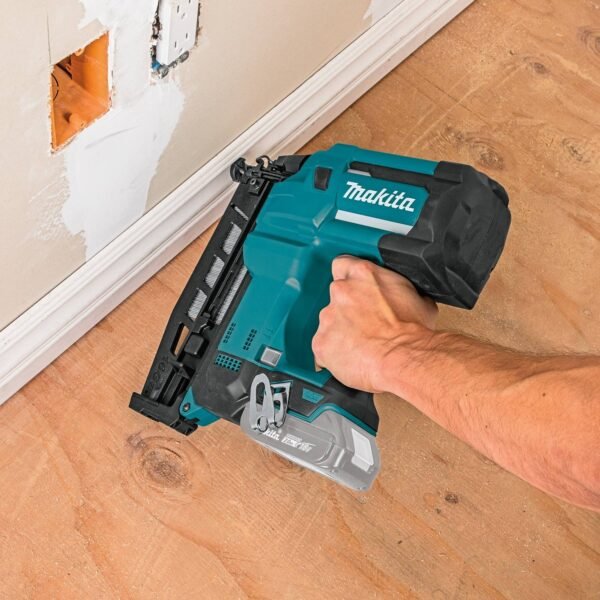
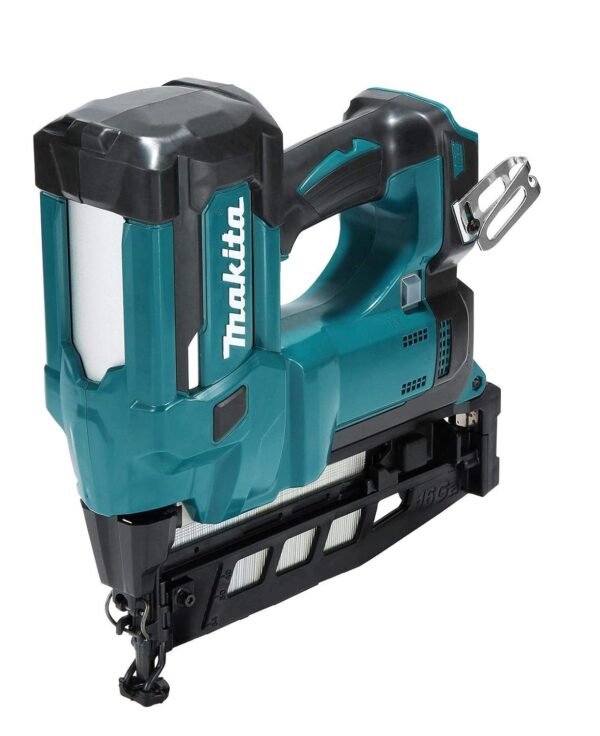
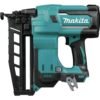
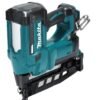
The Makita XNB02Z 18V LXT Straight Finish Nailer, 16 Gauge, 2-1/2″ is specified as a compact, heavily built cordless nailer. Listing data pulls in two directions on mass: the description presents 9.03 pounds as balanced for trim work, while the same listing’s drawback section flags that figure as heavy for prolonged use, so treat 9.03 pounds as the number to weigh against your own work rather than as a settled verdict. The rubber and urethane components are there for grip during extended sessions. The blue color and slim form factor match the rest of the Makita cordless line, and the compact center height is designed to give sight lines around the nose tip, which matters when fastening in cramped spots or at awkward angles.
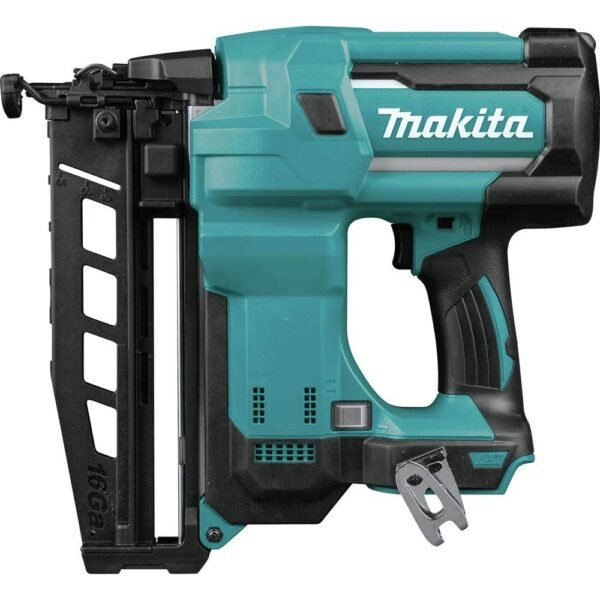
A reversible belt clip is included, so the tool can hang on either side depending on handedness. That sounds minor on a spec sheet, but on a busy site the small conveniences accumulate. The overall build leans practical, with a mix of alloy steel and plastic materials rather than an all-metal shell. Buyers comparing body styles across the class will find the trade-offs laid out across the finish nailers we cover.
Performance and Power Delivery
Makita specifies the tool to drive standard 16 gauge straight finish nails from 1″ to 2-1/2″. Run on an 18V LXT 5.0Ah battery (sold separately), the manufacturer rates it at up to 1,000 finish nails on a single charge. As a cordless tool it removes the compressor and hose entirely, which is what makes it viable for punch-list work away from a power source.
The anti-dry fire mechanism is a meaningful inclusion, since firing blanks is how delicate surfaces pick up dents. The two-mode selector switch toggles between sequential and bump firing, matching precision trim work in one setting and faster baseboard runs in the other. A trigger lock button adds a safety layer when the tool is set down or handed off.
Precision and Depth Adjustment
The “tool-less” depth adjustment is the feature that carries the most weight in finish carpentry. Setting flush or countersunk depth without hunting for a hex key keeps a run moving, and it is the difference between nails that sit clean and nails that mar the wood. For crown molding, casing, or flooring trim, that adjustment does more for the finished look than raw driving power does. A pneumatic sibling such as the Makita AF601 air-powered finish nailer covers the same fastener range for shops that already run a compressor.
Usability and Battery System
The nailer belongs to Makita’s 18V Lithium-Ion system, one of the broadest cordless platforms on the market. It accepts Makita 18V LXT and compact Lithium-Ion batteries, specifically those carrying Star Protection Computer Controls. Makita states that this technology monitors and protects tool and battery against overloading, over-discharging, and overheating, which the company links to longer battery service life.
Makita also promotes short charge times across the LXT line, which reduces downtime between packs. Sharing one battery format across a tool bag removes the need for multiple chargers, and that platform effect is a large part of the buying case here.
Winning Points
- Cordless operation eliminates the need for compressors and hoses.
- Rated for up to 1,000 nails per battery charge using a 5.0Ah battery.
- Anti-dry fire mechanism protects work surfaces.
- Tool-less depth adjustment for quick, repeatable nail setting.
Drawbacks
- The battery is sold separately, which raises the real cost of entry.
- At just over 9 pounds, it is at the heavy end of the 16 gauge cordless class.
- The trigger lock button is an extra step to engage and release during fast work.
Product Competitors
Set against direct rivals such as the DEWALT DCN660 20V MAX XR 16GA finish nailer or the Bostitch N62FNK-2, the contrasts are mostly about ecosystem and electronics. The DEWALT is also cordless and is commonly specified with a smaller magazine and a heavier body. Bostitch models tend to compete on price while going without battery-side protections such as the Star Protection system.
The Makita’s differentiators are battery efficiency and smart electronics, which land best for someone already holding 18V LXT packs. The initial investment is steeper without those batteries. On precision features, the tool-less depth adjustment is ahead of rivals that still require a separate tool or a more involved adjustment. Budget-focused shoppers often end up at the RYOBI P318 cordless finish nailer instead.
Price Worthiness
On price to quality ratio, the nailer suits a buyer ready to commit to a high-end cordless finish tool. The missing battery means added upfront spend, but the rated nail count per charge, feature set, and build quality account for the price. For anyone who wants durability, versatility, and simple operation without an air compressor in the workflow, it belongs on the shortlist.
It is not the cheapest option available. For finishing professionals and committed DIYers who value efficiency and cordless freedom, it is defensible spending. Makita lists a 3-year limited warranty, which is a signal about how the manufacturer views the tool’s service life.
Features and Accessories Worth Mentioning
The package includes safety glasses, a belt clip, and two no-mar tips. Those tips are the accessory that matters most on softer trim stock, where the nose can leave marks in the surface.
The 16 gauge magazine is rated to hold up to 110 nails, which cuts reload frequency on long runs. The two firing modes, sequential for precise placement and bump for speed, keep the tool flexible across woodworking and finishing jobs. Where the work calls for a thinner fastener and less visible hole, an 18 gauge brad nailer such as the Senco FinishPro 18 is the better match.
On the published specifications, the Makita XNB02Z 18V LXT reads as a finish nailer that combines driving power, depth precision, and battery-side electronics in one cordless package. The feature set maps cleanly onto real tasks, from delicate molding to tougher flooring trim. A few quirks aside, notably the weight and the separate battery purchase, it sets a high reference point for cordless finish nailers in its class.