Description
Highlights of the DEWALT 20V MAX* XR Finish Nailer
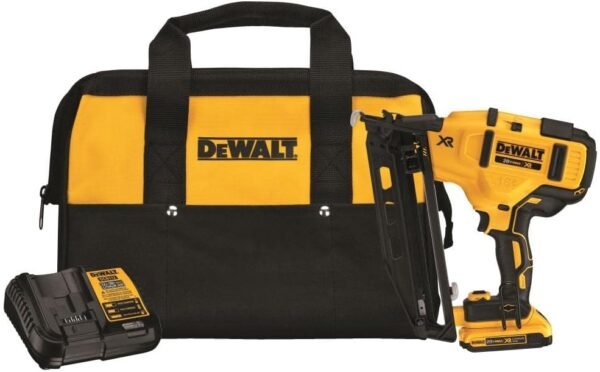
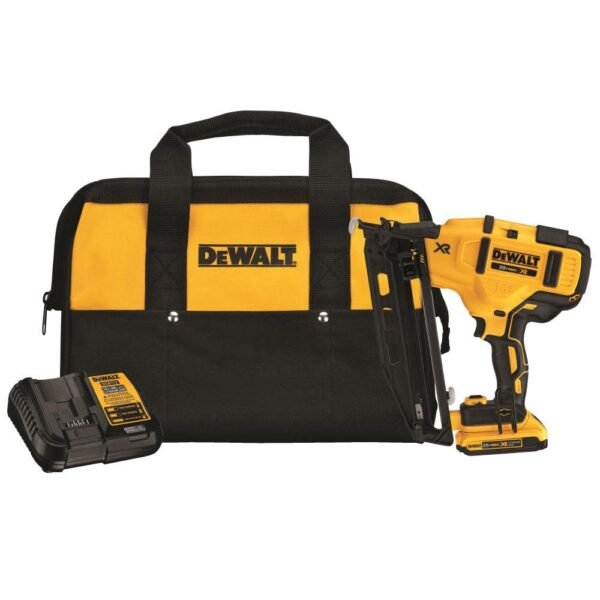
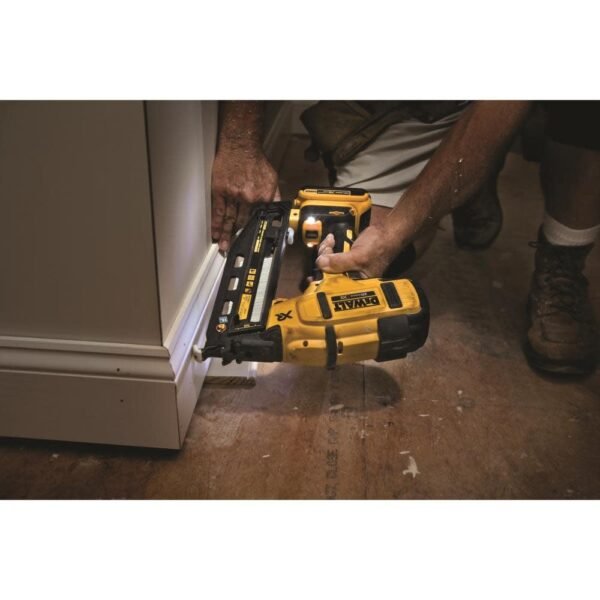
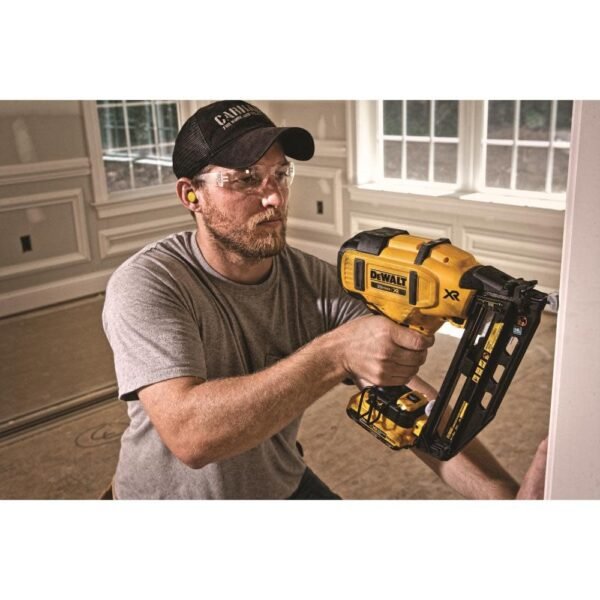
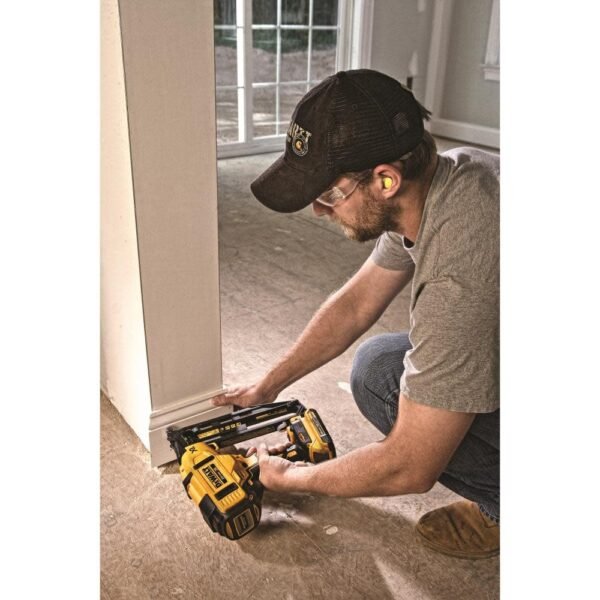
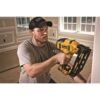
The DEWALT 20V MAX* XR Finish Nailer, model DCN660D1, is built around a brushless motor that DEWALT credits with longer runtime and tool life. The nailer drives 16 gauge angled nails from 1-1/4-inch to 2-1/2-inch, which covers crown molding, casing, and baseboards without a change of tool. Being 100% battery powered removes gas cartridges, compressors, and hoses from the setup entirely. A tool-free selectable trigger switches between sequential and contact actuation, so precision work and faster production nailing share one body.
- Brushless motor enhances efficiency and longevity
- Compatible with the full DEWALT 20V MAX* battery range for convenience
- Tool-free adjustments make workflow smoother
Convenience and Usability Features That Matter
Among the listed conveniences is tool-free depth adjustment, which sets countersink depth without a separate wrench. The jam release mechanism is equally hands-free, clearing the nail jams that turn up on any job site. The multi-functional LED lights do double duty, lighting dim corners and reporting tool status. An adjustable belt hook mounts on either side for left or right-handed carry, which rounds out the ergonomic package. Shoppers comparing similar layouts across the finish nailer category will find that combination fairly common at this tier.
Performance in Tight Spaces and Various Orientations
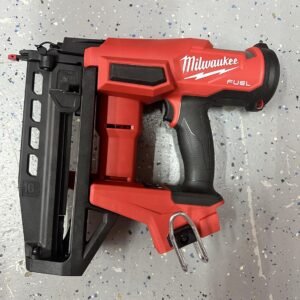
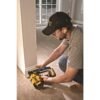
The inline magazine is the layout that separates this tool from most angled nailers, since it keeps the magazine out of the way in tight corners and against walls where angled magazines bind. Listed weight is about 6 pounds, and the balance is arranged to keep that manageable over a long session. The battery-powered design means no cord management on larger projects or in homes without convenient outlets. A straight-magazine alternative on a different platform is the Milwaukee M18 FUEL straight finish nailer, which solves the same access problem a different way.
Drawbacks and Areas for Improvement
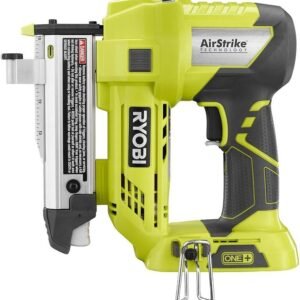
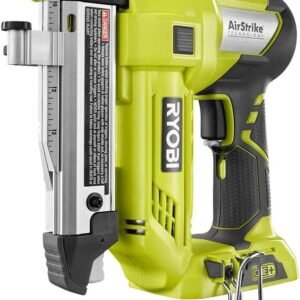
Even a well-specified cordless finish nailer carries limitations. First, battery life is the constraint for heavy users. The included 2.0Ah pack suits small to medium jobs, and spares are worth budgeting for longer days. Second, the weight, balanced as it is, still runs heavier than a pneumatic finish nailer of the same gauge. Third, the price point sits well above traditional pneumatic models, and that gap is the main hesitation buyers report. Anyone who wants the same 16-gauge capability at a lower entry cost tends to look at the Ryobi P318 cordless finish nailer.
- Battery life may require additional units for prolonged work
- Slightly heavier than some competitors, impacting all-day comfort
- Higher upfront investment compared to pneumatic alternatives
Alternative Offerings in the Finish Nailer Market
Against other popular models, the cordless format is the real differentiator. Pneumatic finish nailers such as the Bostitch N62FNK-2 weigh less and run continuously, but they need a compressor and hose to do it. The DEWALT DCN660D1 wins on portability and setup time by dropping that support equipment. Competitors frequently come in cheaper and lighter, though. The Makita AF505N, for instance, balances power and weight well without offering cross-platform battery compatibility, and the corded-free equivalent from that brand is covered in the Makita AF601 finish nailer review.
Value Proposition and Price to Quality Ratio
On price to quality ratio, this nailer reads as smart spending for buyers who value cordless freedom and tool longevity. The 20V MAX* battery system is the practical draw, especially alongside other DEWALT tools. A 3-year limited warranty and 90-day money-back guarantee are listed with the tool and add some purchase confidence. For a user who rarely moves around or prefers a lighter body, the cost is harder to justify. The cost-effectiveness argument is strongest for professionals and DIYers who value quick setup over the lowest sticker price.
Versatility in Use and Adjustability
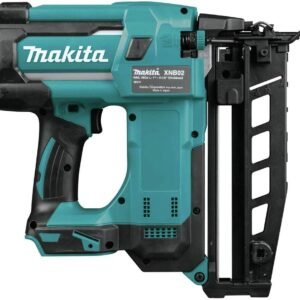
Versatility is where the spec sheet is deepest. The nailer handles the full listed nail range, and adjustable settings control countersink depth across that range. Switching between sequential and contact modes is a trigger-level change rather than a parts swap, which keeps pace changes quick. The stall release lever resets the driver blade without disassembly. These are details aimed at real job-site conditions, spanning fine trim work through heavier baseboards. Buyers who want the same versatility in a cordless 16-gauge body from a third brand can weigh the Makita XNB02Z 16 gauge finish nailer.
Positives Summarized
- Cordless design eliminates need for compressors or gas
- Brushless motor extends tool life and runtime
- Tool-free adjustments for depth, jam clearing, and trigger mode
- LED lights assist in visibility and diagnostics
Negatives to Consider
- Battery life may not suffice for very long jobs without extras
- Tool weight could cause fatigue during extended use
- Higher cost compared to pneumatic finish nailers