





Description
Highlights of the Dual Detection Technology
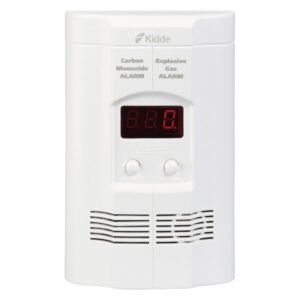
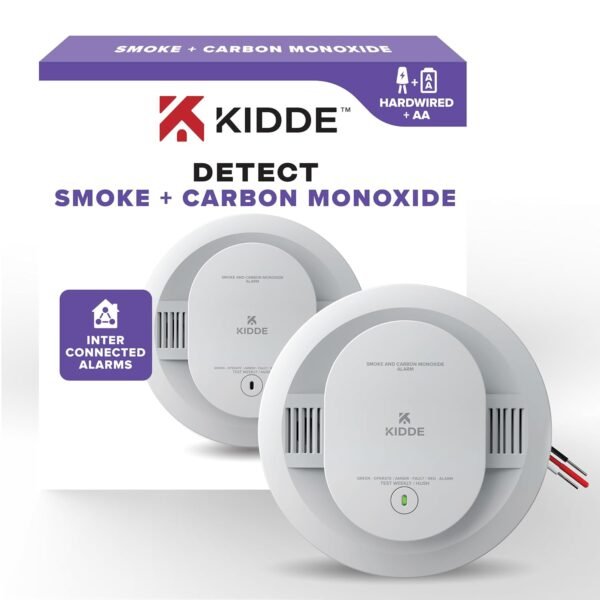
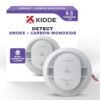
The Kidde Hardwired Combination Smoke and Carbon Monoxide Detector with Interconnected Alarm, LED Warning Lights, and AA Backup Battery, 30CUAR puts smoke sensing and carbon monoxide sensing in a single housing. The dual detection design covers two hazards that are otherwise bought as two separate alarms, and Kidde specifies that both are monitored at the same time rather than in sequence. One filing discrepancy is worth naming before anything else: this listing sits in the combination gas and carbon monoxide category, while the product name and description describe smoke and carbon monoxide detection with no mention of combustible gas sensing. Anyone shopping specifically for explosive gas detection is looking at a different class of device, such as the Kidde KN-COEG-3 CO and explosive gas alarm. For households that want smoke and CO in one unit, the combined housing does simplify the job, since there is one device to mount, wire and test rather than two.
Good Aspects of the Interconnected Alarm System
The interconnected alarm system is what separates this model from a standalone alarm. When one unit detects a hazard, every connected alarm on the loop sounds, so an event starting in a basement is announced in upstairs bedrooms rather than only where it began. That matters most in larger homes and multi-level layouts, where the distance between an ignition point and a sleeping area is the exact problem an alarm has to solve. Interconnect on this model runs over the wiring, so the loop has to be installed to local electrical code and is often a job for a qualified electrician.
- Whole-home alerting rather than room-by-room alerting
- Clear and loud audible alarms on every connected unit
- Synchronized response across all units on the loop
Limitations of the Power Source and Backup Battery
The unit is hardwired with an AA battery backup, which keeps it alarming through a mains outage. That backup arrangement is a trade rather than a free win. Replaceable AA cells have to be changed on a schedule to stay useful, and the task multiplies across a house full of detectors, unlike a sealed unit such as a Kidde combination alarm with a ten year sealed battery, which retires the job for the life of the device. Hardwiring also means the installation is electrical work: it should follow local code, and where no existing circuit is available a qualified electrician is the sensible route. Both points matter to buyers who want a straightforward setup with minimal upkeep.
- Backup cells need replacing on a schedule
- Hardwired installation is electrical work and may need a professional
Benefits of the LED Warning Indicators
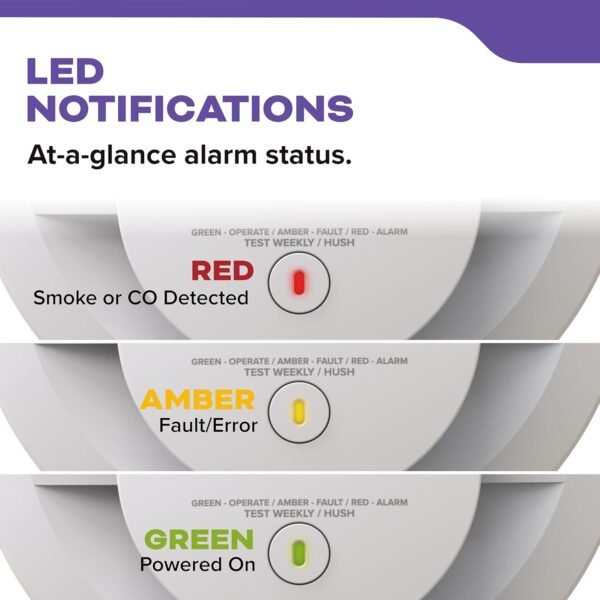
Visual signalling is easy to overlook on smoke and CO alarms, but this model’s LED warning indicators distinguish a smoke event from a carbon monoxide event. That separation matters because the response to a fire and the response to a carbon monoxide alarm are not the same, and Kidde’s instructions set out what each light state means. The indicators also work as a status check at a glance, showing that the unit is powered and monitoring, which is useful for household members who cannot easily interpret chirp patterns. The printed instructions supplied with the alarm take precedence over any summary of the light codes here.
Drawbacks of Reduced Nuisance Alarms
Kidde markets advanced sensing technology designed to reduce false alarms, particularly cooking-related activations. That claim describes a design goal rather than immunity. Owner ratings across this category still report occasional nuisance alarms near kitchens and bathrooms, and no residential alarm is exempt from steam and cooking aerosols. Moving a detector further from a cooking area is the usual remedy, though placement is not a free choice: alarm locations are governed by local building and fire code and by the manufacturer’s installation instructions, so any relocation has to work inside those rules rather than around them.
- Nuisance alarms are reduced by design, not eliminated
- Placement affects nuisance rates, and placement is a code question
Areas for Improvement in Design and Size
The product dimensions of 1.88″ depth by 5″ width and height make this a bulkier unit than the slimmest alarms on the market. Size is not a safety characteristic, but it is visible on a ceiling, more so in rooms with low ceilings or plain finishes. The audible alarm is loud and uses a standard tone rather than the spoken warnings some competing models offer, so buyers who want the hazard named aloud instead of signalled by a tone pattern will need a voice-equipped alarm. Neither point changes what the device detects; both change how it fits a room.
Product Alternatives and Competitive Options
Set against connected alarms such as Nest Protect, the trade is clear enough. The Kidde 30CUAR leads on wired interconnect and dual detection and offers nothing in the way of smart-home integration or smartphone notification. Nest Protect covers the app side at a higher price and with a setup process that involves an account and a network connection. First Alert’s battery-powered combination alarms, including the battery-operated First Alert SMICO100, are easier to fit because they need no wiring, though a battery unit without wireless interconnect cannot sound the rest of the house.
On signalling, the LED warning lights are a real addition over alarms that rely on sound alone. Power arrangement is the other difference: hardwired operation with battery backup depends less on cell replacement than a battery-only alarm does, while battery-only units are far simpler to install. Buyers comparing specifications for this model should also read the separate listing for the Kidde 30CUAR combination alarm, since data for the model is spread across more than one product page and the two do not always agree.
Value Assessment of the Features and Price
On price against features, this detector bundles two detection functions, wired interconnect and visual indicators into one device, which is what justifies the premium over a single-hazard alarm. The backup cells and the wiring work are real costs, one recurring and one upfront. It is not the cheapest option on the shelf, and for buyers who specifically want dual detection with whole-home alerting the price-to-quality ratio reads as reasonable rather than remarkable. The wider combination gas and carbon monoxide detector category also covers units that sense combustible gas, which this model, on its published description, does not.
The absence of smart-home integration and app control will put some buyers off, though it also removes firmware, accounts and network dependencies from a device that has to keep working during a power event. For straightforward hardwired smoke and carbon monoxide monitoring with battery backup and visual indicators, this model covers the core function. How many units a home needs, and where each one goes, remain questions for local code and the manufacturer’s installation instructions.