

Description
Output Levels and Brightness
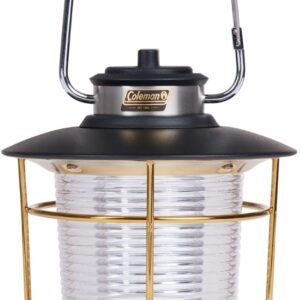
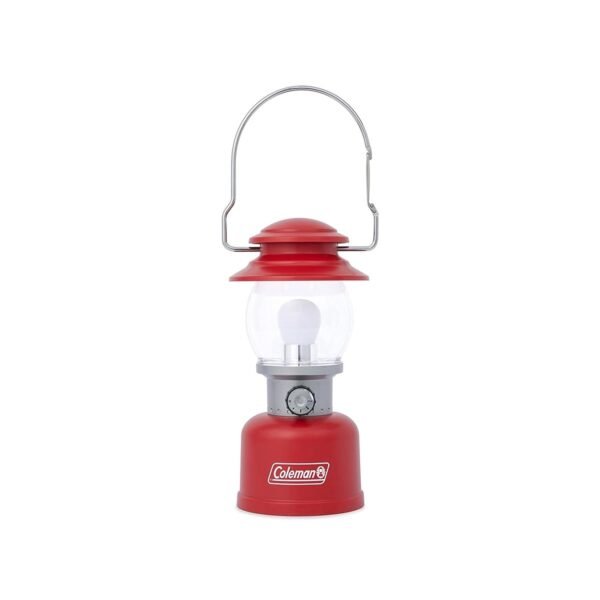
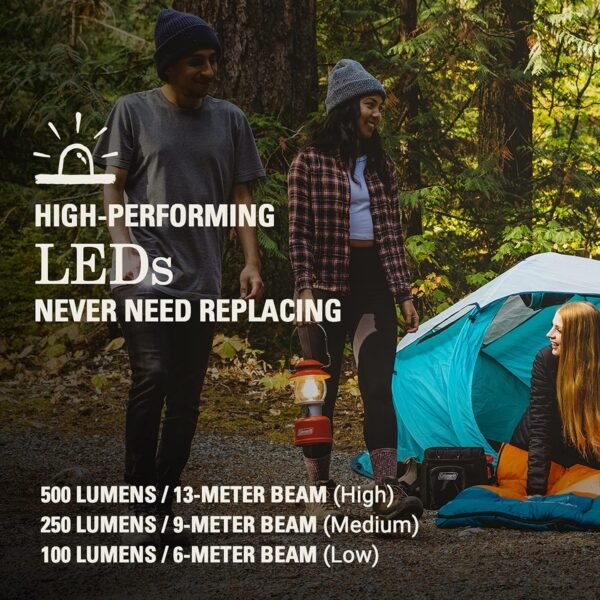
The Coleman Classic LED Lantern 500L is specified with 500 lumens on high, 250 on medium and 100 on low, with a listed beam reach of about 13 meters at the top setting. Five hundred lumens is enough to light a campsite table and the ground around it, and the step down to 100 lumens is the level for a tent or a bedside during an outage. One detail in the listing needs reconciling: the description calls it a three-mode lantern while the feature list adds a flashing mode alongside high, medium and low, so confirm whether a fourth setting is present before relying on it as a signal light. The LED source is rated to last the life of the lantern, so there is no bulb to carry as a spare, a point that holds across the electric lantern range.
Build and Weather Rating
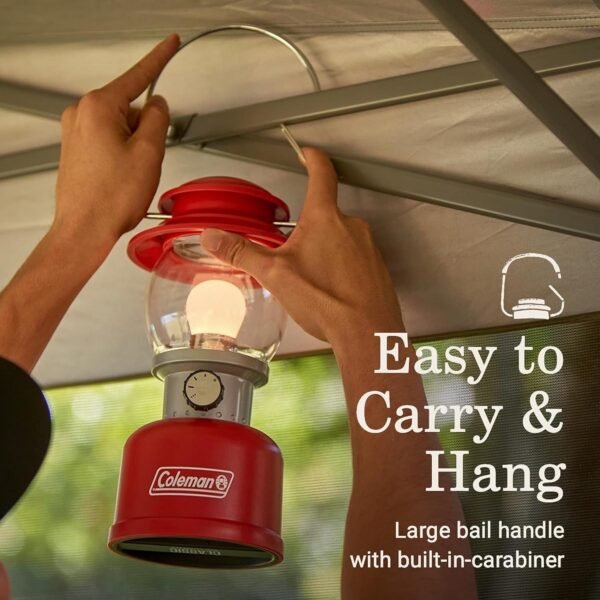
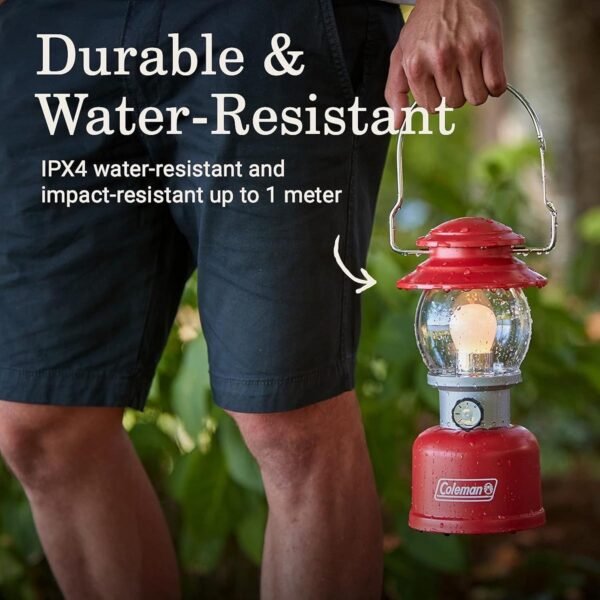
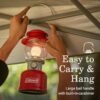
The housing is plastic with a stated IPX4 water resistance rating, which covers splashing and rain from any direction but not immersion, and a claimed impact resistance from 1 meter. That combination describes a lantern meant to survive being knocked off a picnic table in the wet, which is the failure mode camp lanterns actually meet. The large bail handle doubles as a carabiner, so the lantern hangs from a tent loop or a branch without an extra hook, and hanging it is what spreads the light instead of pooling it on one surface.
Battery Format and Run Time
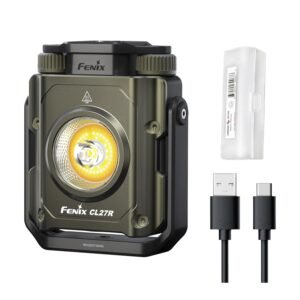
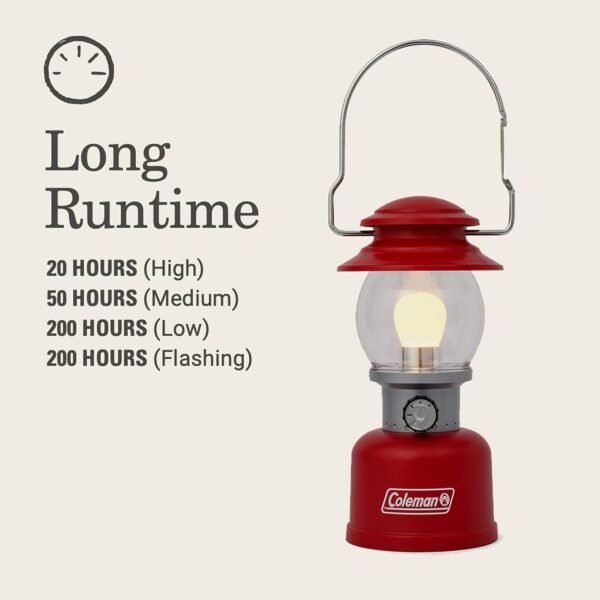
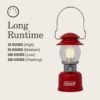
Power comes from 4 D cells, which is the specification that defines this lantern more than its brightness does. The published run times are up to 20 hours on high, about 50 hours on medium and up to 200 hours on low, figures that no AA or AAA lantern of similar output approaches. The trade is weight and cost: D cells are heavy, they are sold separately, and replacing four of them is not trivial across a long season. For anyone weighing a rechargeable pack against disposable cells, the USB-C rechargeable Fenix CL27R is the direct comparison, with far higher peak output and a cell that has to be charged rather than bought.
Size and Handling
Listed dimensions of roughly 6.05 x 5.5 x 12.5 inches and a weight under a kilogram put this in the car-camping class rather than the pack-carry one. The bail handle is large enough for a gloved hand, and because it also serves as a carabiner it can be clipped to a pack or a tent loop for transport. The plastic housing keeps the weight down for the size, and the wide base sits stably on uneven ground.
Points the Specification Supports
- Three output levels from 500 lumens down to 100, covering camp and tent use
- Up to 200 hours of run time on the lowest setting from one set of D cells
- IPX4 rating and 1 meter impact resistance for outdoor conditions
- Bail handle that doubles as a carabiner for hanging or carrying
Limitations
- Requires 4 D cells, which are heavy, not included and costly to replace
- No rechargeable option, so running cost continues for the life of the lantern
- The plastic body is lighter but less hard-wearing than metal-bodied lanterns
- 100 lumens on low is dim for close work such as reading fine print
How It Compares
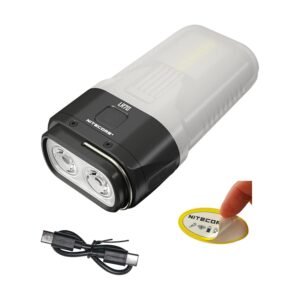
Against rechargeable lanterns of similar output, the Classic wins on stored readiness and loses on running cost: D cells sit in a cupboard for years without self-discharging to nothing, which is exactly what an outage kit needs, while a rechargeable pack has to be topped up on a schedule. Against the metal-bodied Coleman 1900 Collection at 200 lumens, this model gives more than twice the output and far longer run time in a bigger, lighter-feeling plastic housing. Against the Nitecore LR70 with its 3000 lumen flashlight mode and power bank function, it is plainly the simpler and cheaper device, with none of the charging or throw.
Price Against Specification
The price is mid-range for a camp lantern and buys run time rather than peak brightness or premium materials. The 3-year warranty is longer than much of the category carries, and the cost of D cells over several seasons should be added to any comparison against a rechargeable model. For casual campers, festival use and outage kits, the specification lines up with the asking price.
Where It Fits
The lantern suits car camping, back yards, garages and emergency storage, where its size costs nothing and its run time counts for a great deal. The carabiner handle makes it easy to hang in a tent or a garage, the IPX4 rating covers unexpected weather, and the low setting is what turns one set of cells into a week of evenings. A flame alternative such as the UCO Candlelier candle lantern matches the long-storage argument without needing batteries at all. Read as specification rather than promise, this is a long-running, weather-resistant area light whose main cost is the four D cells it consumes.