Description
Highlights of the Kidde Smoke & Carbon Monoxide Detector
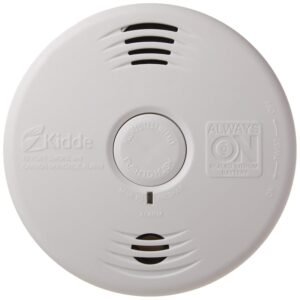
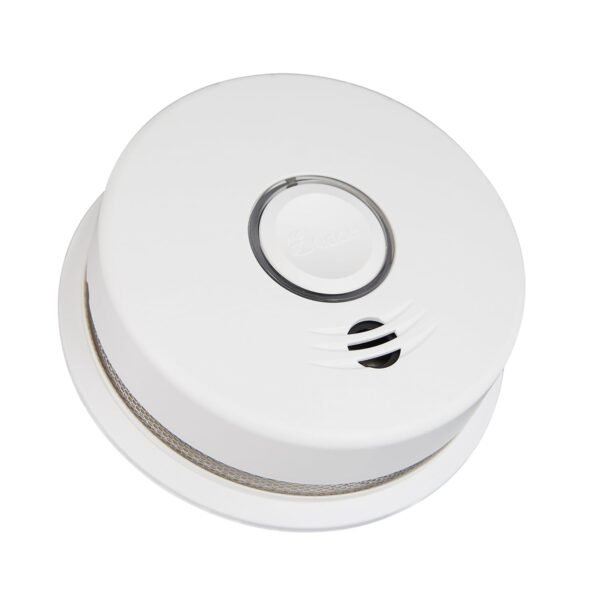
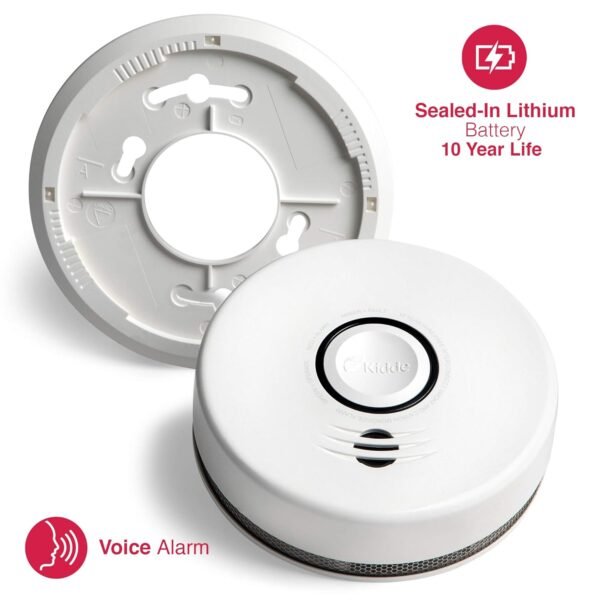
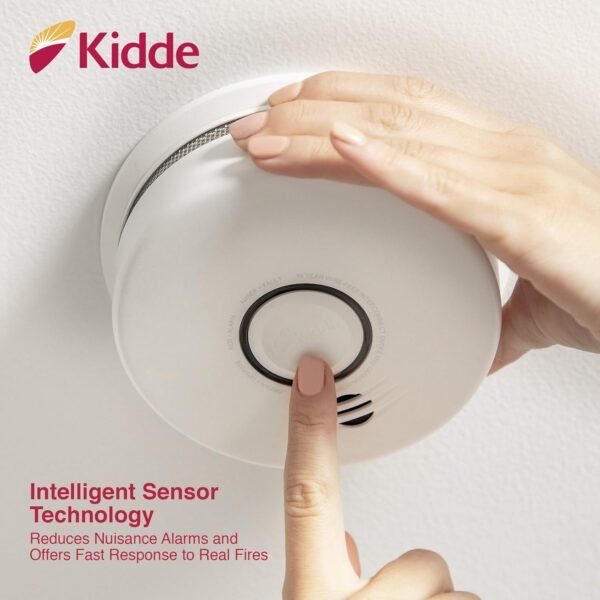
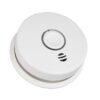
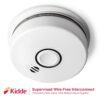
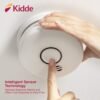
The Kidde Smoke & Carbon Monoxide Detector, model P4010DCSCO-W covers two hazards from one head, and the specification reflects that. Smoke sensing is photoelectric, the type documented as responding earlier to smoldering fires, while CO sensing is electrochemical, the sensor class used across mainstream residential CO alarms. Power is a sealed 10-year lithium battery rated to run the unit for its whole service life, so there is no annual cell change and no battery compartment to open. Rather than a single horn pattern, the alarm announces the hazard by voice, stating either a fire condition or a carbon monoxide warning, with LED pulses in sync with the announcement. The Smart Hush function silences a nuisance alarm for roughly eight minutes, which is the control that keeps a kitchen adjacent alarm on the ceiling.
- The sealed 10-year lithium battery removes scheduled cell replacement.
- Voice announcement distinguishes a smoke event from a CO event.
- Smart Hush silences a nuisance alarm temporarily.
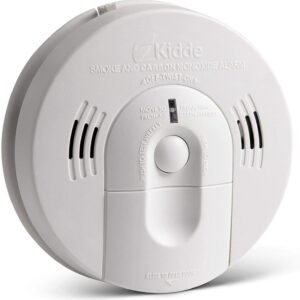
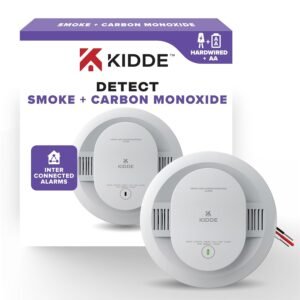
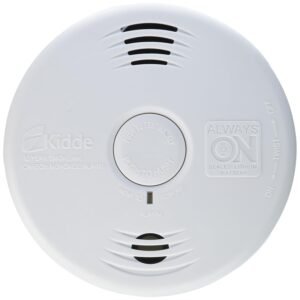
- Conventional circular ceiling housing.
Drawbacks That Need Attention
Several published limits deserve attention before purchase. The voice announcement is loud and startling by design, which is the intent in an emergency and a consideration in a bedroom. Physically the unit measures about 5.59 inches across and close to 2 inches deep, so it stands off a ceiling more than a slimline single hazard alarm. Interconnection is capped: up to 24 Kidde devices in total, with no more than 12 smoke alarms and 18 initiating devices on one loop, which are the limits a residential system is designed around rather than a brand restriction, and larger properties reach them.
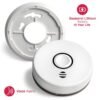
The upper operating temperature of 100 degrees Fahrenheit is the specification that most often rules out a location. Attics and unconditioned garages exceed that figure routinely in summer, which pushes those spaces towards a heat detector instead. The tamper resistant fitting is deliberate but does add a step when the unit reaches end of life and has to come down.
- Voice alerts are startling at close range, which matters for bedroom placement.
- Deeper housing than a slimline alarm.
- Interconnect limits constrain very large layouts.
- Upper temperature rating of 100 degrees restricts where it can go.
Setup and Day to Day Behavior
The box includes a mounting bracket, hardware and a quick start guide, and setup is a bracket, screws and a twist, with the sealed cell already in place. In normal operation the unit is silent, with the published 85 decibel output reserved for an alarm state and a subtle low power signal ahead of end of life. The LED pulse indicators add a visual channel alongside the voice announcement, which matters where hearing is impaired.
One behavior is worth understanding rather than treating as a fault. A CO alarm listed to UL 2034 is designed on time weighted thresholds, so it deliberately does not sound on brief low level exposure. A CO sensor that takes longer to respond than a smoke sensor is behaving to the standard the listing names, not underperforming against it.
Design and Build Quality
The white circular housing is conventional and disappears against a painted ceiling. Weight is about 7.4 ounces, which is unremarkable for a combination unit and well within any standard bracket. The published operating humidity range is 10% to 95%, covering ordinary interior conditions. The 3-volt lithium cell is sealed inside, so there is no compartment to corrode and no contact to clean, at the cost of the unit being disposable at end of life. The visible LEDs are the one aesthetic compromise, since they remain noticeable in a fully dark room.
Competitive Options in the Market
Against connected alarms with app notification and scheduled self test, this model trades remote features for a lower price and a simpler setup with no account or network involved. Its sealed 10 year cell matches the longest terms in the combination smoke and carbon monoxide detector category, and outlasts alarms that still take a replaceable cell.
Within similar specifications, the Kidde P3010CU combination alarm shares the sealed cell platform without the voice announcement, while the First Alert SMCO210 combination alarm is the closest cross brand comparison on features. A standalone unit with a numeric CO display, such as the X-Sense SC07 with an LCD readout, takes a different route by showing the ppm figure instead of announcing it.
Price Performance and Value Proposition
On specification per dollar the P4010DCSCO-W sits sensibly. The 10 year warranty and sealed cell justify the premium over alarms that need an annual battery, since across a decade the cell purchases close much of the gap. Voice announcement is the feature most likely to matter in practice, because it removes the guesswork about which hazard has triggered when a horn sounds at three in the morning.
What the price does not include is any connectivity. Buyers who want a phone notification while away from the property are shopping in a different bracket. For a household that wants two hazards covered by one device with no maintenance schedule, this specification is on target.
Installation and Interconnection Features
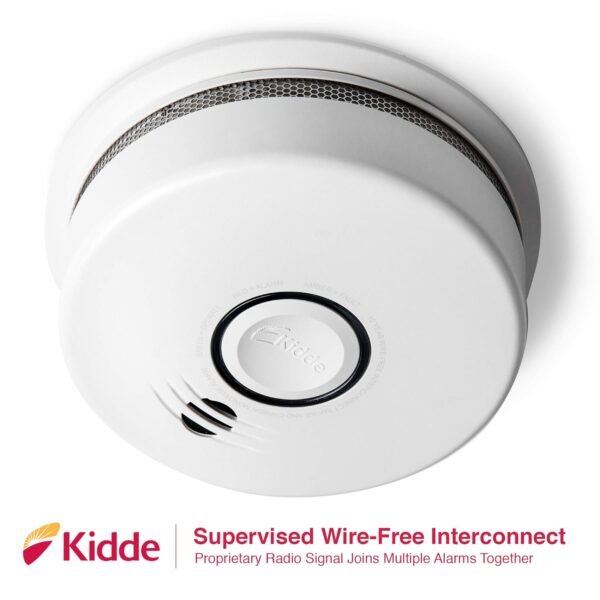
The interconnect rules are the densest part of the documentation and are worth reading before wiring. The loop supports up to 24 devices in total, with a maximum of 18 initiating devices and 12 smoke alarms, and every device on the loop has to be a compatible Kidde unit. A hardwired sibling such as the Kidde 30CUAR hardwired combination alarm is the usual mains powered counterpart on the same loop.
Smart Hush operates across interconnected units, so silencing a nuisance alarm quiets the loop rather than one head. Where an interconnected system is being designed or extended, the layout and the wiring are governed by local code, and a licensed electrician should carry out the connections where code requires it.
Safety Features and Certification
The listed compliance set is substantial: UL Certified against UL 2034 for carbon monoxide alarms and UL 217 for smoke alarms, with NFPA 72, HUD, FHA and California Fire Marshal requirements cited in the specification. Those listings mean the device has been evaluated against recognized standards for its class.
What the device does is signal a sensed condition: detected smoke, or a CO concentration crossing the time weighted thresholds the standard sets. It reports that condition through an 85 decibel horn, a voice announcement and a flashing red LED, and passes it to any interconnected units. It does not determine how many alarms a dwelling needs, where they belong or whether the resulting layout is compliant, which are matters for local building code and, for anything hardwired or interconnected, for a qualified installer.
Read as a specification rather than a promise, this combination alarm is a well equipped conventional unit: photoelectric and electrochemical sensing, a sealed decade cell, voice announcement, interconnect capability and a broad listing set, with no connectivity and a temperature ceiling that rules out hot spaces. That combination fits a hallway, a landing or a bedroom approach in a household that wants both hazards covered by one head.